 4 citations
,
May 2002 in “Dermatologic Surgery”
4 citations
,
May 2002 in “Dermatologic Surgery” This article describes a technique for evaluating and treating the under-addressed temporal peak areas in hair restoration surgery to improve cosmetic harmony with the frontal hairline.
 December 2023 in “Scientific Reports”
 In this study, researchers successfully established immortalized human frontal and occipital scalp dermal papilla cell lines from androgenetic alopecia patients, observing distinct gene expression, androgen receptor levels, and hair follicle growth effects between these regions, which may help advance hair loss research and therapeutic development.
 1 citations
,
July 2024 in “Skin Research and Technology”
1 citations
,
July 2024 in “Skin Research and Technology” In this study, the researchers compared subcutaneous fat in the frontal and occipital scalp regions, which are affected and spared in androgenetic alopecia respectively, to better understand the role of subcutaneous fat in the condition's pathogenesis.
 July 2024 in “Iranian journal of pathology”
 This study described the clinicopathological features of patients with frontal fibrosing alopecia who underwent skin biopsies.
This study reports that using stamps to mark scalp incisions with gentian violet ink and a barrier film improved incision symmetry and maintained slot visibility for hair graft insertion in the frontal region.
 6 citations
,
January 2013 in “Genetics and Molecular Research”
6 citations
,
January 2013 in “Genetics and Molecular Research” This study found that women with androgenetic alopecia demonstrated higher androgen receptor gene expression compared to controls, with a correlation found between higher AR expression and fewer CAG repeats in the AR gene.
 July 2026 in “Innovations in Pharmaceutical Sciences & Care”
 In this case report, a 31-year-old man with frontal hairline recession saw a marked improvement in hair density and scalp appearance after undergoing six mesotherapy sessions alongside twice-daily application of 5% minoxidil, attributed to the treatment protocol combining nutrients, bioactives, and topical minoxidil.
June 2025 in “Journal of Ultrasound in Medicine” This study reports that high-frequency ultrasound can characterize frontal fibrosing alopecia by assessing dermal atrophy, hair follicle changes, and subclinical inflammation.
March 2025 in “Revista Foco” This review describes the clinical signs, symptoms, and diagnostic findings for alopecia frontal fibrosante, emphasizing the importance of early diagnosis and variable treatment options, and reports no new findings.
November 2024 in “International Journal of Women’s Dermatology” In this study of a Colombian sample, the researchers found that while sex, alopecia location, and symptoms aligned with global reports, age at presentation, tobacco use, and use of wigs and dyes were different from those noted in other countries.
July 2022 in “Journal of Investigative Dermatology” This study found that decreased TRPS1 expression in balding dermal papilla cells may impair their signaling ability, contributing to hair follicle miniaturization in androgenic alopecia.
8 citations
,
January 2002 in “Piel” Postmenopausal women may experience frontal hairline and eyebrow loss due to cicatricial fibrosis.
 April 2026 in “Research Square”
 In this study, trichoscopic examination revealed that variations in hair diameter were more common in certain types of alopecia affecting the frontal scalp, suggesting the importance of evaluating the entire scalp for accurate diagnoses, although limitations include a single center design and small sample size.
 18 citations
,
June 2017 in “Journal of The American Academy of Dermatology”
18 citations
,
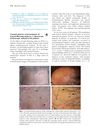
June 2017 in “Journal of The American Academy of Dermatology” In this study, trichoscopy consistently identified typical findings of frontal fibrosing alopecia, revealing three unusual clinical patterns in 18.4% of patients, which may aid in the differential diagnosis when clinical presentations are atypical.
 1 citations
,
November 2020 in “Journal of The American Academy of Dermatology”
1 citations
,
November 2020 in “Journal of The American Academy of Dermatology” The commentary suggests that certain hair and skin care products may be linked to frontal fibrosing alopecia, but not sunscreens, and calls for more thorough research on the causes.
 January 2020 in “Clinical Case Reports and Reviews”
 This study observed that the coexistence of Frontal Fibrosing Alopecia and lupus erythematosus in a patient may suggest a shared pathogenic background.
 September 2024 in “Cutis”
 Sunscreen use may increase the risk of frontal fibrosing alopecia.
2 citations
,
December 2018 This study found that dermatoscopy can quickly and non-invasively detect facial vellus hair involvement in patients with alopecia frontal fibrosante, occurring frequently and associated with specific facial lesions.
 19 citations
,
September 2014 in “British Journal of Dermatology”
19 citations
,
September 2014 in “British Journal of Dermatology” This study found that topical minoxidil 5% foam was effective in promoting hair growth in both the frontal and vertex scalp for men with androgenetic alopecia.
 9 citations
,
June 2014 in “British Journal of Dermatology”
9 citations
,
June 2014 in “British Journal of Dermatology” The study found that balding scalps have more thin hairs and larger oil glands, which might contribute to skin conditions related to hair loss.
 10 citations
,
May 2012 in “Journal of Craniofacial Surgery”
10 citations
,
May 2012 in “Journal of Craniofacial Surgery” This case report describes a successful frontal region reconstruction using Cerament for a 50-year-old man, resulting in satisfactory forehead morphology and improved appearance four years post-surgery.
December 2015 in “European Journal of Pediatric Dermatology” This study describes synchronous neonatal telogen effluvium as a physiological phenomenon where newborns exhibit a hair band of rarefaction in the occipital region, not caused by sleeping position.
 46 citations
,
May 2004 in “Facial Plastic Surgery Clinics of North America”
46 citations
,
May 2004 in “Facial Plastic Surgery Clinics of North America” This article discusses techniques for creating natural-looking hairlines in hair restoration surgery and reports no new clinical results.
4 citations
,
November 2019 in “Dermatology - Open Journal” This study reports that Lichen planus pigmentosus is present in Moroccan patients but remains challenging to treat, with only some experiencing complete resolution of lesions after therapy.
 1 citations
,
June 2001 in “International Journal of Cosmetic Surgery and Aesthetic Dermatology”
1 citations
,
June 2001 in “International Journal of Cosmetic Surgery and Aesthetic Dermatology” In this study, an innovative flap procedure was described that may effectively treat extensive frontal baldness through a 180° rotation of a midline occipital flap, aligning hairs naturally.
 33 citations
,
August 1985 in “Archives of Dermatology”
33 citations
,
August 1985 in “Archives of Dermatology” This study suggests that acquired progressive kinking of hair, which typically appears at or after puberty, may be androgen dependent and could progress to male pattern baldness.
 9 citations
,
November 1993 in “Journal of The American Academy of Dermatology”
9 citations
,
November 1993 in “Journal of The American Academy of Dermatology” Some men can have female pattern baldness without hormonal abnormalities or signs of feminization.
1 citations
,
January 2020 in “Bioscientia medicina” This review covers female pattern hair loss, outlining its progression, existing treatments like topical minoxidil and laser therapy, and notes that anti-androgen therapies need further investigation.
 January 2014 in “Revista Brasileira de Cirurgia Plástica”
 This publication describes the role of the Revista Brasileira de Cirurgia Plástica in documenting and promoting advancements in plastic surgery, but does not present new research findings.
5 citations
,
March 2017 in “Journal of the American Academy of Dermatology” Cytokeratin-15 loss is not specific to any single type of scarring alopecia.