June 2026 in “International Journal for Research in Applied Science and Engineering Technology” This study formulated and evaluated a polyherbal hair growth oil using plants like Amla and Neem. The oil showed desirable physicochemical properties, stability, safety, and potential effectiveness, representing a promising natural alternative to synthetic hair care products for promoting healthy hair and scalp protection.
 June 2026 in “Zenodo (CERN European Organization for Nuclear Research)”
 In this study, researchers developed and evaluated a herbal hair growth serum using natural ingredients like olive oil, peppermint oil, and hibiscus extracts, aiming to enhance scalp health, strengthen hair follicles, and promote hair growth.
June 2026 in “International Journal of Innovative Science and Research Technology (IJISRT)” This study aimed to create and evaluate a herbal hair serum containing curry leaf and hibiscus extracts, formulated to promote hair growth and reduce hair loss using castor and almond oils as the base.
May 2026 in “VT International Press Journal of Multidisciplinary Research and Review” This study developed a herbal hair oil using garlic leaves, coconut oil, castor oil, hibiscus flower powder, and amla extract, finding it enhances scalp nutrition, reduces hair loss, and maintains favorable aesthetic attributes with appropriate stability and consistency for hair application.
 May 2026 in “Zenodo (CERN European Organization for Nuclear Research)”
 In this study, a herbal hair dye was formulated and tested, showing good stability and quality. The addition of Barleria prionitis flower enhanced color intensity and conditioning effects, suggesting it as a safe and effective natural alternative to chemical dyes.
 May 2026 in “Zenodo (CERN European Organization for Nuclear Research)”
 In this study, researchers formulated a herbal hair dye with natural ingredients, including Barleria prionitis, and found it to be stable, effective, and a promising natural alternative to chemical dyes, enhancing color intensity and hair conditioning compared to formulations without this component.
 May 2026 in “Zenodo (CERN European Organization for Nuclear Research)”
 This study developed and evaluated a polyherbal hair growth serum using natural ingredients like fenugreek, rosemary, and hibiscus, and found it to be a stable, effective, and safe alternative to synthetic hair care products, with good user compliance from its roll-on applicator.
 May 2026 in “Zenodo (CERN European Organization for Nuclear Research)”
 This study developed a polyherbal hair growth serum containing natural ingredients such as fenugreek, rosemary, and hibiscus, and found it to be safe and effective in promoting hair growth, improving scalp health, and reducing hair fall while being stable over time.
 April 2026 in “Zenodo (CERN European Organization for Nuclear Research)”
 This paper discusses the formulation of an anti-dandruff herbal hair mask using traditional Ayurvedic herbs like Amla, Neem, and Shikakai, which are suggested to effectively address symptoms like redness, flaking, and itching associated with chronic scalp issues.
 April 2026 in “Zenodo (CERN European Organization for Nuclear Research)”
 This study emphasizes the importance of fortifying hair follicles to combat significant hair and scalp issues related to lifestyle changes, recommending Ayurvedic herbs like Amla and Shikakai as effective treatments for dandruff, highlighting their potential in a newly developed anti-dandruff herbal hair mask.
 January 2026 in “International journal of research and scientific innovation”
 In this laboratory study, researchers developed a multifunctional organic hair cream with various natural extracts, finding that the cream with 15% extracts demonstrated higher physical stability, hair strength, and antimicrobial activity compared to lower concentration samples and synthetic alternatives.
July 2025 in “International Journal of Pharma Professional’s Research (IJPPR)” This study reviewed the benefits of a poly herbal hair oil, highlighting its effectiveness in treating common hair problems like dandruff, hair fall, and dryness, while providing essential nutrients through ingredients like Coconut oil, Aloe vera, and Fenugreek seeds.
 April 2025 in “International Journal of Medical Science and Diagnosis Research”
 This study developed a polyherbal shampoo using herbal extracts as an alternative to chemical-based shampoos, aiming to provide a safer and more effective hair care option.
In this study, researchers developed and tested an herbal hair serum containing natural ingredients like banana flower extract and orange oil, which was stable and pH-balanced, with preliminary user feedback suggesting improved hair texture, reduced hair fall, and increased hair density.
 February 2025 in “International Journal for Research in Applied Science and Engineering Technology”
 In this study, researchers evaluated a multi-herbal shampoo made with natural components like aloe and hibiscus, reporting it as safer and more effective than synthetic options, though consumer acceptance remains a challenge.
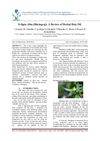
This review article underscores the benefits of herbal hair oil formulations, which include ingredients like Bhringraj leaves and coconut oil, in promoting hair health with fewer side effects compared to chemical products, offering nutrients for sebaceous gland function.
 April 2024 in “International Journal of Science and Research Archive”
 This study focused on developing an effective herbal hair conditioner using ingredients like Custard Apple, Aloe Vera, and Hibiscus Flower, and evaluated its properties such as pH, stability, and moisturizing efficacy.
February 2024 in “Cosmetics” In this study, researchers developed a novel platform for discovering potential hair loss inhibitors by investigating the testosterone/dihydrotestosterone biosynthetic pathway and its regulation through biochemical mechanisms involving 17β-HSD and 3β-HSD, combined with medicinal plant extracts.
 November 2023 in “International Journal For Multidisciplinary Research”
 This review explores how herbal hair oils made from ingredients like amla and hibiscus may offer benefits such as reducing hair loss and dandruff, but these are summarized from existing research rather than new experimental data.
 October 2023 in “Plant Archives/Plant archives”
 This study evaluated herbal formulations, including Neem and Hibiscus soaps and medicated oil, made from certain medicinal plants in India, finding them effective for antimicrobial purposes and beneficial for skin and hair, suggesting they are suitable for public use.
September 2023 in “Zenodo (CERN European Organization for Nuclear Research)” This source compiles information on Calotropis gigantea, an Asclepiadaceae plant used in traditional medicine for treating conditions like leprosy, asthma, vertigo, and hair loss, highlighting its diverse medicinal potential.
 June 2022 in “Jurnal Health Sains”
 This review discusses plant-based alternatives for hair tonic formulations to address hair loss and contains no new clinical results, advocating for plant extracts as safer options than synthetic ingredients.
December 2021 in “Asian journal of pharmaceutical and clinical research” In this study, researchers formulated a polyherbal hair oil using ingredients like coconut and castor oils, and reported that it boosts hair growth, reduces hair fall and dandruff, and adds shine, with minimal adverse effects compared to market formulations.
 July 2019 in “Technology audit and production reserves”
 This research discusses the formulation of probiotic gel shampoos with whey peptides and plant extracts, highlighting their potential effectiveness and market feasibility in Ukraine.
July 2019 in “JoLS Journal of Life Sciences” This study found that extracts from the plant Platycodon grandiflorum, particularly the butanol extract, demonstrated potential in preventing hair loss by showing significant antioxidant activity, promoting cell proliferation, and inhibiting inflammation in various cell models.
 September 2017 in “World journal of Pharmacy and pharmaceutical sciences”
 In this study, researchers observed that a polyherbal ointment made from specific plant extracts significantly promoted hair growth in rats compared to ointments with single extracts, possibly due to the presence of flavonoids and tannins.
January 2017 in “한국약용작물학회지” This study suggests that 70% ethanol extracts from certain medicinal plants may promote hair growth and be useful for developing hair care products.
January 1974 in “Almogaren” This study developed a microdroplet technology to produce cell microspheres that successfully induced hair follicle regeneration in a mouse model, suggesting potential improvements in hair loss treatments.
 January 2022 in “Springer eBooks”
 The book explains causes and treatments for common hair loss, its psychological effects, related health risks, and emphasizes early screening and lifestyle changes.
 December 2021 in “Indian Journal of Dermatology, Venereology and Leprology”
 In this study, androgenetic alopecia patients exhibited more nailfold capillary abnormalities, suggesting a potential link between microcirculation issues and the condition.