39 citations
,
April 2022 in “Biomedical Materials” In this study, a biofunctional hydrogel incorporating mesenchymal stem cell-derived small extracellular vesicles promoted wound healing and reduced scar tissue formation by modulating the immune response in a mouse skin injury model.
 39 citations
,
May 2014 in “Frontiers in Pharmacology”
39 citations
,
May 2014 in “Frontiers in Pharmacology” In this study, CD4+CD25+FoxP3+ Regulatory T cells were found to reduce TGF-b1 induced lung fibrosis and fibrocyte accumulation in mice, partly by suppressing fibroblast growth factor 9.
 38 citations
,
June 2005 in “Matrix Biology”
38 citations
,
June 2005 in “Matrix Biology” Minoxidil affects collagen-related genes, potentially helping treat fibrosis.
38 citations
,
February 2021 in “Journal of Investigative Dermatology” This review examines the complexities of age-related skin healing and discusses how translating findings from model organisms to humans could enhance understanding and treatment of impaired regeneration in aging populations, but it reports no new clinical results.
37 citations
,
May 2018 in “Frontiers in physiology” This study identified key long non-coding RNAs and mRNAs involved in primary wool follicle induction in carpet wool sheep, emphasizing their roles in hair follicle development and skin processes.
37 citations
,
July 1999 in “The EMBO Journal” Overexpression of certain genes can shorten hair by disrupting the hair-growth cycle.
 37 citations
,
October 2009 in “Dermatology”
37 citations
,
October 2009 in “Dermatology” This study suggests that the action of minoxidil in stimulating hair growth likely occurs at the follicular dermal papilla, though it does not induce new follicle formation.
36 citations
,
February 2016 in “British journal of pharmacology” This study found that SIRT1 negatively regulates fibroblast activation and excessive scar formation, suggesting it may be a promising drug target for treating hypertrophic scars.
 36 citations
,
December 2012 in “Dermatologic Surgery”
36 citations
,
December 2012 in “Dermatologic Surgery” Injecting platelet-rich plasma (PRP) can increase hair growth rate and density in male pattern baldness.
 36 citations
,
September 2011 in “British Journal of Dermatology”
36 citations
,
September 2011 in “British Journal of Dermatology” This study found that white hair exhibits increased expression of genes and proteins linked to active hair growth compared to black hair, suggesting that hair greying is associated with enhanced hair growth activity.
 36 citations
,
June 2021 in “Experimental & Molecular Medicine”
36 citations
,
June 2021 in “Experimental & Molecular Medicine” This study found that mechanical stress activates a WISP-1/Hedgehog signaling axis that contributes to ligamentum flavum hypertrophy and fibrosis, identifying Hedgehog signaling as a potential therapeutic target.
 36 citations
,
January 2017 in “Stem Cells International”
36 citations
,
January 2017 in “Stem Cells International” This study found that Wnt7a-containing conditioned medium from UC-MSCs can accelerate wound healing and promote hair follicle regeneration by enhancing specific cellular functions in the wound microenvironment.
 36 citations
,
July 2014 in “Experimental Dermatology”
36 citations
,
July 2014 in “Experimental Dermatology” This narrative piece considers how epigenetic factors may influence the processes of skin wound healing, including hair follicle formation, but it presents no new experimental results.
36 citations
,
March 2014 in “Annals of the Rheumatic Diseases” This study found that activating liver X receptors with an agonist reduced skin fibrosis in experimental models, particularly in inflammation-driven conditions, by inhibiting macrophage infiltration and interleukin-6 release.
35 citations
,
December 2020 in “International Journal of Molecular Sciences” This review examines the mixed evidence on mast cells as regulators of skin fibrosis and highlights existing gaps in the scientific understanding, reporting no new experimental results.
 35 citations
,
October 2017 in “Signal Transduction and Targeted Therapy”
35 citations
,
October 2017 in “Signal Transduction and Targeted Therapy” This study found that fibromodulin significantly reduces scar formation and boosts scar strength in rodent and porcine models, suggesting potential for FMOD-based therapies in cutaneous wound repair.
35 citations
,
December 2014 in “Lasers in surgery and medicine” This study found that red light accelerated the transition from the resting to growth phase in hair follicles faster than green and blue light in mice, suggesting it may stimulate hair growth.
 35 citations
,
May 2021 in “Nature communications”
35 citations
,
May 2021 in “Nature communications” This study found that basement membrane components and structures in mouse hair follicles are highly specialized for specific inter-tissue interactions, with laminin α5 playing a crucial role in hair cycle regulation and anchoring.
34 citations
,
September 2020 in “Clinical, cosmetic and investigational dermatology” This research found that hyaluronic acid increased cell proliferation and type I collagen more effectively than poly-L-lactic acid in both human fibroblast cultures and rat dermis.
 34 citations
,
May 2012 in “International Journal of Molecular Sciences”
34 citations
,
May 2012 in “International Journal of Molecular Sciences” This study found that Ecklonia cava enzymatic extract, particularly its component dieckol, promoted hair growth by increasing dermal papilla cell proliferation and inhibiting 5α-reductase activity in cultured vibrissa follicles and C57BL/6 mice.
 33 citations
,
January 2022 in “Scientific Reports”
33 citations
,
January 2022 in “Scientific Reports” This study found that loading CoQ10 into a protransfersomal emulgel improved its stability and anti-ageing effects in UV radiation skin-aged induced-mice, without causing skin irritation.
 33 citations
,
September 2012 in “Wound Repair and Regeneration”
33 citations
,
September 2012 in “Wound Repair and Regeneration” This study found that the application of calreticulin significantly improved wound healing time and quality in diabetic mice, suggesting it may be an effective topical treatment for chronic wounds.
 33 citations
,
December 2004 in “Differentiation”
33 citations
,
December 2004 in “Differentiation” In this study, mouse amnion epithelium was successfully transformed into skin and hair follicles when associated with hair-forming dermis, revealing the necessity of specific influences for follicle formation.
32 citations
,
July 2017 in “Molecular diagnosis & therapy” MicroRNA-21 could help diagnose and treat skin fibrosis.
32 citations
,
June 2021 in “Frontiers in Pharmacology” This study reports that Cur@CMCTS-Tk hydrogel effectively accelerated wound healing and tissue regeneration in rats by scavenging excess reactive oxygen species and protecting human fibroblasts from oxidative damage.
 32 citations
,
March 2014 in “PLOS ONE”
32 citations
,
March 2014 in “PLOS ONE” This study demonstrates that FMOD deficiency in mice alters TGF-β ligand and receptor expression during wound healing stages, leading to delayed wound closure and increased scar size.
 32 citations
,
January 2006 in “Acta dermato-venereologica”
32 citations
,
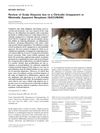
January 2006 in “Acta dermato-venereologica” SACUMAN, a rare condition causing hair loss without clear signs, is often misdiagnosed and needs scalp biopsies for accurate detection.
 32 citations
,
January 2005 in “Advances in Biochemical Engineering / Biotechnology”
32 citations
,
January 2005 in “Advances in Biochemical Engineering / Biotechnology” This review discusses the unique capacity of fetal skin to heal wounds without scarring and notes that while many factors have been identified, the complete mechanism of fetal wound healing remains unclear.
 32 citations
,
April 1994 in “Journal of the American Academy of Dermatology”
32 citations
,
April 1994 in “Journal of the American Academy of Dermatology” This report presents the second known case of erythema nodosum without typical associated conditions, which could be linked to mycoplasma infection, although no testing was conducted to confirm this in the patient.
 31 citations
,
January 2011 in “Dermato-endocrinology”
31 citations
,
January 2011 in “Dermato-endocrinology” This review updates the protective effects and molecular mechanisms of melatonin against ultraviolet-induced damage in human skin, reporting no new clinical findings.