 32 citations
,
September 2017 in “Journal of the American Academy of Dermatology”
32 citations
,
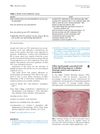
September 2017 in “Journal of the American Academy of Dermatology” In this study, researchers reported that oral isotretinoin effectively treated facial papules in frontal fibrosing alopecia, with histopathologic findings suggesting the involvement of elastic fibers and sebaceous glands in papule formation beyond perifollicular inflammation.
32 citations
,
July 2017 in “Oncotarget” This study found that intermittent treatment with FTI lonafarnib and sulforaphane may be a promising therapeutic approach for children with Hutchinson-Gilford progeria syndrome, as it improved the cellular phenotype.
 October 2025 in “Proceedings of the National Academy of Sciences”
 This study identifies the PI4P-RHD4 module as a key regulator of GET pathway receptor dynamics in Arabidopsis, affecting TA protein insertion and root hair growth.
July 2024 in “Journal of Investigative Dermatology” PP405 may help hair growth by activating hair follicle stem cells.
 13 citations
,
January 2019 in “Skin appendage disorders”
13 citations
,
January 2019 in “Skin appendage disorders” This study reported that fibrosing alopecia in a pattern distribution can occur in patients of color, with clinical and histopathological features allowing for an accurate differential diagnosis.
 November 2021 in “CRC Press eBooks”
 This article reviews the characteristics and presentation of fibrosing alopecia in a pattern distribution, a form of scarring alopecia similar to androgenetic alopecia and lichen planopilaris, but provides no new clinical findings.
 July 2026 in “bioRxiv (Cold Spring Harbor Laboratory)”
 This study identified a new FAK isoform, FAKΔe4, which is regulated by ECM stiffness and affects cell migration, invasion, and mechanosensing in human-derived data and engineered models.
 April 2023 in “The journal of investigative dermatology/Journal of investigative dermatology”
 This study found that inhibiting the Mitochondrial Pyruvate Carrier in human hair follicles ex vivo activated the integrated stress response, affecting cell proliferation and metabolism.
 July 2022 in “Research Square (Research Square)”
 This study found that Egyptian women with frontal fibrosing alopecia had lower serum PPARγ levels and a higher occurrence of PPARG gene polymorphism compared to healthy controls, suggesting a potential role for PPARγ in the condition's development.
September 2025 in “Science Advances” This study reports that PADI4, an enzyme involved in posttranslational protein modifications, regulates progenitor cell transitions in hair follicle development by repressing transcription and interacting with translational and ribosomal processes.
 October 2023 in “Journal of dermatological science”
 This study highlights that mutations in the MBTPS2 gene can lead to dermatological disorders like IFAP syndrome and severe bone diseases such as X-Linked Osteogenesis Imperfecta, emphasizing the significance of understanding these genetic variants for disease mechanisms and associations.
29 citations
,
January 2020 in “BioMed Research International” This study found that sinapic acid promotes the browning of 3T3-L1 adipocytes and may offer therapeutic potential for obesity by influencing mitochondrial biogenesis through the p38 MAPK/CREB signaling pathway.
 1 citations
,
January 2020 in “Skin appendage disorders”
1 citations
,
January 2020 in “Skin appendage disorders” Finasteride may help treat frontal fibrosing alopecia, but more research is needed.
 January 2015 in “Hair transplant forum international”
 This snippet mentions an increase in women seeking surgical hair restoration and subsequently encountering more cases of frontal fibrosing alopecia, but the abstract doesn't contain results or conclusions.
 3 citations
,
February 2024 in “Journal of the American Academy of Dermatology”
3 citations
,
February 2024 in “Journal of the American Academy of Dermatology” This source discusses that while oral JAK inhibitors are used for treating lichen planopilaris and frontal fibrosing alopecia, they carry significant risk of adverse events; two cases showed promising results using tofacitinib cream as a safer topical alternative.
 1 citations
,
April 2012 in “Informa Healthcare eBooks”
1 citations
,
April 2012 in “Informa Healthcare eBooks” Some medications for inflammation can cause a condition with scalp rashes and hair loss, often linked to Crohn's disease, and may require treatment changes to prevent permanent hair loss.
2 citations
,
March 2011 in “International Journal of Dermatology” This case report describes an 18-year-old male with IFAP syndrome, confirmed by total hair loss, severe photophobia, and characteristic skin changes, marking a rare presentation of the condition.
 April 2019 in “Journal of Investigative Dermatology”
 This study found that DPP4 is significantly involved in matrix deposition and fibrosis in human skin fibroblasts, although the exact functions of DPP4 remain unclear.
 May 2025 in “Journal of Clinical Images and Medical Case Reports”
 The study observed that patterned fibrosing alopecia, a type of scarring hair loss, appears in some patients after hair transplants, facelifts, and other surgical interventions, sharing features with lichen planopilaris and androgenetic alopecia.
 4 citations
,
January 2001 in “Archives of Biochemistry and Biophysics”
4 citations
,
January 2001 in “Archives of Biochemistry and Biophysics” This study found that TPA induces apoptosis in pig renal epithelial cells by affecting cell cycle proteins, and activated ras can prevent this process.
 1 citations
,
May 2024 in “Dermatology and Therapy”
1 citations
,
May 2024 in “Dermatology and Therapy” This review article examines the current understanding of frontal fibrosing alopecia, noting its prevalence in different demographics and the roles of genetic and environmental factors in its pathogenesis, while highlighting that treatment approaches remain varied and lack standardization.
 179 citations
,
December 2004 in “Journal of The American Academy of Dermatology”
179 citations
,
December 2004 in “Journal of The American Academy of Dermatology” This study observed that frontal fibrosing alopecia in postmenopausal women involves selective follicular inflammation, and finasteride treatment may slow disease progression, suggesting a potential androgen-related component.

This study found that individuals with homozygous loss-of-function mutations in PLAAT3 experience a novel type of partial lipodystrophy linked to defects in white adipose tissue differentiation and function.
19 citations
,
November 1979 in “Archives of dermatology” This case report discusses the potential use of topical tretinoin for treating Fox-Fordyce disease, but provides no new clinical results.
 1 citations
,
September 2021 in “CRC Press eBooks”
1 citations
,
September 2021 in “CRC Press eBooks” This chapter reviews trichoscopic-pathologic correlations in Frontal Fibrosing Alopecia and reports no new clinical results; the authors discuss genetics, clinical patterns, and unusual variants associated with this condition.
 June 2021 in “bioRxiv (Cold Spring Harbor Laboratory)”
 This study discovered that the gene Tfap2b identifies a melanocyte stem cell population in zebrafish, essential for regenerating melanocytes with multi-fate potential into adult pigment cells.
 10 citations
,
January 2011 in “Case reports in dermatological medicine”
10 citations
,
January 2011 in “Case reports in dermatological medicine” This report documented a successful and sustained hair restoration surgery using follicular unit transplantation for temporal triangular alopecia, lasting over six years.
 25 citations
,
December 2017 in “Facial Plastic Surgery”
25 citations
,
December 2017 in “Facial Plastic Surgery” This study observed that combining high-potency steroids with pimecrolimus might effectively stabilize hairline recession in frontal fibrosing alopecia patients.
 6 citations
,
January 2020 in “International journal of biological sciences”
6 citations
,
January 2020 in “International journal of biological sciences” In this study, deletion of ROBO4 in mice ameliorated hair loss caused by elevated PAF levels, suggesting potential interplay with VLDLR-related pathways.
 39 citations
,
July 2015 in “British Journal of Dermatology”
39 citations
,
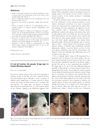
July 2015 in “British Journal of Dermatology” This article discusses the pseudo 'fringe sign' in frontal fibrosing alopecia, highlighting that it is not solely related to traction, and it reports no new clinical results.