 3 citations
,
July 2021 in “International journal of pharmaceutical chemistry and analysis”
3 citations
,
July 2021 in “International journal of pharmaceutical chemistry and analysis” This review examines the role of medicinal plants in treating hair problems like baldness and dandruff, but it reports no new clinical results and emphasizes nutritional benefits from various herbal ingredients.
 1 citations
,
January 2013 in “Springer eBooks”
1 citations
,
January 2013 in “Springer eBooks” Cosmeceuticals may benefit skin health but need more research for efficacy and safety confirmation.
 April 2026 in “Inflammopharmacology”
 This study found that Punica granatum ethanolic leaf extract may alleviate skin fibrosis in rats by modulating inflammation-related pathways and reducing dermal alterations.
This study investigated the phytochemicals in Phyla nodiflora leaf extracts and identified n-Hexadecanoic acid, stigmasterol, and beta-sitosterol as promising drug candidates for diabetes, alopecia, cancer, and anti-diuresis, advocating further research into these compounds.
 November 2023 in “Deleted Journal”
 This review of Cedrus libani highlights its potential as a source of natural antioxidants and antimicrobials and notes that it may offer analgesic and anti-inflammatory benefits; however, further toxicological and clinical studies are necessary to confirm its safety and efficacy for treating human diseases.

Bee pollen, green tea, essential oils, and various plant extracts improve skin and hair health.
 August 2015 in “Postgraduate obstetrics & gynecology”
 Women with PCOS often have insulin resistance, abnormal lipid levels, and a higher risk of diabetes and heart disease; lifestyle changes and medication like metformin can help manage these risks.
 August 2015 in “Postgraduate obstetrics & gynecology”
 This article discusses the unapproved use of metformin for treating polycystic ovary syndrome; it provides educational content for physicians but reports no new clinical results.
 June 2010 in “Expert Review of Dermatology”
 Scientists found key proteins and genes that affect skin and hair health, and identified potential new treatments for hair loss, skin disorders, and wound healing.
 155 citations
,
August 1991 in “Journal of The American Academy of Dermatology”
155 citations
,
August 1991 in “Journal of The American Academy of Dermatology” This article reviews methotrexate's pharmacokinetics and toxicity, emphasizing the role of urinary excretion and leucovorin in avoiding most toxic reactions; it provides no new clinical results.
 68 citations
,
July 2011 in “Journal of Biochemistry/The journal of biochemistry”
68 citations
,
July 2011 in “Journal of Biochemistry/The journal of biochemistry” This review discusses newly identified non-Edg family lysophosphatidic acid receptors, detailing their roles in vascular development, platelet activation, and hair growth, and reports no clinical results.
 25 citations
,
August 2015 in “International Journal of Cosmetic Science”
25 citations
,
August 2015 in “International Journal of Cosmetic Science” This study suggests that an extract from Malva verticillata seeds could help treat hair loss by modulating the Wnt/β-catenin pathway in cultured human dermal papilla cells.
 January 2026 in “RSC Advances”
 This study used a zebrafish model and advanced mass spectrometry to identify 11 metabolites of epristeride, revealing significant effects on purine metabolism and aromatic amino acid biosynthesis, which may aid in developing anti-doping detection methods.

This study examined hair mineral and free amino acid components in various diseases and found that when using effect size analysis, specific components related to diabetes and other conditions were identified, suggesting their potential as novel health indicators.

This review discusses the medicinal uses and phytochemical composition of Eclipta alba and reports no new clinical findings; the authors suggest its potential therapeutic significance due to complex interactions of its constituents.
 September 2020 in “Research Square (Research Square)”
 This study found that Wan strain Angora rabbits with high wool production had higher hair follicle density and identified five long noncoding RNAs as potential regulators of this trait.
 47 citations
,
September 2023 in “Pharmacological Reports”
47 citations
,
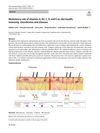
September 2023 in “Pharmacological Reports” In this review, researchers explored the roles of vitamins A, B3, C, D, and E in skin immunity, highlighting their potential as therapeutics for skin diseases due to their antioxidant, anti-inflammatory, and antimicrobial properties.
 17 citations
,
June 2021 in “Molecules”
17 citations
,
June 2021 in “Molecules” This review summarizes the promising role of melatonin combined with nanosized carriers in drug delivery, suggesting enhanced effectiveness in treating various diseases compared to free melatonin.
 9 citations
,
January 2015 in “Springer eBooks”
9 citations
,
January 2015 in “Springer eBooks” This article reviews the diagnostic criteria and management strategies for polycystic ovary syndrome but reports no new clinical findings; it highlights associated health risks and recommended treatments.
 9 citations
,
January 1966 in “Economic botany”
9 citations
,
January 1966 in “Economic botany” Plant-based ingredients in hair care are being replaced by synthetic alternatives.
Surgeons should evaluate new technologies critically, offer a range of services including non-surgical options, and be aware of marketing influences to meet patient needs and maintain a successful practice.
 2 citations
,
August 2020 in “Cosmetics”
2 citations
,
August 2020 in “Cosmetics” This study reported unexpected positive results in two males with androgenetic alopecia using a cyclodextrin-enabled, natural-based formula over 270 days, showing marked hair thickening and reduced scalp hair loss.
 4 citations
,
September 2024 in “Jurnal Pengolahan Hasil Perikanan Indonesia”
4 citations
,
September 2024 in “Jurnal Pengolahan Hasil Perikanan Indonesia” In this study, researchers reported that compounds from Bruguiera gymnorhiza leaves showed anti-inflammatory potential in in silico analyses, with favorable drug properties and specific binding to the IKKβ receptor, suggesting possible development into anti-inflammatory drugs.
 4 citations
,
January 2017 in “Biological & pharmaceutical bulletin”
4 citations
,
January 2017 in “Biological & pharmaceutical bulletin” This study found that inhibiting arachidonate 12-lipoxygenase (ALOX12) may enhance hair cuticle maturation by increasing S100A3 protein citrullination and promoting cuticular differentiation in isolated human hair follicles.
 1 citations
,
May 2017 in “Asian journal of medical sciences”
1 citations
,
May 2017 in “Asian journal of medical sciences” This study found that dietary supplementation with collagen, chondroitin sulfate, low-molecular weight hyaluronic acid, Pycnogenol®, and coenzyme Q10 significantly improved skin hydration, elasticity, nail hardness, and hair condition in patients with age-related dermatological changes after 12 weeks.
 1 citations
,
January 2015 in “Journal of nutrition & health”
1 citations
,
January 2015 in “Journal of nutrition & health” This study suggests that fish oil, specifically its components EPA and DHA, play a beneficial role in promoting skin health by supporting epidermal growth and reducing proinflammatory cytokines.
 January 2002 in “Journal of Toxicology-cutaneous and Ocular Toxicology”
 Botanical extracts are increasingly important in cosmetics and drugs for their effectiveness and safety, backed by traditional use and scientific evidence.
 January 2020 in “Journal of Pharmacognosy and Phytochemistry”
 This study observed that a polyherbal hair oil made from virgin coconut oil and extracts of nine different herbs demonstrated effectiveness in promoting hair growth with a cooling effect and no reported side effects, based on various evaluated properties.
 169 citations
,
June 2010 in “Molecular & cellular proteomics”
169 citations
,
June 2010 in “Molecular & cellular proteomics” This study suggests that ethylene and lignoceric acid (C24:0) may promote cotton fiber and Arabidopsis root hair growth by activating the pectin biosynthesis network.
 65 citations
,
October 2018 in “Frontiers in cellular and infection microbiology”
65 citations
,
October 2018 in “Frontiers in cellular and infection microbiology” This study observed that dandruff in Indian women is associated with a distinct scalp microbiome, including specific bacterial and unknown Malassezia species, with implications for nutrient homeostasis and cell-host adhesion pathways.