 December 2020 in “Skin appendage disorders”
 This discussion highlights the evolving clinical spectrum of lichen planopilaris, noting atypical features and presentations in younger males that suggest potential different pathomechanisms from previously recognized variants.
 January 2018 in “Springer eBooks”
 PDE inhibitors, especially PDE4 inhibitors like apremilast, are effective for certain inflammatory skin conditions but have side effects and can be costly.
 January 2018 in “Springer eBooks”
 Terbinafine is the most effective medicine for fungal nail infections, especially for diabetics and those with weak immune systems.
This source outlines common health issues in weanling gerbils, including skin infections often tied to beta-hemolytic Staphylococcus aureus, and obesity-related conditions like diabetes, as well as respiratory infections and musculoskeletal problems, without detailing specific new study results.
 March 2015 in “Zagazig University Medical Journal”
 The study found that CK15 expression, representing hair follicle stem cell activity, was reduced or absent in scarred primary cicatricial alopecia lesions, suggesting stem cell damage may contribute to the scarring process.
Skin changes throughout life, from development before birth to aging effects like wrinkles, influenced by both genetics and environment.
 March 2011 in “Journal of clinical and experimental investigations”
 This study describes two thallium poisoning outbreaks, highlighting characteristic symptoms like hair loss and peripheral neuropathy, and emphasizes that such poisoning can stem from accidental or criminal ingestion.
 October 1961 in “Archives of Dermatology”
 This report describes a case of dermatitis herpetiformis where symptoms resolved with continuous sulfapyridine therapy after persisting despite other treatments.
 August 2019 in “Journal of The American Academy of Dermatology”
 Platelet-rich plasma helps hair regrowth and improves quality of life in women with hair loss, but minoxidil may be more effective.
 421 citations
,
April 2012 in “The New England Journal of Medicine”
421 citations
,
April 2012 in “The New England Journal of Medicine” Alopecia Areata is an autoimmune condition causing hair loss with no cure and treatments that often don't work well.
 182 citations
,
October 2003 in “British Journal of Dermatology”
182 citations
,
October 2003 in “British Journal of Dermatology” These guidelines for alopecia areata management, prepared by the British Association of Dermatologists, provide evidence-based treatment recommendations and insights into the condition's epidemiology, diagnosis, and investigation.
 151 citations
,
February 2007 in “International Journal of Dermatology”
151 citations
,
February 2007 in “International Journal of Dermatology” This review explores the causes and mechanisms of alopecia areata and discusses current treatments, reporting no new clinical findings.
 123 citations
,
August 2005 in “Journal of the European Academy of Dermatology and Venereology”
123 citations
,
August 2005 in “Journal of the European Academy of Dermatology and Venereology” In this study, the researchers observed that treatment with intralesional and topical corticosteroids, finasteride, and minoxidil may stop the progression of frontal fibrosing alopecia in postmenopausal and premenopausal women.
 114 citations
,
February 2012 in “International Journal of Dermatology”
114 citations
,
February 2012 in “International Journal of Dermatology” This review examines the dermatologic effects of tobacco use and nicotine, noting potential benefits and drawbacks for various skin conditions, but reports no new clinical results.
 96 citations
,
January 1997 in “Clinics in Dermatology”
96 citations
,
January 1997 in “Clinics in Dermatology” This study found that G protein-coupled estrogen receptor enhances melanin synthesis in melanoma cells through cAMP-PKA-MITF-TYR signaling, suggesting its potential as a drug target for chloasma treatment.
 89 citations
,
March 2018 in “The Journal of Dermatology”
89 citations
,
March 2018 in “The Journal of Dermatology” This review presents various trichoscopic findings for diagnosing alopecia areata but reports no new clinical results, emphasizing that no single marker is pathognomonic and multiple features should be considered together.
 73 citations
,
January 2013 in “European journal of dermatology/EJD. European journal of dermatology”
73 citations
,
January 2013 in “European journal of dermatology/EJD. European journal of dermatology” This review examines current research on antioxidants in autoimmune skin diseases like alopecia areata and vitiligo, concluding with suggestions for future studies and treatment possibilities without reporting new clinical results.
 64 citations
,
November 2008 in “Journal of The American Academy of Dermatology”
64 citations
,
November 2008 in “Journal of The American Academy of Dermatology” This study observed that acute diffuse and total alopecia, a subtype of alopecia areata, typically resolves rapidly and spontaneously within about six months, even without treatment, suggesting a favorable prognosis.
 64 citations
,
July 1997 in “Journal of The American Academy of Dermatology”
64 citations
,
July 1997 in “Journal of The American Academy of Dermatology” This study found that eosinophils are a useful diagnostic feature for alopecia areata, especially when the typical "swarm of bees" lymphoid infiltrate is absent, helping differentiate it from trichotillomania.
 63 citations
,
January 2017 in “Annals of Dermatology”
63 citations
,
January 2017 in “Annals of Dermatology” More research is needed to understand alopecia areata severity.
 62 citations
,
June 2015 in “The Journal of Dermatology”
62 citations
,
June 2015 in “The Journal of Dermatology” This study found that patients with alopecia areata had higher levels of Th17 cells and lower levels of regulatory T cells compared to healthy controls, suggesting an immune imbalance in these patients.
 60 citations
,
September 2015 in “Expert Review of Clinical Immunology”
60 citations
,
September 2015 in “Expert Review of Clinical Immunology” This study suggests that CD8+ cytotoxic T lymphocytes play a crucial role in the development of alopecia areata, based on observations in rodent models that mimic human autoimmune disease.
 58 citations
,
January 2018 in “International Journal of Women's Dermatology”
58 citations
,
January 2018 in “International Journal of Women's Dermatology” This review discusses the psychological impact of alopecia on women and reports no new clinical findings, highlighting the effect on self-esteem and quality of life.
 57 citations
,
September 2005 in “International Journal of Dermatology”
57 citations
,
September 2005 in “International Journal of Dermatology” This study reported that chemical relaxants and hair styling practices were associated with scarring hair loss, particularly among women with central centrifugal cicatricial alopecias.
 51 citations
,
June 2016 in “Journal of the European Academy of Dermatology and Venereology”
51 citations
,
June 2016 in “Journal of the European Academy of Dermatology and Venereology” In this study, tofacitinib treatment was associated with significant hair regrowth in two patients with alopecia universalis over eight months, with minimal adverse effects reported.
 50 citations
,
March 2000 in “American Journal of Clinical Dermatology”
50 citations
,
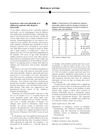
March 2000 in “American Journal of Clinical Dermatology” This article discusses the etiology, clinical features, and treatment of alopecia areata but presents no new clinical findings, underlining the palliative nature of current therapies.
 49 citations
,
March 2017 in “Journal of the American Academy of Dermatology”
49 citations
,
March 2017 in “Journal of the American Academy of Dermatology” This case series found that oral tofacitinib treatment in eight adolescents with alopecia universalis led to significant regrowth of hair, though relapse is likely after stopping therapy.
 48 citations
,
April 2010 in “Journal of the European Academy of Dermatology and Venereology”
48 citations
,
April 2010 in “Journal of the European Academy of Dermatology and Venereology” This article reviews gender differences in skin disorders, highlighting variations in disease prevalence and type between sexes, but reports no new findings, emphasizing potential implications for prevention and treatment strategies.
 39 citations
,
January 2019 in “Journal of the American Academy of Dermatology”
39 citations
,
January 2019 in “Journal of the American Academy of Dermatology” In this study, three children with severe alopecia treated with systemic tofacitinib showed significant hair regrowth, suggesting it may be a potential option for those unresponsive to conventional therapy.
 39 citations
,
January 2011 in “Archives of Dermatology”
39 citations
,
January 2011 in “Archives of Dermatology” This study found that the yellow dot pattern observed in dermoscopy of alopecia areata corresponds to inefficient follicular structures containing hair remnants, as corroborated by reflectance confocal microscopy and pathological findings.