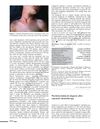
This abstract discusses pellagra as a nutritional disorder characterized by a known set of symptoms but reports no new clinical findings; the authors review existing knowledge and suggest further research.
 45 citations
,
January 1998 in “Dermatology”
45 citations
,
January 1998 in “Dermatology” This review examines acneiform eruptions, often drug-induced, highlighting that they differ from acne vulgaris in causes and characteristics, with no new clinical results reported.
 53 citations
,
May 2001 in “The American journal of the medical sciences”
53 citations
,
May 2001 in “The American journal of the medical sciences” This article reviews common skin eruptions in chemotherapy patients and discusses how recognizing these patterns can help avoid unnecessary changes to cancer treatment; it reports no new clinical results.
 41 citations
,
December 2008 in “Journal of the American Academy of Dermatology”
41 citations
,
December 2008 in “Journal of the American Academy of Dermatology” This review discusses fixed drug eruption (FDE) potentially linked to finasteride and emphasizes dermatologists' need to recognize its possible occurrence due to the drug's widespread use, but reports no new clinical results.
 15 citations
,
March 2021 in “Journal of clinical medicine”
15 citations
,
March 2021 in “Journal of clinical medicine” This review discusses common skin eruptions caused by biologics in treating inflammatory bowel disease and proposes tailored therapeutic approaches for managing these adverse reactions.
19 citations
,
September 2008 in “Journal of Cellular Physiology” This article explores potential mechanisms of acneiform skin eruptions linked to EGFR inhibition in cancer patients, focusing on EGFR's role in controlling IL-1-dependent inflammation at hair follicles, but reports no clinical results.
10 citations
,
August 2016 in “Dermatology Online Journal” This article describes cutaneous reactions including keratosis pilaris-like eruptions in a patient on nilotinib for chronic myelogenous leukemia, emphasizing the importance of accurately classifying such eruptions.
 7 citations
,
February 2006 in “Clinical and Experimental Dermatology”
7 citations
,
February 2006 in “Clinical and Experimental Dermatology” This clinical report details the case of a 22-year-old man experiencing severe pustular eruptions on his chest and back, which improved after increasing minocycline to 100 mg twice daily.
 2 citations
,
April 2018 in “Journal of Investigative Dermatology”
2 citations
,
April 2018 in “Journal of Investigative Dermatology” This case study in a renal transplant patient observed that eruptive KA-type SCCs exhibited aggressive behavior and genetic expression changes following intralesional chemotherapy, indicating potential caution against routine use of such treatments in similar cases.
 January 2016 in “대한피부과학회지”
 This case report describes two patients experiencing a bortezomib-induced skin eruption as multiple plaques on the trunk, with the lesions resolving spontaneously in about a week.
 123 citations
,
September 1987 in “JAMA”
123 citations
,
September 1987 in “JAMA” This study observed that patients receiving IL-2 immunotherapy developed a skin eruption characterized by burning and pruritus, which resolved shortly after stopping the infusion, suggesting that IL-2 mediated these effects.
 17 citations
,
January 2010 in “Acta Dermato Venereologica”
17 citations
,
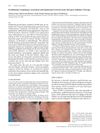
January 2010 in “Acta Dermato Venereologica” This report details a case of a 43-year-old woman developing yellowish papular eruptions alongside typical acneiform skin reactions on her cheeks and chest following a switch from cetuximab to panitumumab treatment.
15 citations
,
January 2006 in “British Journal of Dermatology” This case study reports that the topical application of mometasone furoate ointment successfully reduced eruptions and promoted hair regrowth in a patient with amicrobial pustulosis.
6 citations
,
September 2011 in “Journal of the American Academy of Dermatology” This report describes a case of secondary syphilis with an unusual folliculocentric papular eruption in an HIV-positive patient, underlining the diagnostic challenges and importance of biopsy with treponemal staining in such cases.
6 citations
,
February 1985 in “Archives of Dermatology” This report describes a case where a 23-year-old woman with juvenile rheumatoid arthritis developed generalized ichthyosiform eruption due to sarcoidosis after long-term use of systemic corticosteroids.
1 citations
,
October 2024 in “Indian Dermatology Online Journal” This case report describes a 36-year-old man who developed generalized eruptive histiocytosis on the scalp after undergoing nine platelet-rich plasma treatments for hair loss, likely triggered by injection-related trauma and inflammation.
 November 2022 in “The journal of investigative dermatology/Journal of investigative dermatology”
 This study explores how EGFR signaling impacts skin inflammation and follicular integrity during hair eruption, aiming to identify druggable pathways to mitigate skin inflammation in cancer patients receiving EGFR inhibitors.
 16 citations
,
May 1998 in “International Journal of Dermatology”
16 citations
,
May 1998 in “International Journal of Dermatology” This study found that elevated serum cortisol levels and other immunological changes are significantly involved in the active phases of psoriasis eruptions.
 1 citations
,
November 2020 in “International Journal of Dermatology”
1 citations
,
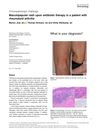
November 2020 in “International Journal of Dermatology” In this case report, the authors suggest that methotrexate-induced rheumatoid papular eruption is a rare side effect of methotrexate, resolved after discontinuation, which may be linked to rheumatic conditions.
 1 citations
,
November 1953 in “Archives of Dermatology”
1 citations
,
November 1953 in “Archives of Dermatology” This case presentation by Dr. Howard Fox describes a persistent skin eruption in a woman following sun exposure and the use of a specific lotion, highlighting diagnostic challenges between Lupus Erythematosus and Erythema Perstans but reports no definitive diagnosis.
February 2026 in “Bioscientia Medicina Journal of Biomedicine and Translational Research” This case report highlights the importance of considering eosinophilic pustular folliculitis in adolescent patients with persistent papulopustular eruptions to avoid misdiagnosis and ensure effective anti-inflammatory treatment.
May 2024 in “JAAD Case Reports” This case report describes a 29-year-old man with a year-long non-itchy skin eruption and hair loss, with distinct papules and plaques across his scalp, beard, body, and suprapubic regions, but no systemic symptoms or family history of autoimmune disease.
169 citations
,
September 2002 in “British journal of dermatology/British journal of dermatology, Supplement” This study reports that ZD1839 (Iressa), an anticancer drug, was associated with acneiform eruptions and hair growth abnormalities due to its inhibition of epidermal growth factor receptor signaling in the skin.
 41 citations
,
June 2013 in “PLOS ONE”
41 citations
,
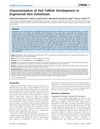
June 2013 in “PLOS ONE” This study demonstrated that engineered skin substitutes using human keratinocytes and murine dermal papilla cells can develop pigmented hairs without sebaceous glands, suggesting separate pathways for hair development and eruption.
 40 citations
,
August 2010 in “Archives of dermatology”
40 citations
,
August 2010 in “Archives of dermatology” This case report describes the youngest known patient with viral-associated trichodysplasia of immunosuppression, where systemic valganciclovir therapy improved facial papule eruptions following cardiac transplantation.
13 citations
,
March 1988 in “Experientia” This study observed that administering anti-EGF serum to newborn mice affected physiological processes, delaying eyelid opening and tooth eruption, accelerating hair growth, and delaying weight gain.
10 citations
,
November 1993 in “Indian Journal of Dermatology Venereology and Leprology” This report observed that a male developed erythema multiforme linked to both topical and oral minoxidil use for androgenetic alopecia, supported by eruption recurrence with reapplication.
10 citations
,
January 1987 in “PubMed” This study found that triiodothyronine and epidermal growth factor differentially affected craniofacial development in neonatal rats, with various impacts on hair growth direction, incisor eruption, and ear and eyelid development.
 6 citations
,
April 2013 in “Current Dermatology Reports”
6 citations
,
April 2013 in “Current Dermatology Reports” This review discusses the cutaneous side effects associated with vemurafenib and ipilimumab in metastatic melanoma treatment and emphasizes the importance of dermatologists in managing these skin eruptions; it reports no new clinical results.
5 citations
,
June 2015 in “The Journal of Dermatology” This study identified "HTLV-1-associated lichenoid dermatitis" as a skin condition in HTLV-1-infected individuals, characterized by reactive eruptions associated with increased immunity toward infected CD4+ T cells.