 February 2024 in “Australasian journal of dermatology”
 This study found that in atrophic acne scars, inflammation infiltrates the pilosebaceous unit over time, affecting resident stem cells and hindering the normal regeneration of the epidermis and adnexal structures, leading to scarring.

This study found that a blend of low- and high-molecular weight hyaluronic acid significantly improved penetration into the hair cortex compared to individual HA types, reducing frizz and increasing hair elasticity and water content, as measured by Confocal Raman Spectroscopy.
 November 2023 in “The journal of investigative dermatology/Journal of investigative dermatology”
 This study reported that adipose stem cell exosomes, combined with microneedling, improved facial skin wrinkles, elasticity, hydration, and pigmentation compared to a placebo, with significant results on the Global Aesthetic Improvement Scale and no serious adverse events noted in treated individuals.
 November 2023 in “Clinical, Cosmetic and Investigational Dermatology”
 This case report identified a maculopapular rash in a 76-year-old male, occurring 2 months after starting Finasteride for prostatic hyperplasia, with clinical and histologic evidence suggesting a drug-induced skin eruption.
 July 2023 in “British journal of dermatology/British journal of dermatology, Supplement”
 This study investigated age-related changes in female scalp dermal fibroblasts, finding alterations in gene and protein expressions associated with fibrosis and senescence, which could potentially affect hair follicle health and contribute to aging-related hair changes.
 September 2022 in “Anais Brasileiros de Dermatologia”
 This case study reports a female adult patient with annular elastolytic giant cell granuloma on the scalp, observed through dermoscopy showing multiple yellowish/orange follicular dots against an erythemato-whitish background.
 September 2022 in “The Egyptian Journal of Hospital Medicine”
 This review article discusses microneedling as a non-surgical treatment option in dermatology, highlighting its benefits for scar improvement through collagen induction and reporting its popularity among practitioners due to its cost-effectiveness and simplicity.
April 2021 in “Indian Journal of Animal Research” This study examined the age-related changes in the dermal structure of goat skin, providing baseline data on its histomorphology, histochemistry, and histoenzymology.
December 2020 in “Han-guk byuti gyeong-yeong hakoeji” This study found that weight control efforts among people in their 20s and 30s were associated with decreased skin moisture, elasticity, and increased hair loss and thinning.
 November 2020 in “INDIAN JOURNAL OF APPLIED RESEARCH”
 This study found that women with alopecia have significantly lower tensile strength in both dry and wet hair samples compared to controls, indicating increased hair breakability.
Microneedling improves the appearance and feel of post-burn scars.
 September 2019 in “Journal of The American Academy of Dermatology”
 This research observed that during the 2 to 4 days following hair transplantation for androgenetic alopecia, patients may develop forehead and upper eyelid edema due to gravitational fluid movement and oozing of inflammatory fluid in the implanted area.
February 2019 in “American International Journal of Humanities Arts and Social Sciences” This histological study of Millivora Capenesis skin describes the composition of the dermis, featuring distinct papillary and reticular layers with associated structures like hair follicles, glands, and corpuscles.
 January 2019 in “Journal of Entomology and Zoology Studies”
 This study observed that in Assam Hill Goats, the primary hair follicles had larger diameters and more structural associations compared to secondary follicles, especially in ruminant-age groups.
September 2018 in “Digital Access to Scholarship at Harvard (DASH) (Harvard University)” In this study, FN-based fiber scaffolds designed using Rotary Jet-Spinning were shown to enhance wound healing and reduce scar formation in a mouse model, suggesting potential for regenerating healthy skin structure.
April 2017 in “The Journal of urology/The journal of urology” This study found that Sonic Hedgehog protein treatment enhanced the sprouting and regeneration of pelvic ganglia and cavernous nerves after injury, with localization of delivery affecting outcomes.
April 2017 in “The Journal of urology/The journal of urology” This study observed that both dutasteride and finasteride affected penile morphology in normotensive and hypertensive rats, with more pronounced changes in hypertensive animals, especially when treated with dutasteride.
This study suggests that pseudopelade may be an autonomous disease based on its distinctive clinical and histopathological features not present in other scarring alopecias.
In this study, the relaxed overhand knot method demonstrated its effectiveness in measuring the self-friction coefficient of single hair fibers, revealing that sodium hydroxide treatment significantly increases friction and could aid microsurgical applications.
September 2016 in “Ege tıp dergisi/Ege tıp dergisi :” In this case report, an 11-year-old girl was diagnosed with lipedematous scalp, a condition typically observed in adult women, based on clinical features and histopathological findings.
June 2016 in “한국디자인문화학회지” This study found that ultraviolet A rays damage all hair types, with stronger adverse effects on colored and permanently waved hair, suggesting the use of sunblock products for hair protection.
January 2015 in “Chinese Veterinary Science” This study observed distinct changes in the ultrastructure of Hexi cashmere goat hair follicles throughout the year, highlighting stages with specific cellular and structural characteristics.
 January 2013 in “Hair transplant forum international”
 This article discusses the role of hair restoration surgeons in balancing various aspects of their practice, but it reports no new results.
 April 2012 in “Informa Healthcare eBooks”
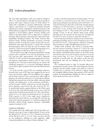
 Lichen planopilaris is a rare, chronic condition causing hair loss, mainly in middle-aged women, and early treatment is important to prevent permanent baldness.
January 2011 in “Leather Science and Engineering” This study found that rabbit skin histology revealed changes in collagen and elastic fibers after soaking, dehairing, and tanning processes, impacting fiber tightness and fur removal.
 January 2005 in “Seibutsu Butsuri/Seibutsu butsuri”
 Chemical treatments damage hair more than UV exposure, making it thinner and less flexible.
January 2005 in “Journal of Zhejiang University(Sciences Edition)” This study observed that Yuyi hairless mice develop alopecia shortly after birth, with the skin eventually thickening and forming folds, and hair failing to regrow as they age.
January 2003 in “Jiepouxue zazhi” This study found that human hair keratin can serve as a matrix for skin structure restoration, as observed in rats where the graft was replaced by newly formed collagenous fibers over six weeks.
This study found that anti-keratin antibody from immunized cow milk increases the resistance of damaged hair to stretching and inhibits fracture from excessive brushing.
August 1969 in “Archives of Dermatology” In this study, the authors reported that in rat skin affected by localized calciphylaxis, although regeneration occurs and some connective tissue remains, the regenerate resembles scar tissue with reduced hair presence and lacks restored elastic fibers.