 January 2015 in “Journal of Cytology and Histology”
 This study suggests that follicular stem cells in the bulge region are not directly targeted in androgenetic alopecia, based on the consistent presence of cytokeratin 15 across scalp samples from affected patients.
 7 citations
,
May 2010 in “Journal of Dermatological Treatment”
7 citations
,
May 2010 in “Journal of Dermatological Treatment” This case report describes a patient with various conditions, including ulcerative colitis and azathioprine-induced liver injury, and reviews related literature on these coexisting conditions.
 6 citations
,
September 2022 in “Frontiers in pharmacology”
6 citations
,
September 2022 in “Frontiers in pharmacology” In this study, Epimedii Folium extract was found to enhance melanin production and promote pigmentation through mechanisms involving the MAPK/ERK1/2 pathway in both in vitro and in vivo models.
 4 citations
,
December 2024 in “Clinical Cosmetic and Investigational Dermatology”
4 citations
,
December 2024 in “Clinical Cosmetic and Investigational Dermatology” This study suggests that combining baricitinib with narrowband UV-B therapy is an effective and well-tolerated approach for treating active nonsegmental vitiligo.
 January 2026 in “Indian Journal of Plastic Surgery”
 This study evaluated nonculture epidermal suspension for stable vitiligo and found it to be effective, with 68% mean repigmentation and 43.1% of patients achieving excellent results; it showed sustained benefits over long-term follow-up and was generally safe with minor adverse events in 13.7% of participants.
 December 2025 in “Cosmoderma”
 This study reviewed evidence suggesting that systemic corticosteroids, particularly in pulse regimens like dexamethasone and betamethasone oral mini-pulse, effectively slow vitiligo progression and support repigmentation, while offering a favorable safety profile compared to continuous therapy.
 February 2024 in “International Journal of Research in Dermatology”
 In this study, researchers examined thyroid function and autoantibody levels in patients with alopecia areata and vitiligo, finding similar rates of thyroid dysfunction and autoantibody presence in both groups, with no significant differences based on ethnicity or gender.
 January 2023 in “Journal of Cutaneous and Aesthetic Surgery”
 In this case report, follicular unit extraction successfully treated stable segmental vitiligo in the inguinoscrotal region.
 April 2017 in “Our Dermatology Online”
 This case study identified a 22-year-old patient with multiple autoimmune syndrome type 3, involving lupus erythematosus, autoimmune thyroiditis, alopecia areata, and vitiligo.
 84 citations
,
April 2005 in “Dermatologic Clinics”
84 citations
,
April 2005 in “Dermatologic Clinics” Treatments for melanin disorders exist, but more effective options needed.
 17 citations
,
March 2018 in “Pediatric dermatology”
17 citations
,
March 2018 in “Pediatric dermatology” This study suggests that hydroxychloroquine may benefit some children with alopecia areata, as five out of nine patients showed improvement, although side effects like gastrointestinal intolerance and headache were noted.
 June 2026 in “Research Square”
 This report on a case of alopecia areata in a mother and daughter with a 16-year gap suggests genetic predisposition and environmental triggers rather than direct transmission.
 21 citations
,
January 2019 in “Experimental dermatology”
21 citations
,
January 2019 in “Experimental dermatology” This review explores how low-energy He-Ne laser therapy may stimulate repigmentation in vitiligo by affecting mitochondrial pathways and melanocyte function, but does not report new clinical results.
 74 citations
,
March 2001 in “Seminars in Cutaneous Medicine and Surgery”
74 citations
,
March 2001 in “Seminars in Cutaneous Medicine and Surgery” This review summarizes the cutaneous manifestations of lupus erythematosus, noting both non-specific and disease-specific lesions, and highlights the role of skin biopsies and treatments available for cutaneous LE.
 41 citations
,
March 2010 in “Psychology Research and Behavior Management”
41 citations
,
March 2010 in “Psychology Research and Behavior Management” This review discusses the complex interplay between the nervous system and skin conditions, highlighting various treatment strategies, but reports no new research findings.
 36 citations
,
April 2014 in “Experimental Dermatology”
36 citations
,
April 2014 in “Experimental Dermatology” This article discusses the need for a personalized and stratified therapeutic approach for vitiligo, utilizing current knowledge and expertise, but it does not report new clinical results.
 27 citations
,
July 2017 in “European Journal of Dermatology”
27 citations
,
July 2017 in “European Journal of Dermatology” This article reviews the role of microRNAs as epigenetic modulators in dermatology but reports no new clinical findings.
 25 citations
,
January 2005 in “Pediatric Dermatology”
25 citations
,
January 2005 in “Pediatric Dermatology” This article discusses the use of methotrexate for treating generalized pustular psoriasis in a 2-year-old child, providing a specific case study but reporting no new clinical results.
 19 citations
,
July 2007 in “Dermatologic clinics”
19 citations
,
July 2007 in “Dermatologic clinics” This paper discusses the need for a standardized classification and meta-analysis of treatments for hypopigmented disorders and reports no new clinical results.
 17 citations
,
January 2011 in “The Korean Journal of Hepatology”
17 citations
,
January 2011 in “The Korean Journal of Hepatology” This case report details an occurrence of Vogt-Koyanagi-Harada disease during pegylated interferon-α2b and ribavirin therapy for chronic hepatitis C.
 16 citations
,
January 2005 in “Pediatric Dermatology”
16 citations
,
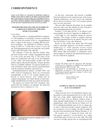
January 2005 in “Pediatric Dermatology” This brief report describes a case of Fox-Fordyce disease in a prepubertal girl but reports no new clinical findings.
 14 citations
,
May 2019 in “Experimental Dermatology”
14 citations
,
May 2019 in “Experimental Dermatology” In this study, adipose tissue secretome was shown to enhance oxidative stress resistance and promote cell proliferation in vitiligo cells, suggesting a potential natural treatment approach.
 14 citations
,
January 2005 in “Pediatric Dermatology”
14 citations
,
January 2005 in “Pediatric Dermatology” This case report describes a child with hypopigmented mycosis fungoides successfully treated with UVA1 light therapy.
 12 citations
,
January 2005 in “Pediatric Dermatology”
12 citations
,
January 2005 in “Pediatric Dermatology” Fox Fordyce disease might be more common in prepubertal girls than thought and can be managed with treatment.
 10 citations
,
August 2016 in “Anais brasileiros de dermatologia/Anais Brasileiros de Dermatologia”
10 citations
,
August 2016 in “Anais brasileiros de dermatologia/Anais Brasileiros de Dermatologia” This study found that nail abnormalities, particularly longitudinal ridging, were more frequent in vitiligo patients (78%) compared to healthy controls (55%).
 9 citations
,
November 2017 in “Journal of Glaucoma”
9 citations
,
November 2017 in “Journal of Glaucoma” This case report documents a patient experiencing paradoxical depigmentation of the periocular skin after one year of using latanoprost, a finding not previously associated with this medication.
 9 citations
,
January 2005 in “Pediatric Dermatology”
9 citations
,
January 2005 in “Pediatric Dermatology” This report details the clinical presentation and management of cutaneous mastocytosis in Indian children and provides no new experimental findings.
 7 citations
,
June 2019 in “Fayoum University Medical Journal/Fayoum University Medical Journal ”
7 citations
,
June 2019 in “Fayoum University Medical Journal/Fayoum University Medical Journal ” In this study, researchers aimed to investigate the effects of injecting intralesional platelet-rich plasma and vitamin D in patients with vitiligo, focusing on their potential to induce skin pigmentation. Results are not reported in the abstract.
 6 citations
,
July 2009 in “Veterinary dermatology”
6 citations
,
July 2009 in “Veterinary dermatology” This study found that macroscopic vesiculobullous lesions with epidermal devitalization in dogs are part of the clinical spectrum of canine cutaneous epitheliotropic T-cell lymphoma.
 5 citations
,
February 2010 in “Expert Review of Dermatology”
5 citations
,
February 2010 in “Expert Review of Dermatology” This article reviews the interconnectedness of the skin and nervous system and discusses various treatment options for psychophysiological skin disorders, reporting no new clinical results.