 December 2023 in “Frontiers in pharmacology”
 In this study, intrathecal progesterone administration initially worsened mechanical allodynia in mice after nerve injury, but later reduced pain when applied during the maintenance phase, highlighting distinct roles for cytochrome P450c17 and 5α-reductase in neuropathic pain modulation.
 September 2023 in “Family practice”
 This study found that among 52 classification tools on the Clinical Knowledge Summaries website, 46% lacked strong guidance for their use in managing conditions, suggesting that nearly half of the tools may not be useful for clinical decision-making.
This case study highlights a 38-year-old woman with lichen planopilaris experiencing gingival hypertrophy linked to high serum cyclosporine levels and relevant dosage, which improved after reducing the cyclosporine dose.
 July 2023 in “Research Square (Research Square)”
 In this study conducted on rabbits, conventional blood treated with 120% sodium citrate was observed to achieve the highest platelet recovery and enrichment coefficient, while altering sodium citrate concentrate affected levels of growth factors PDGF and TGF-β1 after plasma activation.

In this study, Korean patients with systemic lupus erythematosus reported worse perceptions and higher adverse events with the COVID-19 vaccine compared to the influenza vaccine.

This study identified that transgender patients face barriers in accessing oral healthcare, including discrimination and harassment, leading to increased stress, poorer oral health, and a diminished quality of life related to oral health.
 January 2023 in “PARIPEX INDIAN JOURNAL OF RESEARCH”
 This article discusses various causes of rickets in children and describes VDDR-2A as a type of refractory rickets often linked to alopecia totalis in infancy, but reports no new clinical findings.
 November 2022 in “CARDIOMETRY”
 This article discusses the potential benefits of GcMAF and oral MAF, developed by "Saisei Mirai", for cancer and other conditions, but reports no new clinical results.
 January 2022 in “International journal of Ayurveda and pharma research”
 This review discusses the Ayurvedic perspective on premature graying of hair (Akala Palitam) and reports no new clinical results, emphasizing the need for understanding its etio-pathogenesis for effective management.
 October 2021 in “Meditsinskiy sovet = Medical Council”
 This study found that cyproterone acetate treatment improved quality of life and reduced anxiety and depressive symptoms in women with skin manifestations of hyperandrogenism.
 June 2020 in “Acta Scientific Otolaryngology”
 This case study presents a patient with male-pattern alopecia who received PRP treatment with calcium chloride after ruling out other potential causes.

This dissertation describes using skull bone for upper jaw reconstruction, leading to less pain and the possibility of immediate implant placement compared to traditional methods.

This study reported that topical calcipotriol led to complete scalp hair regrowth in three patients with alopecia totalis, with no relapse observed for 6 months post-treatment.
 August 2019 in “International journal of contemporary pediatrics”
 This case study reports that a 3 ½ year-old male with vitamin D-dependent type II rickets showed partial improvement in alopecia and rickets when treated with high doses of 1,25(OH)2 vitamin D3.
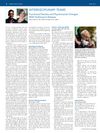
The interdisciplinary approach improved the quality of life for a Parkinson's patient and eased staff workload.
 July 2018 in “Benha Journal of Applied Sciences”
 In this study, researchers found that patients with alopecia areata had significantly higher levels of miR-203 in their skin compared to healthy controls.
 May 2018 in “Academic Medicine”
 This article reflects on the significant psychosocial effects of hair loss, emphasizing its impact on identity and urging medical professionals to treat it as a serious concern.
 February 2018 in “Dermatologic Surgery”
 This study found that nonshaven follicular unit extraction is an effective method for pubic hair restoration in women with pubic atrichosis or hypotrichosis, based on high satisfaction scores from both patients and the surgeon.

This chapter reviews various fungal skin diseases affecting cattle but does not report new research findings; it focuses on rare, inherited, and congenital conditions like follicular dysplasia and cutaneous asthenia.
 April 2017 in “The journal of investigative dermatology/Journal of investigative dermatology”
 This study observed that mice lacking epidermal HSD11b1 had increased non-histaminergic itch and changes in skin nerve fibers, potentially linked to higher TSLP expression.
 April 2017 in “Journal of Aesthetic Nursing”
 This editorial in the Journal of Aesthetic Nursing discusses the rise in unethical practices in the medical aesthetics field, particularly by non-health professionals offering high-level cosmetic procedures, and calls for experienced practitioners to voice their concerns in person to influence regulatory practices.
 January 2017 in “Elsevier eBooks”
 Sex hormones affect reproduction, sexual development, and oral health, and it's important for dental practitioners to understand their effects and interactions.
 December 2016 in “British Journal of Dermatology”
 The meeting highlighted the importance of genetic testing and multidisciplinary approaches in pediatric dermatology.
 May 2016 in “Cambridge University Press eBooks”
 Eating disorders are serious, often undiagnosed conditions requiring early treatment, with anorexia being the most deadly and binge-eating the most treatable.
 December 2015 in “Vascular Pharmacology”
 Hair papilla cells are crucial for blood vessel development in hair follicles, affecting hair growth and loss.

This study evaluated the accuracy of the HairCheck device, a cross-section trichometer, and concluded that it effectively measures changes in hair diameter and density for assessing alopecia progression and treatment response.
 February 2013 in “Journal of the American Academy of Dermatology”
 This study found that certain polymorphisms in EGF and EGFR genes may increase susceptibility to alopecia areata in the Korean population, and these genetic variations could be associated with specific symptoms such as nail involvement and body hair loss.
 February 2013 in “Journal of the American Academy of Dermatology”
 In this study, the HairCheck device was reported to accurately assess changes in hair density and diameter, suggesting its usefulness in monitoring alopecia progression and treatment response.
Men with both baldness and scalp psoriasis often don't have psoriasis on bald spots.
 January 2007 in “Journal of the American Academy of Dermatology”
 A 73-year-old man's grey-white hair turned dark brown after eczema treatment.