35 citations
,
February 2024 in “Science Advances” This study introduces a magnet-assisted fabrication strategy for creating complex 3D soft bioscaffolds, demonstrating its effectiveness by producing structures with overhangs and supporting biohybrid actuators, promising advancements in biomedical applications.
 10 citations
,
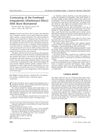
May 2012 in “Journal of Craniofacial Surgery”
10 citations
,
May 2012 in “Journal of Craniofacial Surgery” This case report describes a successful frontal region reconstruction using Cerament for a 50-year-old man, resulting in satisfactory forehead morphology and improved appearance four years post-surgery.
3 citations
,
July 2025 in “Acta Biomaterialia” In this study, AFM-based indentation was used to assess mechanical properties of murine skin wounds at two healing stages, revealing that early wounds exhibit stiffer hyperproliferative epithelium compared to granulation tissue, and highlighting significant influences of surface roughness on tissue stiffness measurements.
2 citations
,
July 2019 in “Cosmetics” This study identified a unique concentric double-layered structure in both Japanese and Caucasian SHINAYAKA hair, associated with improved flexibility and elasticity, and developed a succinic acid treatment to enhance these properties.
November 2025 in “Journal of Investigative Dermatology” Mesenchymal stiffness affects sweat gland cell development.
4 citations
,
December 2018 in “Zenodo (CERN European Organization for Nuclear Research)” This study reports that in vitro experiments suggest biomagnetic cross-talk between red blood cells and human hairs as a potential factor influencing RBC deformation.
 16 citations
,
December 2016 in “Dermatologic Surgery”
16 citations
,
December 2016 in “Dermatologic Surgery” This study observed that donor strip scar width after hair transplantation was correlated with preoperative scalp laxity and elasticity but not with glidability.
 28 citations
,
May 1998 in “Skin Research and Technology”
28 citations
,
May 1998 in “Skin Research and Technology” This study characterized the stress-strain properties of the human scalp and found that its stiffness increases significantly with load, providing valuable insights for planning scalp surgery procedures.
This study found that human hair exhibits significant deformation in its intermediate filaments under strain, with recovery taking about 1000 minutes, suggesting a self-healing period post-mechanical stress. Additionally, cuticle scales deform much less than the cortex, and the Poisson ratio aligns with soft matter properties.
July 2026 in “Journal of Investigative Dermatology” Tissue stiffness affects sweat gland development by guiding cell differentiation through specific signals.
 1 citations
,
July 2017 in “Hair transplant forum international”
1 citations
,
July 2017 in “Hair transplant forum international” This abstract discusses the importance of thoroughly evaluating donor area characteristics like hair density and scalp elasticity in planning hair transplantation, but it reports no new research findings.
81 citations
,
December 2007 in “Acta materialia” This study conducted in situ tensile loading experiments with atomic force microscopy to observe how conditioning treatments affect the tensile response of virgin, chemically damaged, and mechanically damaged Caucasian hair.
136 citations
,
September 2019 in “Journal of Clinical Investigation” This study found that mature dermal adipocytes have high plasticity, undergoing dedifferentiation and redifferentiation, which plays a significant role in hair cycling and wound healing.
The researchers reported that yak hair fibers undergo macromolecular conformational changes and partial slippage of macromolecules during stretching, confirming this as the main stretching mechanism when the stretching ratio is large.
 December 2018 in “International Journal of Research -GRANTHAALAYAH”
 This study reports that pulsed biomagnetic fields may play a role in the deformation of red blood cells by facilitating cross-talk between RBCs and human hairs in vitro.
 September 2004 in “Atlas of the Oral and Maxillofacial Surgery Clinics”
 This article provides an overview of hair restoration surgery options and applications for cosmetic and reconstructive hair deformity treatment and reports no clinical results.
31 citations
,
August 2023 in “ACS Applied Bio Materials” This study developed granular hydrogels with reversible interparticle cross-linking, finding they offer high mechanical stability and enhance cell recruitment, making them promising for injectable and 3D printable scaffolds in tissue engineering and therapeutic delivery.
 7 citations
,
October 1963 in “Textile Research Journal”
7 citations
,
October 1963 in “Textile Research Journal” Merino wool fibers change shape with moisture, while human hair shape stays the same.
 34 citations
,
October 1982 in “Journal of applied polymer science”
34 citations
,
October 1982 in “Journal of applied polymer science” This study found that the moisture content of human hair significantly influences the type of fracture under tensile loading, with low or high humidity levels leading to smooth fractures and intermediate humidity resulting in step fractures.
 June 2002 in “Surgery (oxford)”
 This review discusses the post-burn deformities seen after healing from acute burns and emphasizes the need for integrated, multidisciplinary management to prevent these sequelae; it reports no new clinical results.
October 2024 in “Acta Biomaterialia” This study introduced a novel method that uses upright structured illumination microscopy and atomic force microscopy to map the mechanical properties of thick living tissue slices, revealing the intricate mechanical heterogeneity of mouse skin and effects of preservation techniques on tissue stiffness.
4 citations
,
December 2018 in “International Journal of Research -GRANTHAALAYAH” This study reports that in vitro experiments suggest a new biomagnetic cross-talk between red blood cells and human hair could be a factor in red blood cell deformation.
This study found that in both rodents and humans, knee laxity increased at certain phases of the reproductive cycle due to sex-steroid influence, particularly under high levels of estrogen and progesterone.
 34 citations
,
March 2011 in “Plastic and Reconstructive Surgery”
34 citations
,
March 2011 in “Plastic and Reconstructive Surgery” This study found that custom alloplastic implants achieved a 95% success rate in reconstructing large cranial defects from warfare-related injuries, but frontal defects near airways and orbits showed higher infection and implant removal rates.
 1 citations
,
November 2022 in “Pharmaceutical research”
1 citations
,
November 2022 in “Pharmaceutical research” In this study, the authors found that applying hypobaric pressure to the skin significantly increases the transdermal permeation of large molecules by enhancing diffusion, despite the associated skin stretching and hair follicle enlargement not fully explaining this effect.
13 citations
,
September 2021 in “Frontiers in Cell and Developmental Biology” This study found that suspension culture was more effective than hydrogel-based systems for maintaining spheroid morphology and differentiation of human iPSC-derived definitive endoderm cells.
2 citations
,
April 2019 in “Experimental Dermatology” This study observed that applying a pulling force to hair follicles led to significant compression of nuclei in certain cell layers and distinct collagen changes at different follicle depths.
22 citations
,
January 1985 This study observed that hair cuticles experience greater water-induced plasticization than hair cortex, affecting the torsional rigidity of hair fibers, which may help predict hair setting behavior.
 4 citations
,
April 2019 in “Cosmetics”
4 citations
,
April 2019 in “Cosmetics” In this study, the bending stiffness of human hair was linked to the varying proportions of para-like versus ortho-like cortical cells within the hair fiber.
This chapter reviews secondary soft tissue revision surgeries for residual defects in patients with orofacial clefts, highlighting the various aesthetic issues and their surgical management after reaching skeletal maturity.