2 citations
,
June 2024 in “Advanced Healthcare Materials” In this study, researchers highlighted the integration of computational technology with nanozyme research, enabling atomic-level kinetic analysis and improved design and synthesis of nanozymes, while enhancing detection methods through automated, accurate, and reproducible analyses.
 August 2025 in “MedScien”
 This study explores the design of responsive drug carriers based on the tumor microenvironment to improve targeting and reduce side effects in cancer treatment, using a model of delivering curcumin with a responsive polymer carrier and evaluating potential errors due to cancer cell heterogeneity.
 January 2024 in “Wiadomości Lekarskie”
 This paper reviews the development and implementation of CAR-T cell therapy as a significant advancement in treating pediatric hematological malignancies, particularly for children with relapsed or chemotherapy-resistant acute lymphoblastic leukemia, offering renewed remission prospects where conventional methods are ineffective.
3 citations
,
June 2024 in “Pharmacia” In this study, isatin-gallate hybrids were synthesized and assessed, with compound 3b showing significant in vitro antioxidant and cytotoxic activities, and the series displaying moderate efficacy in inhibiting coronavirus activity through in silico analysis.
 1 citations
,
October 2022 in “Molecular therapy”
1 citations
,
October 2022 in “Molecular therapy” This study found that betibeglogene autotemcel significantly improved transfusion independence in 89% of patients with transfusion-dependent beta-thalassemia, although the high cost and manufacturing challenges may limit widespread adoption.
 9 citations
,
February 2012 in “Cancer Chemotherapy and Pharmacology”
9 citations
,
February 2012 in “Cancer Chemotherapy and Pharmacology” The combination of gemcitabine and vinorelbine is effective and safe for treating elderly patients with advanced breast cancer previously treated with anthracyclines and taxanes.
 107 citations
,
December 2003 in “Dermatologic Therapy”
107 citations
,
December 2003 in “Dermatologic Therapy” This paper reviews the use of interferons, particularly alfa interferon, in treating cutaneous T-cell lymphoma, noting its substantial efficacy both alone and in combination therapies with predictable, generally well-tolerated side effects.
 14 citations
,
February 2023 in “Frontiers in immunology”
14 citations
,
February 2023 in “Frontiers in immunology” This review discusses the range of cutaneous immune-related adverse events induced by immune checkpoint inhibitors and the proposed mechanisms underlying these skin reactions, but reports no new clinical results.
3 citations
,
April 2021 in “Oncology Times” This study reports that sacituzumab govitecan achieved a 33.3% overall response rate in patients with metastatic triple-negative breast cancer who had prior treatments, with a median response duration of 7.7 months.

This study demonstrated that de novo designed bifunctional proteins can target and degrade BCL-xL, leading to cell apoptosis, suggesting a new approach to targeted protein degradation therapy.
 3 citations
,
January 2019 in “Bulgarian Journal of Veterinary Medicine”
3 citations
,
January 2019 in “Bulgarian Journal of Veterinary Medicine” This case study describes a cat co-infected with Demodex cati and feline immunodeficiency virus, showing initial treatment improvement followed by disease recurrence and eventual euthanasia.
 June 2022 in “Scientific Reports”
 This study found that prevelex coatings on microwell array devices enhanced the formation of uniform cell spheroids and enabled the development of hair follicles in tissue engineering applications.
 39 citations
,
October 2014 in “Schweizerische medizinische Wochenschrift”
39 citations
,
October 2014 in “Schweizerische medizinische Wochenschrift” This study found that while cyclophosphamide remains effective for severe autoimmune conditions, it is associated with gastrointestinal side effects, infections, some cases of irreversible amenorrhoea, and a higher risk of malignancies, emphasizing the need for long-term monitoring.
 January 2026 in “Nanoscale Advances”
 In this study, a biocompatible zinc oxide nanocomposite loaded with the anticancer drug 9-Br-Nos demonstrated effective drug delivery and cytotoxicity against lung cancer cells in vitro, while also proving non-toxic to healthy cells, suggesting its potential for targeted lung cancer treatment.
 35 citations
,
May 2008 in “Journal of Clinical Oncology”
35 citations
,
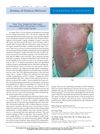
May 2008 in “Journal of Clinical Oncology” A cancer patient died from a severe skin reaction after taking the drug cetuximab.
4 citations
,
July 2025 in “Frontiers in Pharmacology” This study found that cooling combined with antioxidants can improve scalp cooling effectiveness in preventing chemotherapy-induced alopecia by maintaining hair follicle viability and function.
14 citations
,
February 2011 in “Experimental dermatology” This study identifies cartilage oligomeric matrix protein (COMP) as a key extracellular matrix component in human hair follicle cycling, potentially regulated by TGFβ signaling, and suggests its importance in normal hair follicle biology.
April 2014 in “Zhonghua shiyan waike zazhi” This study found that follicular unit-like wigs made from a polycaprolactone matrix exhibited good histocompatibility in New Zealand white rabbits, with reduced inflammatory cell infiltration compared to a polypropylene matrix.
6 citations
,
March 2022 in “Actas Dermo-Sifiliográficas” This review discusses the characteristics and management of cutaneous immune-related adverse events from immune checkpoint inhibitors and notes their potential association with a favorable cancer treatment response.
54 citations
,
January 2021 in “Biophysics Reports” This review highlights the current progress and application pros and cons of various cell-based screening platforms in drug discovery, discussing challenges and potential improvements for these innovative methods.
 April 2026 in “Zenodo (CERN European Organization for Nuclear Research)”
 This study found that cationic surfactant-based conditioning systems significantly improve hair combability by forming a stable low-friction film on hair surfaces, reducing friction and enhancing sensory performance compared to standard systems, as confirmed by both instrumental and sensory evaluations.
8 citations
,
November 2025 in “Journal of Translational Medicine” This review highlights challenges in developing drugs targeting the Wnt/β-Catenin signaling pathway for cancer due to its complexity and essential roles in normal tissue. It explores targeted protein degradation technology as a promising strategy to overcome these challenges, suggesting potential new avenues for drug development.
2 citations
,
November 2022 in “bioRxiv (Cold Spring Harbor Laboratory)” This study found that metabolic adaptations in skin epithelial stem cells, specifically redox ratio recovery and glycolytic flux modulation, define competitive outcomes between wild-type and mutant cells in different oncogenic environments.
2 citations
,
November 2025 in “Pharmaceutics” This review explores the potential of cell-mediated drug delivery systems in dermatology, highlighting their ability to target inflamed or diseased skin while discussing applications in diseases like atopic dermatitis and melanoma, along with challenges such as immunogenicity and manufacturing.
16 citations
,
April 2000 in “Journal of Investigative Dermatology” The study reports that the AVET system showed higher efficiency in transfecting cultured human keratinocytes compared to SuperFect and PrimeFector, with AVET reaching levels of enzyme activity similar to normal cells in keratinocytes from lamellar ichthyosis patients.
 September 2025 in “Experimental & Molecular Medicine”
 This study observed that the small molecules KY19382 and KY19334 inhibited cancerous traits in human cutaneous squamous cell carcinoma cells by suppressing the Wnt/β-catenin pathway, indicating their potential as treatments for cancers involving CDK1 overexpression and diseases related to CXXC5 accumulation.
 2 citations
,
December 2024 in “Bulletin of Rehabilitation Medicine”
2 citations
,
December 2024 in “Bulletin of Rehabilitation Medicine” In this study, chitosan glycolate sponges demonstrated the highest cell survival rates and blood absorption, highlighting their potential as hemostatic materials, whereas chitosan ascorbate sponges inhibited cell growth and metabolic activity, indicating further development is needed.
 139 citations
,
February 2010 in “The journal of allergy and clinical immunology/Journal of allergy and clinical immunology/The journal of allergy and clinical immunology”
139 citations
,
February 2010 in “The journal of allergy and clinical immunology/Journal of allergy and clinical immunology/The journal of allergy and clinical immunology” This review outlines the advancements in organ and tissue transplantation since the discovery of the human MHC and reports no new clinical results.
 8 citations
,
January 2023 in “RSC Advances”
8 citations
,
January 2023 in “RSC Advances” This article reviews advancements in carbon dots for tissue engineering and regenerative medicine, highlighting challenges and future directions without presenting new clinical findings.
7 citations
,
March 2025 in “Cytotechnology”