 April 2018 in “The journal of investigative dermatology/Journal of investigative dermatology”
 This phase 2a trial evaluated Samcyprone for common wart treatment and found that while a sensitization reaction is necessary for therapeutic response, its level does not predict wart clearance.
 April 2018 in “The journal of investigative dermatology/Journal of investigative dermatology”
 This study found that treating human skin explants with TPA increased the number of certain melanocyte phenotypes in the interfollicular epidermis, suggesting that this ex vivo model can effectively replicate human skin's pharmacologic responses for studying potential treatments.

In this study, botulinum toxin type A injections reduced the severity of treatment-resistant scalp psoriasis in more patients compared to placebo over a 12-week period.
 January 2018 in “Springer eBooks”
 PDE inhibitors, especially PDE4 inhibitors like apremilast, are effective for certain inflammatory skin conditions but have side effects and can be costly.
 December 2017 in “The journal of investigative dermatology. Symposium proceedings/The Journal of investigative dermatology symposium proceedings”
 This article reviews the role of the National Alopecia Areata Foundation in promoting research and collaboration to find treatments or a cure for alopecia areata and reports no clinical results.

This chapter reviews the presence and roles of stem cells in various body systems, focusing on their lifelong function in animals and humans, and reports no new experimental findings.
 April 2017 in “The journal of investigative dermatology/Journal of investigative dermatology”
 This study observed that mice lacking epidermal HSD11b1 had increased non-histaminergic itch and changes in skin nerve fibers, potentially linked to higher TSLP expression.
 January 2017 in “Springer eBooks”
 This article reviews the classification, pathogenesis, and treatment options for cutaneous lupus erythematosus and reports no new clinical findings.
 January 2017 in “Rasayan journal of Chemistry”
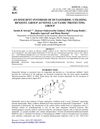
 This paper describes a new scalable synthesis method for Dutasteride, highlighting its potential for large-scale commercial production.
 April 2016 in “Plastic and reconstructive surgery. Global open”
 This article lists online educational resources from the American Society of Plastic Surgeons but reports no new research findings.
 April 2016 in “Plastic and reconstructive surgery. Global open”
 This abstract catalogs resources from the American Society of Plastic Surgeons but presents no research findings.
 January 2016 in “Human & Experimental Toxicology”
 This study reported that CCT oligodeoxynucleotide induced patchy hair loss in male mice with specific genetic traits, suggesting gender and genetic preferences in immune response.
 January 2016 in “Springer eBooks”
 New materials and methods could improve skin healing and reduce scarring.
 January 2016 in “Research Explorer (The University of Manchester)”
 Activating the Eda/Edar pathway improves wound healing by enhancing hair follicle growth.
 December 2015 in “Vascular Pharmacology”
 Hair papilla cells are crucial for blood vessel development in hair follicles, affecting hair growth and loss.
 November 2015 in “European Journal of Inflammation”
 This review discusses the potential pathogenic mechanisms of cicatricial alopecia and emphasizes the need for further research on treatment methods, but it reports no new clinical findings.

In this study, researchers found that alopecia areata is linked to immune cell activation against hair follicle autoantigens and is associated with heart changes and cardiac marker alterations in humans and mice.
 January 2014 in “Journal of Investigative Dermatology”
 Proteins like aPKC and PDGF-AA, substances like adenosine and ATP, and adipose-derived stem cells all play important roles in hair growth and health, and could potentially be used to treat hair loss and skin conditions.
 December 2013 in “The journal of investigative dermatology. Symposium proceedings/The Journal of investigative dermatology symposium proceedings”
 This article reviews the National Alopecia Areata Foundation's biennial research summits, aimed at advancing treatment development for alopecia areata, and reports no new results.
 December 2013 in “Research Portal (King's College London)”
 This article discusses the anatomical and biological aspects of hair follicle stem cells in the bulge region but reports no new research findings.
 June 2013 in “Revista cubana de plantas medicinales”
 This study found that Sida cordifolia collected in Colombia is a good source of steroidal saponins, which may contribute to its antioxidant and antifungal properties.

This study found that compounds isolated from Indian medicinal plants showed good to moderate hair growth activity in vivo compared to minoxidil.

This study reported that high cholesterol levels were linked to increased prostate cancer risk, while selenium supplementation affected gene expression, suggesting nutritional and clinical factors might influence prostate cancer risk and biology.
 January 2011 in “International Journal of Trichology”
 The document concludes that doctors should recognize congenital triangular alopecia to avoid unnecessary treatments, as it does not respond to steroids like alopecia areata does.
 December 2010 in “Jurnal Natural (Faculty of Mathematics and Natural Science, Syiah Kuala University)”
 This thesis explores both environmental and genetic factors in prostate cancer, focusing on surrogate hormone markers, medical radiation, family history, and genetic polymorphisms related to DNA repair and hormone marker genes, but reports no new clinical findings.
 June 2010 in “Journal of Chemical Crystallography”
 This study determined the crystal structure and conformation of synthesized 17x-Acetoxy-pregn-4,6-diene-3,20-dione, revealing specific molecular interactions and structural details in an orthorhombic crystal system.

This dissertation reported that the loss of Ovol2 impairs hair follicle regeneration and wound repair in mice, highlighting its role in regulating directional migration of epithelial cells.
 April 2018 in “Journal of Investigative Dermatology”
 This study found that 1550-nm Er:Glass fractional laser treatment significantly increased hair density and shaft diameter in patients with androgenetic alopecia, though the mechanism may not involve Wnt10A or IGF-1 expression.
63 citations
,
April 2005 in “Mechanisms of development” This study found that heterozygous mice overexpressing Claudin-6 experienced alterations in epidermal and hair follicle differentiation, leading to distinctive coat characteristics and a disrupted epidermal permeability barrier.
 December 2012 in “Journal of dermatological science”
 This study reveals that hair follicles in mice and humans recruit epidermal Langerhans cells during skin inflammation via specific chemokine signaling pathways.