4 citations
,
April 2024 in “Animals” This study reported allergic dermatitis in Brazilian donkeys linked to Culicoides insect bites, characterized by severe itching and skin lesions. The potential treatment with copaiba oil and multivitamin emulsion was explored, revealing its promise for managing this condition.
 July 2014 in “Elsevier eBooks”
 The document concludes that various hypersensitivity diseases in horses can be diagnosed and treated with methods like immunotherapy and medication, and early aggressive treatment is crucial for severe diseases like equine cutaneous pythiosis.
 45 citations
,
December 2009 in “Veterinary dermatology”
45 citations
,
December 2009 in “Veterinary dermatology” The book is recommended for its new scientific information and balanced treatment options for hair loss in domestic animals.
 4 citations
,
January 2017 in “Ciência Rural”
4 citations
,
January 2017 in “Ciência Rural” This case report highlights that equine multisystemic eosinophilic epitheliotropic disease should be considered in horses presenting with skin lesions and gastrointestinal symptoms, as illustrated by the progression in a 5-year-old horse despite treatment.
 1 citations
,
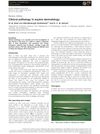
June 2016 in “Equine Veterinary Education”
1 citations
,
June 2016 in “Equine Veterinary Education” This article discusses various diagnostic techniques for investigating equine skin diseases and reports no new clinical results.
 October 2020 in “Veterinary Dermatology”
 This review discusses autoimmune blistering diseases across species and highlights new treatment efficacy findings and ongoing trials, but it reports no new clinical results.
 January 2025 in “International Journal of Mosquito Research”
 In this study, the combination of petroleum ether extracts from Jacquinia ruscifolia flowers and Thuja orientalis strobili demonstrated synergistic larvicidal effects against third-instar Culex quinquefasciatus larvae, achieving 100% mortality at 250 ppm with noted synergism particularly in a 1:2 ratio.
4 citations
,
January 2020 This study found that combining prodigiosin and essential oil from Thuja orientalis leaves showed a synergistic effect against the 3rd larva stage of Cx. pipiens, significantly reducing acetylcholine esterase activity and altering midgut pH, compared to untreated larvae.
4 citations
,
January 1970 in “Bangladesh Journal of Veterinary Medicine” This study found that 88.89% of examined domestic and stray cats in Mymensingh district, Bangladesh, were infested with arthropods, notably Ctenocephalides felis felis, with higher prevalence in females and in summer for certain infections.
June 2025 in “Basrah Journal of veterinary Research” This article reviews the genetic diversity, clinical symptoms, diagnosis, and prevention strategies of feline calicivirus in domestic cats, but reports no new clinical results; it emphasizes the importance of vaccination and proper hygiene.
 March 2025 in “Buletin Veteriner Udayana”
 In this study, a domestic cat diagnosed with scabiosis and Felicola subrostratus infestation was successfully treated with ivermectin, diphenhydramine, fish oil, sulfur soap, and topical fipronil, showing good treatment outcomes.
14 citations
,
August 2013 in “Journal of Parasitology” This study reported that 39.7% of Amargosa voles had mite-associated lesions, which may severely impact their health and fitness.
 January 2024 in “Arquivo Brasileiro de Medicina Veterinária e Zootecnia/Arquivo brasileiro de medicina veterinária e zootecnia”
 This study reports that treating a feline with progressive pruritus, alopecia, and FIV infection with imidacloprid and moxidectin resulted in remission of clinical signs and elimination of Demodex cati mites, as confirmed by parasitological examination and genetic sequencing.
1 citations
,
May 2016 in “Journal of Veterinary Diagnostic Investigation” In this study, exotic lice were found to be widespread among mule deer in California, with younger age classes and low blood selenium concentrations being significantly associated with infestation.
 17 citations
,
December 2003 in “Veterinary dermatology”
17 citations
,
December 2003 in “Veterinary dermatology” In this study, mange lesions with alopecia and crusts in masked palm civets in Japan were caused by the mite Notoedres cati.
October 2025 in “Brazilian Journal of Veterinary Research and Animal Science” The researchers reported a case of a neotropical porcupine co-infected with Brazilian porcupine poxvirus and Toxoplasma gondii, suggesting the need for further investigation into the impact of this interaction.
 August 2024 in “Microscopy Research and Technique”
 This study described the structure of the hair brush on male Endoclita vietnamensis moths' legs, identifying characteristics such as specialized scales and a pheromone gland, which could facilitate the future development of pheromone-based pest control methods for eucalyptus pests in China.
December 2018 in “Bioscience Journal” This study reports the first known occurrence of Leporacarus gibbus infestation alongside Cheyletiella parasitovorax and Psoropotes cuniculi in a domestic rabbit in Espírito Santo, Brazil.
14 citations
,
March 2000 in “Journal of Zoo and Wildlife Medicine” This study identified a new Demodex species causing demodicosis in a zoo koala, successfully treated with daily oral ivermectin.
5 citations
,
January 2021 in “Pakistan Journal of Nematology” This review discusses the potential of Citrullus colocynthis as a natural nematicidal agent and highlights its phytochemical composition, but reports no new experimental results.
5 citations
,
April 2019 in “Veterinary Dermatology” In this case series, cats infested with Lynxacarus radovskyi developed self-induced alopecia similar to flea allergic dermatitis, primarily affecting the perianal area.
12 citations
,
August 2004 in “Veterinary Dermatology” This study found that treating cats infested with Lynxacarus radovskyi using Fipronil resulted in complete resolution of the infestation by day 15.
 6 citations
,
February 2015 in “Journal of parasitic diseases”
6 citations
,
February 2015 in “Journal of parasitic diseases” This case report describes a sarcoptic mange outbreak caused by Trixacarus caviae in a guinea pig breeding colony, which was successfully treated with subcutaneous ivermectin injections and preventive spraying.
19 citations
,
April 2014 in “Veterinary Dermatology” In this case report, two cats with asthma developed localized skin lesions associated with inhalant glucocorticoid use, which resolved after adjusting treatment and administering milbemycin.
 October 2025 in “Buletin Veteriner Udayana”
 This case report described a young Himalayan kitten in Indonesia with notoedric mange, treated successfully with topical selamectin and sarolaner, highlighting the importance of early diagnosis and management to prevent reinfestation, especially in urban areas.
41 citations
,
April 1989 in “Experimental and Applied Acarology” 1 citations
,
February 2024 in “Australasian Journal of Dermatology” In this case study, a tick bite from the genus Ixodes in a 9-year-old girl was associated with the development of localized alopecia areata, resembling telogen effluvium, which resolved completely in less than three months.
 April 2018 in “Journal of Investigative Dermatology”
 In this study, researchers identified CENPV as a new CYLD interacting partner that localizes to primary cilia and regulates acetylated tubulin levels, offering insights into the pathogenesis of skin appendage tumors.
December 2024 in “Veterinary Dermatology” This case report identified cutaneous epitheliotropic T-cell lymphoma in a 3-year-old male sugar glider after skin biopsies, highlighting the need for thorough diagnostic evaluations in exotic pets.