In this study, researchers formulated and evaluated herbal hair serums incorporating natural ingredients like flax seed, fenugreek, and castor oil, finding that the best formulation supported hair growth with minimal side effects compared to existing herbal serums.
 July 2022 in “International journal of Ayurvedic medicine”
 This study evaluated a newly formulated polyherbal anti-dandruff shampoo that incorporates natural ingredients, such as Neem and Aloe vera, to effectively clean hair, control dandruff, and promote hair growth without using harmful synthetic chemicals.
 42 citations
,
November 2005 in “The journal of investigative dermatology. Symposium proceedings/The Journal of investigative dermatology symposium proceedings”
42 citations
,
November 2005 in “The journal of investigative dermatology. Symposium proceedings/The Journal of investigative dermatology symposium proceedings” This review discusses recent advancements in hair cosmetic agents, including topical growth stimulants and anti-aging compounds, emphasizing molecular technology's role in understanding hair growth and aging; it does not report new results.
 34 citations
,
August 2005 in “Dermatologic Clinics”
34 citations
,
August 2005 in “Dermatologic Clinics” This review discusses how the brain can influence skin biology, suggesting a link between psychological factors and skin health, but it reports no new scientific findings.
 32 citations
,
August 2015 in “Anais Brasileiros de Dermatologia”
32 citations
,
August 2015 in “Anais Brasileiros de Dermatologia” This review discusses the side effects and diseases related to hairstyles and hair treatments among black women, highlighting the need for thorough examination by dermatologists, but reports no new clinical results.
 10 citations
,
May 2015 in “International Journal of Women's Dermatology”
10 citations
,
May 2015 in “International Journal of Women's Dermatology” This review discusses the unique dermatologic needs and conditions affecting women of color, noting specific skin and hair conditions but reports no clinical results.
 2 citations
,
October 2000
2 citations
,
October 2000 This report discusses a request for a health hazard evaluation at Equifax in St. Petersburg, Florida concerning potential workplace exposures related to reported employee health issues, particularly hair loss, but provides no new results.
 February 2023 in “International Journal of Advanced Research in Science, Communication and Technology”
 In this study, the researchers investigated the effectiveness of shampoo containing herbal extracts, specifically Neem and Tulsi, for managing dandruff and found it may offer benefits compared to synthetic drugs, which often cause side effects.
 19 citations
,
October 2008 in “Journal der Deutschen Dermatologischen Gesellschaft”
19 citations
,
October 2008 in “Journal der Deutschen Dermatologischen Gesellschaft” This article reviews the cutaneous reactions and characteristic skin changes associated with chemotherapy, radiation therapy, and new targeted cancer treatments, reporting no new clinical results.
 April 2025 in “Pharmaceuticals”
 This study found that novel thiol-reactive cross-linking agents, particularly APA, significantly improved the tensile strength and elasticity of human hair fibers by effectively regenerating disulfide bridges, with potential applications for advanced hair repair treatments in the cosmetic industry.
 August 2025 in “International Journal of Research Publication and Reviews”
 This review examines the regulatory frameworks and definitions of quasi-drugs in South Korea and Japan, where cosmeceuticals like medicated shampoos and anti-hair loss agents are developed and marketed, providing consumers with more hygienic and preventive care options under specific safety and effectiveness oversight.

This review discusses potential cosmeceutical treatments for hair loss, including ingredients like procyanidins and isoflavones, but does not present new clinical outcomes; the authors highlight the promise of further research.
December 2025 in “Cosmetics” This review synthesizes recent molecular and preclinical advances in alopecia areata and androgenetic alopecia, highlighting how interventions targeting specific intracellular signaling pathways and utilizing stem cell technologies can support precision regrowth and structural follicle reconstruction.
 July 2025 in “Pharmaceuticals”
 In this study, chitosan nanoparticles loaded with phenobarbital were the most effective in promoting hair regrowth and quality in a mouse model of chemotherapy-induced alopecia, suggesting potential for preventing hair loss in cancer patients.
 July 2026 in “IntechOpen eBooks”
 This review highlights the challenges and management strategies associated with persistent chemotherapy-induced alopecia, detailing the psychosocial impacts, follicular pathobiology, and available treatments such as scalp cooling and minoxidil, ultimately proposing a clinical algorithm to transform it into a preventable and manageable condition.
April 2019 in “Journal of Drug Delivery and Therapeutics” In this study, researchers developed poly herbal shampoo formulations using natural herbs like Ashwagandha and Amla, which showed effective hair care benefits including strengthening hair growth and preventing dandruff while maintaining safe pH and foaming capacity; however, stability studies for these formulations are needed.

This study found that modern styling cosmetics can significantly alter hair structure through changes in interfacial chemistry and cohesion, particularly when applied to already damaged hair.
 1 citations
,
June 2023 in “Cells”
1 citations
,
June 2023 in “Cells” This review highlights exosomes as a promising treatment for skin damage from UV light, infrared radiation, burns, and disorders due to their anti-inflammatory properties, ability to induce macrophage polarization, and acceleration of skin repair and regeneration.
 1 citations
,
December 2021 in “International journal of research in dermatology”
1 citations
,
December 2021 in “International journal of research in dermatology” This review discusses the evolution of modern shampoos from basic cleansing agents to products with specific therapeutic uses and emphasizes the importance of dermatologists understanding shampoo mechanisms and appropriate selection for scalp and hair health.
 12 citations
,
January 2007 in “Current problems in dermatology”
12 citations
,
January 2007 in “Current problems in dermatology” This review discusses the impact of various exogenous agents on hair, such as cosmetics and radiation, but reports no new experimental results.
 September 2025 in “Ensaios USF”
 This study developed a solid shampoo formulation with conditioning properties, highlighting its feasibility and environmental benefits compared to conventional shampoos due to biodegradable packaging and no water in its composition, thus offering a sustainable alternative in the cosmetic industry.
 May 2026 in “International Research Journal of Modernization in Engineering Technology and Science”
 This study developed an herbal shampoo using traditional plant ingredients, demonstrating its effective cleansing, conditioning, and protective properties while minimizing synthetic chemicals, aligning with consumer preferences for natural and sustainable personal care products.
 1 citations
,
April 2021 in “Han'gug miyong haghoeji/Journal of the Korean society of cosmetology”
1 citations
,
April 2021 in “Han'gug miyong haghoeji/Journal of the Korean society of cosmetology” In this study, researchers found that using 0.75% aspartic acid as an intermediate agent for a permanent wave improved wave formation and retention compared to a control in virgin hair, also reducing cuticle damage and maintaining tensile strength.

This study evaluated a hibiscus-based herbal shampoo formulation and found it to have effective cleansing and conditioning properties, mild antimicrobial benefits, and good physical stability, positioning it as a natural alternative to synthetic shampoos.
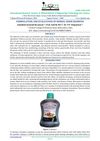 January 2024 in “International Research Journal of Modernization in Engineering Technology and Science”
 This study formulated a poly-herbal shampoo using ingredients like hibiscus, neem, and alo-vera and evaluated its cosmetic properties, reporting positive organoleptic and physico-chemical characteristics, with the potential for safe use as a hair cleansing and conditioning product.
 2 citations
,
January 2025 in “International Journal of Pharmaceutical Research and Applications”
2 citations
,
January 2025 in “International Journal of Pharmaceutical Research and Applications” This study formulated an herbal shampoo using natural extracts and compared its physicochemical properties, such as pH and foam consistency, with commercial shampoos, finding that both performed similarly in conditioning tests conducted with twenty volunteers.
 January 2024 in “Wiadomości Lekarskie”
 In this study, wounds treated with a combination of 0.02% Decamethoxine and Blastomunil showed enhanced healing and epithelization by the 14th day, leveraging the immunomodulatory and antimicrobial properties of the agents.
 1 citations
,
January 2020
1 citations
,
January 2020 In this study, researchers formulated a herbal shampoo using natural ingredients like Pomegranate, Curry Leaves, and Ginger, and reported good cleansing properties, froth stability, and conditioning performance, though they suggest further scientific validation to confirm overall quality.
 April 2025 in “International Journal of Advanced Research in Science Communication and Technology”
 This study developed a herbal shampoo using Reetha, Amla, Neem, Bringraj, Jatamanasi, and Aloe vera, reporting that the shampoo met pharmacognostical standards and showed increased hair growth activity, excellent washing and conditioning effects at 1% concentration, and stability with no skin irritation.
 February 2025 in “International Journal of Pharmaceutical Sciences Review and Research”
 In this study, researchers formulated and evaluated a herbal shampoo containing Tulsi leaves, Green gram extract, Flaxseed mucilage, and potato juice, finding it to possess good cleansing, foam stability, and conditioning properties, though further development is needed to enhance quality, performance, and safety.