 July 2023 in “GLOBAL JOURNAL FOR RESEARCH ANALYSIS”
 This study explored a new treatment approach using 20% TCA application with topical bimatoprost solution for managing alopecia areata of the eyebrows in cases where traditional treatments failed, offering a potential additional option for difficult cases.
 5 citations
,
January 2018
5 citations
,
January 2018 This study optimized a screening assay to identify molecules that inhibit or enhance TRPM5 ion channel activity, which may have implications for treating dysfunctions linked to cardiac arrhythmias and diabetes.
 October 2025 in “Indian Journal of Dermatology”
 This study examined the dermoscopic features of five patients with tuberous sclerosis and found that dermoscopy can differentiate characteristic cutaneous features from similar conditions, potentially aiding in earlier diagnosis when other symptoms are subtle or absent.
 January 1963 in “Stain technology”
 This study describes a staining technique that differentiates medullary from cortical keratin in sheep and goat hair using Ziehl-Neelsen's carbol-fuchsin in skin biopsy sections.
 13 citations
,
June 2012 in “Journal of Dermatological Case Reports”
13 citations
,
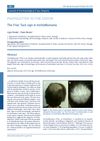
June 2012 in “Journal of Dermatological Case Reports” This report describes an 8-year-old male with trichotillomania, confirmed by trichoscopy showing characteristic hair damage and patterns.
 6 citations
,
June 2018 in “PLOS ONE”
6 citations
,
June 2018 in “PLOS ONE” This study demonstrated that the Alopecia Areata Assessment Tool (ALTO) effectively identifies alopecia areata cases with high sensitivity and specificity in a dermatology clinic setting.
 January 2007 in “Revista del Centro Dermatológico Pascua”
 This case report describes a 2-year-old boy diagnosed with trichothiodystrophy, characterized by fragile hair, intellectual damage, diminished fertility, and short stature.
 16 citations
,
July 2016 in “Veterinary Dermatology”
16 citations
,
July 2016 in “Veterinary Dermatology” This study found that dermoscopy can identify distinctive features in canine pattern alopecia, such as hair shaft thinning and pigmentation patterns, which may aid in diagnosing this and potentially other skin disorders.
 December 2020 in “Research Square (Research Square)”
 This study found that the AndroCoV Clinical Scoring for COVID-19 Diagnosis is a feasible, sensitive, and cost-effective tool with higher accuracy than most rtPCR-SARS-CoV-2 tests for diagnosing COVID-19.
 September 2024 in “Journal of the American Academy of Dermatology”
 This study found that among 100 Caucasian patients with androgenetic alopecia, dermatologists could discern hair loss at thresholds significantly lower than the previously cited 50% reduction, highlighting the importance of using objective trichometric measurements to improve detection and personalized treatment strategies.