 September 2023 in “Stem cell reviews and reports”
 This study introduces a new method to isolate stem cells from the hair follicle outer root sheath of equine skin, demonstrating that these cells, named eMSCORS, proliferate efficiently and can differentiate similarly to adipose tissue-derived MSCs, offering a promising alternative for equine veterinary applications.
This study found that deleting the Twist1 gene in skin keratinocytes significantly reduced UVB-induced skin cancer and hyperproliferation in mice and suggested Twist1 as a target for skin cancer prevention.
 May 2014 in “Transfusion and Apheresis Science”
 The study found that the quality of cord blood units remains consistent before freezing and after thawing, indicating that attached tube segments reliably represent the graft's properties.
 3 citations
,
May 2019 in “Cytotherapy”
3 citations
,
May 2019 in “Cytotherapy” In this study, only a subset of proposed biomarkers universally responded to priming in mesenchymal stromal cells, suggesting limited utility for standardized potency assays across different MSC types and conditions.
 21 citations
,
November 2017 in “Scientific Reports”
21 citations
,
November 2017 in “Scientific Reports” This study found that prostaglandin D2 reduced proliferation in bulge resident K15+ stem cells but not in other K15+ progenitor cells, suggesting differential impacts on hair follicle stem cell niches.
 15 citations
,
June 2015 in “Human Cell”
15 citations
,
June 2015 in “Human Cell” This study found that forming spheroids using silicone micro-wells improved the viability and neural differentiation potential of human adipose-derived stem cells after thawing.
 3 citations
,
April 2011 in “Expert Review of Dermatology”
3 citations
,
April 2011 in “Expert Review of Dermatology” This review examines a study showing that the balding scalp in men with androgenetic alopecia retains stem cells but lacks certain progenitor cells, suggesting new targets for future therapies; it reports no clinical results.
 November 2015 in “European journal of dermatology/EJD. European journal of dermatology”
 This report describes a 55-year-old African woman with a 4-year history of frontotemporal alopecia and total eyebrow loss, who experienced scalp itching and had unsuccessfully undergone hair transplantation.
 May 2011 in “Journal of The American Academy of Dermatology”
 This research letter observed that patients with severe atopic dermatitis showed normal serum cortisol levels after hospitalization despite continued use of potent topical corticosteroids, though poor adherence may lead to overestimations of actual medication use.
 April 2024 in “Research Square”
 IBD patients treated with TNF antagonists may develop autoimmune alopecia areata, with severe cases less likely to improve.
 835 citations
,
October 2008 in “Nature Genetics”
835 citations
,
October 2008 in “Nature Genetics” Lgr5 is a marker for active, long-lasting stem cells in mouse hair follicles.
 326 citations
,
February 2009 in “The American journal of pathology”
326 citations
,
February 2009 in “The American journal of pathology” This review discusses the role of Lgr5 as a marker for identifying adult stem cells, particularly in the intestine and hair follicles, and reports no clinical results.
 321 citations
,
March 2015 in “Nature”
321 citations
,
March 2015 in “Nature” This study found that super-enhancers are essential for hair follicle stem cell identity, lineage commitment, and plasticity in mice, with SOX9 being a key regulator of these chromatin dynamics.
 314 citations
,
April 2010 in “Developmental Cell”
314 citations
,
April 2010 in “Developmental Cell” This study found that in mice, inactivating beta-catenin in the dermal papilla reduces hair follicle progenitor proliferation and disrupts the hair cycle.
 291 citations
,
April 2010 in “Gastroenterology”
291 citations
,
April 2010 in “Gastroenterology” This study identified Lgr5 and Lgr6 as receptors expressed by small populations of stem cells in various adult organs, with Lgr5+ve cells forming long-lived organoids in certain mouse models.
 232 citations
,
January 2013 in “Nature Cell Biology”
232 citations
,
January 2013 in “Nature Cell Biology” Understanding where cancer cells come from helps create better prevention and treatment methods.
 191 citations
,
September 2011 in “Cell stem cell”
191 citations
,
September 2011 in “Cell stem cell” This study found that polycomb-group-mediated repression plays a key role in regulating hair follicle stem cell states and lineage progression by distinct mechanisms in adult mouse skin.
 90 citations
,
January 2003 in “The Journal of Urology”
90 citations
,
January 2003 in “The Journal of Urology” This study found that finasteride significantly reduced VEGF expression and microvessel density in prostatic suburethral tissue, suggesting a mechanism for decreased bleeding in patients with benign prostatic hyperplasia.
 66 citations
,
May 2012 in “Scientific Reports”
66 citations
,
May 2012 in “Scientific Reports” This study demonstrated that bioengineered hair follicles reconstituted from embryonic skin cells and transplanted into hosts can restore physiological hair functions, suggesting potential applications for treating alopecia.
 54 citations
,
January 2016 in “Cell reports”
54 citations
,
January 2016 in “Cell reports” This study found that different epidermal stem cell populations contribute to the formation of various skin tumors and new hair follicles following β-catenin activation in the adult epidermis.
 39 citations
,
May 2010 in “Stem Cells”
39 citations
,
May 2010 in “Stem Cells” This study reported that disrupting ephrin-Eph interactions in adult mouse skin doubled cell proliferation in the hair follicle and epidermis, suggesting ephrins as negative regulators of proliferation.
 38 citations
,
December 2019 in “Iranian Biomedical Journal”
38 citations
,
December 2019 in “Iranian Biomedical Journal” This study found that hair follicle stem cells could enhance burn wound healing and improve tissue tensile strength in rats.
 37 citations
,
February 2019 in “Experimental Dermatology”
37 citations
,
February 2019 in “Experimental Dermatology” This study explored the regenerative abilities of the African spiny mouse's skin, revealing more robust wound-induced hair follicle neogenesis compared to laboratory mice and highlighting unique features of its hair and wound response.
 34 citations
,
April 2018 in “EMBO journal”
34 citations
,
April 2018 in “EMBO journal” This study found that in mouse skin, the activation of stem/progenitor cells is synchronized across different niches during growth, with the glutamate transporter SLC1A3 playing a crucial role in this process.
 29 citations
,
March 2020 in “Stem Cell Research & Therapy”
29 citations
,
March 2020 in “Stem Cell Research & Therapy” This study suggests that adipose-derived mesenchymal stem cells from diabetic mice can enhance wound healing by promoting fibroblast growth, migration, angiogenesis, and differentiation into fibroblasts and endothelial cells.
 26 citations
,
December 2017 in “Journal of Investigative Dermatology”
26 citations
,
December 2017 in “Journal of Investigative Dermatology” This study found that the acceleration of endothelial to mesenchymal transition due to loss of Notch signaling led to delayed wound healing and increased scarring in skin wounds.
 25 citations
,
June 2021 in “Developmental Cell”
25 citations
,
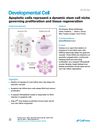
June 2021 in “Developmental Cell” In this study, researchers found that deleting Caspase-9 in hair follicle stem cells delayed apoptosis, leading to accelerated wound repair and new hair follicle regeneration by maintaining apoptotic cells as signaling centers.
 25 citations
,
August 2007 in “Molecular Therapy”
25 citations
,
August 2007 in “Molecular Therapy” This study found that using ectopic expression of CD24 is a promising approach for selecting genetically modified human epidermal stem cells for safe cutaneous gene therapy in cancer-prone conditions.
 19 citations
,
September 2019 in “EMBO molecular medicine”
19 citations
,
September 2019 in “EMBO molecular medicine” This study found that deletion of c-Jun and JunB in mouse bulge hair follicle stem cells was sufficient to trigger psoriasis-like skin disease through thymic stromal lymphopoietin signaling.
 17 citations
,
May 2011 in “Gene Therapy”
17 citations
,
May 2011 in “Gene Therapy” This study found that transfecting hair follicle stem cells with a PEI-DNA complex expressing hTERT stimulated hair growth in rats by inducing follicle neogenesis and promoting the anagen phase.