2 citations
,
January 2025 in “JAAD Case Reports” Topical metformin may improve hair regrowth in CCCA when added to standard treatments.
2 citations
,
September 2024 in “Journal of the American Academy of Dermatology” CCCA in African Americans may be linked to hair grooming, low vitamin D, and autoimmune factors.
 2 citations
,
April 2024 in “Advanced Materials”
2 citations
,
April 2024 in “Advanced Materials” This study tested a hydrogel microneedle patch delivering T reg attractants in mice with alopecia, finding it boosted regulatory T cell numbers at the site, leading to hair regrowth without causing peripheral immunosuppression, suggesting a potential new approach for autoimmune skin disease treatment.
 2 citations
,
January 2023 in “Journal of The American Academy of Dermatology”
2 citations
,
January 2023 in “Journal of The American Academy of Dermatology” This study investigated the use of scalp biopsies for diagnosing and managing alopecia in Black women, focusing on distribution, prevalence, and biopsy outcomes, but did not report new clinical results.
2 citations
,
September 2022 in “World Rabbit Science” This study found that the WIF1 gene may play a crucial role in hair follicle growth and development in Angora rabbits by regulating specific genes and proteins.
 2 citations
,
September 2022 in “Actas dermo-sifiliográficas/Actas dermo-sifiliográficas”
2 citations
,
September 2022 in “Actas dermo-sifiliográficas/Actas dermo-sifiliográficas” This article discusses the sensitive skin condition of the scalp, its clinical manifestations, triggers, and individualized treatment options, but reports no new clinical results.
2 citations
,
May 2020 in “Journal of the American Academy of Dermatology” Hair shaft changes may be linked to CCCA, but their role is unclear.
2 citations
,
January 2020 in “Enlighten: Theses (The University of Glasgow)” This study found that alopecia areata is associated with distinct systemic and tissue immune signatures, with macrophages implicated as contributors to hair loss, suggesting potential therapeutic targeting of macrophage activity.
 2 citations
,
April 2018 in “Journal of Investigative Dermatology”
2 citations
,
April 2018 in “Journal of Investigative Dermatology” This study suggests that frontal fibrosing alopecia is a highly inflammatory disease involving TH1 and JAK-STAT pathways, without reduced hair keratins, highlighting JAK-STAT signaling as a potential therapeutic target.
 2 citations
,
August 2017 in “British Journal of Dermatology”
2 citations
,
August 2017 in “British Journal of Dermatology” Hair loss in Cronkhite-Canada syndrome may be due to an autoimmune response.
 2 citations
,
June 2016 in “Dermatologic Clinics”
2 citations
,
June 2016 in “Dermatologic Clinics” This article reviews clinical practice gaps in dermatology regarding the care of patients with hair disorders, including attitude, knowledge, and skill deficiencies, and reports no new results.
 2 citations
,
June 2012 in “PubMed”
2 citations
,
June 2012 in “PubMed” This article reports three cases of African American men with central centrifugal cicatricial alopecia, highlighting the need to consider this diagnosis for male patients with vertex hair loss and scalp symptoms.

research Skin
2 citations
,
January 2011 in “Elsevier eBooks” This review discusses approaches to diagnosing and managing cutaneous manifestations of lupus erythematosus and reports no new clinical results.
 2 citations
,
January 2004 in “Elsevier eBooks”
2 citations
,
January 2004 in “Elsevier eBooks” This article reviews historical uses of the term "lupus" for various skin disorders but provides no new clinical findings.
1 citations
,
February 2025 in “International Journal of Molecular Sciences” This study found that supplementing Liaoning cashmere goats with HMBi increased cashmere length while decreasing its diameter, attributed to changes in Met-related metabolites and elevated expression of genes related to the Met cycle and cell differentiation pathways such as Wnt and MAPK.
 1 citations
,
April 2023 in “International Journal of Molecular Sciences”
1 citations
,
April 2023 in “International Journal of Molecular Sciences” This study found that Botryococcus terribilis ethanol extract significantly reduced inflammation markers in LPS-stimulated RAW264 cells, potentially via Axl inhibition and alteration of immune-related gene expression.
 1 citations
,
December 2022 in “Research Square (Research Square)”
1 citations
,
December 2022 in “Research Square (Research Square)” This study observed that patients with certain medical histories and hair care practices, such as using hooded dryers and wearing natural hairstyles, had higher odds of improvement in CCCA treatment outcomes.
 1 citations
,
November 2021 in “Advances in Dermatology and Allergology”
1 citations
,
November 2021 in “Advances in Dermatology and Allergology” This study described the clinical and pathologic characteristics of patients with cutaneous lupus erythematosus, noting that chronic cutaneous lupus was most common, with photosensitivity as a prevalent symptom.
 1 citations
,
February 2021 in “Cosmetics”
1 citations
,
February 2021 in “Cosmetics” This study found that the ethyl acetate extract of Fagraea berteroana fruits and its fraction FEAE-F0 promoted cell proliferation and modulated gene expression in hair follicle cells, suggesting potential for hair growth stimulation.
 1 citations
,
January 2016 in “Elsevier eBooks”
1 citations
,
January 2016 in “Elsevier eBooks” This review examines the origins and mechanisms of tumor initiation in common skin cancers, but does not present new experimental findings; it emphasizes the need for further research on cancer stem cells.
 1 citations
,
July 2012 in “Springer eBooks”
1 citations
,
July 2012 in “Springer eBooks” The document concludes that more research is needed to better understand and treat scarring hair loss conditions.
 1 citations
,
April 2010 in “Expert Review of Dermatology”
1 citations
,
April 2010 in “Expert Review of Dermatology” This review discusses primary cicatricial alopecias, detailing their classification, pathogenesis, clinical features, histopathologic findings, and treatment, without reporting new experimental results.
1 citations
,
September 2025 in “Frontiers in Immunology” This study reviewed the expression of chemokines in patients with alopecia areata, finding elevated Th1 and Th2 chemokine levels, suggesting a complex immune profile that may require broad immunomodulatory strategies to address the disease's underlying immune dysregulation.
 1 citations
,
September 2024 in “BMC Ophthalmology”
1 citations
,
September 2024 in “BMC Ophthalmology” This study found significantly elevated central corneal thickness and intraocular pressure in patients with polycystic ovary syndrome, suggesting it should be considered in evaluating anterior segment diseases and glaucoma in women.
1 citations
,
May 2024 in “Skin Appendage Disorders” This study describes trichoscopic findings in 11 dark-skinned women with central centrifugal cicatricial alopecia and highlights the potential of trichoscopy for early diagnosis and treatment.
1 citations
,
December 2023 in “JAAD International” Mast cells may significantly contribute to central centrifugal cicatricial alopecia.
 1 citations
,
April 2022 in “International Journal of Women's Dermatology”
1 citations
,
April 2022 in “International Journal of Women's Dermatology” This study suggests that curl pattern classification could help improve patient communication and risk stratification in hair loss disorders, but its clinical utility in dermatology needs further validation.
 1 citations
,
April 2022 in “The Journal of Family Practice”
1 citations
,
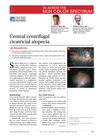
April 2022 in “The Journal of Family Practice” This report describes early and late stages of central centrifugal cicatricial alopecia in two Black women, highlighting progression from a small to a large central patch of hair loss.
1 citations
,
January 2022 in “Clinical Cases in Dermatology” This review discusses central centrifugal cicatricial alopecia, emphasizing its clinical features, potential contributing factors, and treatment options, but does not report new clinical findings.
1 citations
,
August 2020 in “International Journal of Dermatology” This article discusses the reversibility of alopecia caused by chronic cutaneous lupus erythematosus but reports no new clinical results.