34 citations
,
January 2022 in “Molecules/Molecules online/Molecules annual” This review highlights the use of natural products in cosmetic-containing herbals for skin and hair care but reports no new clinical results, calling attention to their claimed curative properties and minimal side effects.
 28 citations
,
January 2018 in “Biochemical Society Transactions”
28 citations
,
January 2018 in “Biochemical Society Transactions” This review explores the role of fatty acids and bioactive lipid mediators in skin health and suggests targeting this metabolic network to control inflammation and improve skin conditions, but it reports no new findings.
 23 citations
,
January 2017 in “Journal of Oleo Science”
23 citations
,
January 2017 in “Journal of Oleo Science” This review discusses the use of supercritical carbon dioxide for extracting rice bran oil, noting its advantages over conventional methods for preserving nutrients and antioxidants, but provides no new experimental results.
 16 citations
,
September 2019 in “Aesthetic Plastic Surgery”
16 citations
,
September 2019 in “Aesthetic Plastic Surgery” Platelet-rich plasma therapy helps improve atrophic acne scars.
14 citations
,
January 2025 in “Biomaterials Research” This review discusses the use of bioactive glass in skin tissue repair and highlights its potential to aid wound healing through effects on inflammatory cells and tissue regeneration, but reports no new experimental findings.
 14 citations
,
April 2021 in “Biology”
14 citations
,
April 2021 in “Biology” This study found that ethanol extract of Tubtim Chumphae rice bran downregulates SRD5A gene expression, similarly to finasteride, suggesting potential use as an anti-hair loss product.
 14 citations
,
October 2020 in “Journal of ethnopharmacology”
14 citations
,
October 2020 in “Journal of ethnopharmacology” This study found that both ethanol and aqueous extracts of Lepidium sativum seeds improved insulin signaling and reduced obesity-related metabolic changes in high-fat diet-fed rats, suggesting potential as a dietary supplement.
 9 citations
,
April 2019 in “Food Chemistry”
9 citations
,
April 2019 in “Food Chemistry” This study developed an efficient method for converting polymeric procyanidins into high-purity oligomeric procyanidins using a semisynthetic approach combined with separation techniques.
 5 citations
,
April 2016 in “Proceedings of the Latvian Academy of Sciences. Section B, Natural, Exact and Applied Sciences”
5 citations
,
April 2016 in “Proceedings of the Latvian Academy of Sciences. Section B, Natural, Exact and Applied Sciences” This study fabricated a polyamide fiber containing amber particles and characterized its potential for textile applications, noting that the chemical structure of amber remained unchanged after grinding and integration.
 4 citations
,
September 2024 in “Jurnal Pengolahan Hasil Perikanan Indonesia”
4 citations
,
September 2024 in “Jurnal Pengolahan Hasil Perikanan Indonesia” In this study, researchers reported that compounds from Bruguiera gymnorhiza leaves showed anti-inflammatory potential in in silico analyses, with favorable drug properties and specific binding to the IKKβ receptor, suggesting possible development into anti-inflammatory drugs.
 1 citations
,
November 2014 in “Elsevier eBooks”
1 citations
,
November 2014 in “Elsevier eBooks” This chapter reviews traditional and tissue-engineered treatments for skin defects and discusses advances in bioengineered skin constructs, but it presents no new experimental results.

This study found that elastin-like recombinamer (ELR) wound dressings promote tissue regeneration and stability without rejection in ex vivo and in vivo models, indicating potential for hard-to-heal wound treatment.
 June 2026 in “International Journal of Bioprinting”
 This review found that 3D bioprinting significantly advances skin tissue engineering by enabling the creation of complex, patient-specific skin structures, though technological and regulatory challenges persist, particularly in areas like scalability and physiological mimicry.
March 2026 in “International Journal of Cosmetic Science” This research reports that KCV and its palmitoylated derivatives show strong effectiveness in strengthening hair proteins, indicating their potential for use in advanced hair care products.

This chapter reviews the challenges and future prospects of using nanotechnology and phytochemistry in developing safe, effective, and precision-based therapies for Polycystic Ovary Syndrome, without reporting new clinical findings.
 July 2024 in “Annals of Phytomedicine An International Journal”
 In this study, the authors reviewed various herbal ingredients used in hair care products and found that components like aloe vera, hibiscus, amla, and fenugreek have traditional and scientifically validated benefits for addressing hair issues such as hair loss, dandruff, and damage.
 April 2024 in “International Journal of Advanced Research in Science Communication and Technology”
 This review explores the impact of synthetic and herbal drugs on hormone levels and ovarian tissue in PCOD but reports no new clinical findings.
 December 2023 in “Jurnal Penelitian Pendidikan IPA”
 In this laboratory study on mice, researchers found that both platelet-rich plasma and salmon DNA serum promoted wound healing, with platelet-rich plasma providing faster results due to its bioactive growth factors.

This review highlights various plant-based and herbal treatments that reportedly help prevent hair loss and encourage hair growth. It also explores the molecular mechanisms, identified plant compounds, recent technologies such as nanoarchitectonics, and patents related to hair growth promotion.
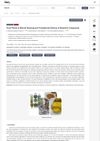
This review highlights the potential of plant-derived natural compounds as biocompatible and biodegradable materials in dermal and transdermal delivery systems, emphasizing their unexplored benefits and detailing recent advances in isolation techniques and drug delivery technologies.
 May 2026 in “Scientific and Technical Bulletin оf State Scientific Research Control Institute of Veterinary Medical Products and Fodder Additives аnd Institute of Animal Biology”
 The researchers reported that zinc carbonate nanoparticles stabilized with polyvinylpyrrolidone did not show local irritant or skin-resorptive effects in preclinical tests on rabbits and rats.
188 citations
,
December 2020 in “Foods” This review explores the potential health benefits of food bioactive compounds, specifically polyphenols, as preventive agents against non-communicable diseases like cancer and cardiovascular disorders, while also addressing challenges like bioavailability and industrial applications.
61 citations
,
July 2022 in “Journal of Nanobiotechnology” This study found that carbon dots derived from fucoidan effectively inhibit Enterococcus faecalis and its biofilm, offering a promising approach for managing biofilm-associated persistent endodontic infections.
 33 citations
,
February 2021 in “Advanced Pharmaceutical Bulletin”
33 citations
,
February 2021 in “Advanced Pharmaceutical Bulletin” This article explains the preparation methods and applications for various vesicle and particle systems used in transdermal drug delivery, highlighting their effectiveness and potential for further development in this field.
 28 citations
,
January 2017 in “Critical Reviews in Therapeutic Drug Carrier Systems”
28 citations
,
January 2017 in “Critical Reviews in Therapeutic Drug Carrier Systems” This review classifies engineered nanomaterials by composition and application in biomedicine, highlighting diverse uses like regenerative medicine and potential occupational side effects, but reports no new clinical results.
 24 citations
,
June 2021 in “Agronomy”
24 citations
,
June 2021 in “Agronomy” This study found that biostimulant application in lettuce cultivation led to significant yield and phytochemical enhancements, with effects varying between green and red cultivars depending on the treatment method used.
 8 citations
,
January 2023 in “RSC Advances”
8 citations
,
January 2023 in “RSC Advances” This article reviews advancements in carbon dots for tissue engineering and regenerative medicine, highlighting challenges and future directions without presenting new clinical findings.
3 citations
,
February 2024 in “International journal of molecular sciences” This review highlights the potential of valorizing citrus by-products, particularly hesperidin from orange peels, as sustainable ingredients in skincare for antiaging, pigmentation, wound healing, and UV damage protection, emphasizing hesperidin's role in a circular economy approach.
 2 citations
,
July 2011 in “Journal of the Egyptian Women's Dermatologic Society (Print)”
2 citations
,
July 2011 in “Journal of the Egyptian Women's Dermatologic Society (Print)” This study found that frequent consumption of nuts, chocolate, candy, and red tea was associated with more severe acne, while eating fresh vegetables was linked to milder acne in these patients.
 November 2023 in “Open Repository of the University of Porto (University of Porto)”
 Pharmacists play a crucial role in patient care and education.