 1 citations
,
January 2010 in “Serbian Journal of Dermatology and Venereology”
1 citations
,
January 2010 in “Serbian Journal of Dermatology and Venereology” This article reviews the multifaceted approach required for acne vulgaris treatment, emphasizing individualized combination therapies tailored to clinical severity and patient psychological profiles, but no new results are included.
 7 citations
,
January 1982 in “Acta agriculturae Scandinavica”
7 citations
,
January 1982 in “Acta agriculturae Scandinavica” Mink use L-methionine and L-cystine slightly better than natural amino acids for hair growth, but D-methionine is not effective.
 5 citations
,
December 1942 in “Journal of the American Medical Association”
5 citations
,
December 1942 in “Journal of the American Medical Association” This article reviews the classification and characteristics of water soluble vitamins, focusing on their varying solubility and functions, and reports no new experimental findings.
 1 citations
,
February 2025 in “Journal of Biomedical Research & Environmental Sciences”
1 citations
,
February 2025 in “Journal of Biomedical Research & Environmental Sciences” This review explores the diverse health benefits and pharmacological properties of mushrooms, highlighting their potential use in cosmetics for antioxidant, anti-aging, and anti-hair loss effects due to their bioactive compounds.
16 citations
,
November 2018 in “The journal of pain/Journal of pain” This study found that in a rat model, 14,15-EET may alleviate central poststroke pain by enhancing thalamic inhibition through neurosteroid signaling, potentially outperforming gabapentin in early-stage treatment.
12 citations
,
September 2021 in “Journal of molecular structure” In this study, researchers created a new molecular salt from minoxidil and 2,4-dihydroxybenzoic acid, finding it superior to raw minoxidil for promoting hair growth in a mouse model, suggesting it may be a promising candidate for treating hair loss.
 August 2023 in “Repository of the University of Primorsk (University of Primorska)”
 A Western diet may increase acne risk, while a Mediterranean diet and certain supplements can help reduce it.
This study found that certain dietary changes, such as a low glycemic load diet for men and specific supplements for women, may improve acne, while chocolate, whey proteins, and dairy products are linked to worsened symptoms in both genders.
119 citations
,
June 2021 in “Heliyon” This review examines the phytochemical constituents and pharmacological effects of licorice, discussing its potential health benefits and side effects without reporting new clinical results.
10 citations
,
June 2011 in “PubMed” This article suggests that most topical treatments for acne and unwanted hair growth are safe to use during pregnancy, except for hydroquinone and tretinoin, due to low systemic absorption.
 5 citations
,
October 2021 in “Frontiers in Cell and Developmental Biology”
5 citations
,
October 2021 in “Frontiers in Cell and Developmental Biology” This study examined aging hair follicle stem cells in mice and found that inflammation reduction in dermal white adipose tissue can stimulate regenerative behavior, highlighting its role in hair follicle aging.
2 citations
,
May 2025 in “Antioxidants” This study examined the phytochemicals and antioxidant activities of methanolic extracts from Cameroonian Prunus africana bark and Leea indica and Paullinia pinnata leaves, identifying various phenolic compounds and significant antioxidant properties through multiple assays.
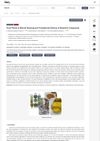
This review highlights the potential of plant-derived natural compounds as biocompatible and biodegradable materials in dermal and transdermal delivery systems, emphasizing their unexplored benefits and detailing recent advances in isolation techniques and drug delivery technologies.
In this study, aqueous and aqueous-alcoholic extracts of Ajuga reptans showed promising hepatoprotective and wound-healing properties, with significant effects observed in experimental models, suggesting potential for development into official medicinal products pending further research.
 2 citations
,
June 2023 in “Pharmaceutics”
2 citations
,
June 2023 in “Pharmaceutics” This study systematically reviews the development and applications of drug-loaded nanofiber scaffolds in wound healing, highlighting challenges such as maintaining drug activity and achieving controlled release, while summarizing preparation methods and describing advanced drug delivery schemes.
 July 2023 in “Pharmacognosy Magazine”
 This study found that Cerasus serrulata extracts, when obtained through specific methods, demonstrate significant antioxidative and antibacterial properties, as well as potential anti-alopecia effects in a mouse model, potentially making them useful supplements for these purposes.
 9 citations
,
November 2022 in “Applied sciences”
9 citations
,
November 2022 in “Applied sciences” This review explores marine algae-derived phenolic compounds and their potential cosmeceutical benefits, but reports no new clinical results.
11 citations
,
July 2022 in “International Journal of Molecular Sciences” This study found that treating reconstructed human epidermis with beta-lipohydroxy salicylic acid increased tight junction remnants in the stratum corneum, potentially affecting skin cohesion and desquamation.
 45 citations
,
January 2020 in “International Journal of Molecular Sciences”
45 citations
,
January 2020 in “International Journal of Molecular Sciences” This review discusses the potential of plant polyphenols to overcome multidrug resistance in various solid cancers and reports no new experimental results; further research is suggested.
 1 citations
,
August 2023 in “Austin Chemical Engineering”
1 citations
,
August 2023 in “Austin Chemical Engineering” In this study, researchers developed hair and foot care products using tofu whey instead of water, highlighting its potential to conserve water and utilize protein-rich waste, though specific efficacy results are not reported.
 September 1995 in “American Journal of Contact Dermatitis”
 Antiyeast treatments work better for seborrheic dermatitis than steroids, and other findings include increased skin bacteria under plastic wrap, a nasal cell defect in Staphylococcus aureus carriers, quick resolution of certain skin reactions, high rubber latex allergy in spina bifida patients, and glyceryl monopentadecanoate's effectiveness for male hair loss.
 October 2025 in “Jurnal Medisains Kesehatan”
 This experimental study found that leaf extracts from Averrhoa bilimbi and Muntingia calabura significantly inhibited the growth of Staphylococcus aureus, with M. calabura demonstrating stronger antibacterial activity, suggesting potential for acne treatment.
29 citations
,
May 2007 in “International journal of pharmaceutics” This study found that drug transport through artificial sebum varies depending on the compound, suggesting that sebum-targeted delivery can be optimized by selecting compounds based on their distinct transport profiles in sebum versus skin.
12 citations
,
December 2023 in “Antioxidants” In this study, researchers found that blackberry leaves exhibited higher liposoluble antioxidant levels and inhibited lipid peroxidation more effectively than raspberry leaves, while raspberry leaves showed greater water-soluble antioxidant content and hydroxyl radical inhibition in vitro.
 March 2026 in “Molecules”
 This review reports that Dang Gui (Radix Angelica sinensis) possesses bidirectional immunoregulatory effects, enhancing immune cell proliferation and function, and may benefit immune-related diseases such as cancer and anemia. It also evaluates regulatory and safety aspects, aiming to guide future research and clinical use.
March 2008 in “British Journal of Pharmacology” This guide provides an overview of the complex roles and mechanisms of various receptors and channels in pharmacology but does not report new experimental results.
57 citations
,
November 2024 in “Aggregate” This review article highlights recent advancements in smart hydrogels as promising solutions for diabetic wound management, emphasizing their ability to respond to wound environments and deliver targeted therapies, while addressing limitations of traditional dressings.
53 citations
,
July 2021 in “International Journal of Molecular Sciences” This study found that extracts from Geranium pyrenaicum show promising antioxidant, enzyme inhibitory, and antiviral activities, particularly the methanolic extract's antiviral activity against HSV-1.
 45 citations
,
June 2008 in “Journal of pharmaceutical and biomedical analysis”
45 citations
,
June 2008 in “Journal of pharmaceutical and biomedical analysis” This study developed a new HPLC method for detecting prohibited substances like minoxidil and hydrocortisone in cosmetic products, achieving high sensitivity and successful application to real-world samples.
 28 citations
,
December 2019 in “Skin appendage disorders”
28 citations
,
December 2019 in “Skin appendage disorders” This review discusses medication-induced gray hair repigmentation, highlighting that certain anti-inflammatory drugs and melanogenesis stimulators can cause diffuse repigmentation, though evidence remains low-quality and these medications are not currently indicated for this purpose.