 35 citations
,
January 2019 in “Clinics in Dermatology”
35 citations
,
January 2019 in “Clinics in Dermatology” This review discusses contemporary issues in syphilis diagnosis and management, emphasizing the importance of recognizing and addressing both biomedical and psychosocial aspects, but provides no new clinical results.
 32 citations
,
July 2017 in “Dermatology practical & conceptual”
32 citations
,
July 2017 in “Dermatology practical & conceptual” This study is the first to describe a mixed pattern of essential syphilitic alopecia using trichoscopy, identifying features like tapered bended hairs and perifollicular hyperkeratosis in a patient without secondary syphilis symptoms.
 11 citations
,
May 2020 in “Anais Brasileiros de Dermatologia”
11 citations
,
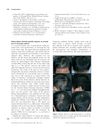
May 2020 in “Anais Brasileiros de Dermatologia” This case report describes a patient with secondary syphilis exhibiting distinct dermoscopic features, including moth-eaten alopecia and an erythematous background more pronounced than previously reported.
 10 citations
,
July 2012 in “International Journal of Dermatology”
10 citations
,
July 2012 in “International Journal of Dermatology” This article addresses diffuse pattern essential syphilitic alopecia as an unusual form of secondary syphilis but provides no new clinical findings.
 7 citations
,
January 2018 in “International Journal of Dermatology”
7 citations
,
January 2018 in “International Journal of Dermatology” Syphilis can cause hair loss without other symptoms and should be considered when diagnosing unexplained hair loss.
 4 citations
,
March 2020 in “Berkala Ilmu Kesehatan Kulit dan Kelamin”
4 citations
,
March 2020 in “Berkala Ilmu Kesehatan Kulit dan Kelamin” This case report noted that HIV-infected men who have sex with men are at a higher risk of syphilis, requiring careful staging and prolonged serologic monitoring to assess treatment success.
 3 citations
,
January 2015 in “Dermatology Online Journal”
3 citations
,
January 2015 in “Dermatology Online Journal” This case report highlights a patient whose essential syphilitic alopecia was the only symptom of syphilis, which improved after benzathine penicillin treatment, emphasizing alopecia as a potential sign of syphilis.
2 citations
,
April 2024 in “AIDS Research and Therapy” This case highlights the importance of considering syphilis testing for patients with unusual symptoms like hair loss and hypopigmentation, emphasizing the diagnostic and management challenges in resource-limited settings.
 2 citations
,
December 2012 in “Acta Facultatis Medicae Naissensis”
2 citations
,
December 2012 in “Acta Facultatis Medicae Naissensis” This article presents a case of syphilitic alopecia in a man, where treatment with benzathine penicillin G led to dramatic hair regrowth and resolution of syphilitic lesions within three months.
1 citations
,
July 2024 in “Indian Journal of Sexually Transmitted Diseases and AIDS” In this study, a 38-year-old male with syphilis-related mixed pattern alopecia showed marked hair regrowth and resolution of postauricular lymphadenopathy after treatment with benzathine penicillin, suggesting that lymph node and hair examinations, along with trichoscopy, can aid in the diagnosis of alopecia syphilitica.
 1 citations
,
January 2013 in “Mayo Clinic Proceedings”
1 citations
,
January 2013 in “Mayo Clinic Proceedings” This case study details a 31-year-old woman diagnosed with secondary syphilis that presented with chronic headaches and hair loss, ultimately attributed to neurosyphilis and alopecia syphilitica.
1 citations
,
March 2024 in “Oxford Medical Case Reports” In this case study, researchers reported that moth-eaten alopecia was the only clinical sign of secondary syphilis in a 28-year-old man from Nepal, and treatment with Benzathine Penicillin G led to complete hair regrowth within four months.
1 citations
,
July 2020 in “Qanun Medika - Medical Journal Faculty of Medicine Muhammadiyah Surabaya” This case report describes a patient with HIV who experienced overlapping symptoms of primary and secondary syphilis and showed clinical and serological improvement after treatment with benzathine penicillin and antiretroviral drugs.
 January 2026 in “Journal of Comprehensive Science (JCS)”
 This case report highlights the severe manifestations of early congenital syphilis and underscores the crucial need for early diagnosis and treatment to improve outcomes in affected infants.
July 2023 in “Indian Journal of Sexually Transmitted Diseases and AIDS” This case study reports that moth-eaten alopecia and a macular rash, along with positive histopathology and serology tests, indicated a diagnosis of secondary syphilis in a 24-year-old male patient.
 January 2021 in “Our Dermatology Online”
 This case report discusses alopecia syphilitica in a young Belgian man, notes that hair loss was his only symptom, and highlights the improvement following penicillin treatment.
 April 2026 in “Frontiers in Medicine”
 This case study reports a 26-year-old male with secondary syphilitic alopecia misdiagnosed as alopecia areata, likely contracted through non-penetrative sexual contact. Effective treatment with intramuscular benzathine penicillin G led to complete hair regrowth within three months.
June 2025 in “British Journal of Dermatology” This case series observed the diagnostic challenges of secondary syphilis, highlighting diverse presentations such as rashes and systemic symptoms that can mimic other conditions, underscoring the importance of dermatological review, serological testing, and interdisciplinary care for effective treatment and management.
 January 2025 in “The Pediatric Infectious Disease Journal”
 This report details a rare case of late latent syphilis in a 17-year-old male with unusual symptoms like polyarthritis and hair loss, which resolved following antibiotic treatment, highlighting varied syphilis presentations and the importance of STI screening, especially in high-risk groups.
April 2015 in “Journal of the American Academy of Dermatology” This case study suggests that the most likely diagnosis for the patient with a pink, scaling rash is secondary syphilis.
 May 2019 in “Pakistan Journal of Pharmaceutical Sciences”
 This case report presented a female with PCOS treated with metformin who developed hyperuricemia, migraine, neurological and joint pain, and rheumatic fever, later showing a delayed hypersensitivity reaction to benzathine benzyl penicillin treatment.
1 citations
,
May 2019 in “PubMed” This report presents a case of a female with PCOS treated with metformin who developed hyperuricemia, severe joint and neurological pain, and later experienced a hypersensitivity reaction to benzathine benzyl penicillin.
December 2008 in “中華皮膚科醫學雜誌” This case report describes a 35-year-old Taiwanese man whose hair loss improved significantly after treatment for syphilis, suggesting a link between his condition and the infection.
 13 citations
,
June 2013 in “Actas Dermo-Sifiliográficas”
13 citations
,
June 2013 in “Actas Dermo-Sifiliográficas” This review details five cases of syphilitic alopecia, an uncommon symptom in syphilis affecting mainly men, emphasizing that dermatologists should be vigilant as it can appear as the sole symptom.
 7 citations
,
November 2006 in “Pediatric Dermatology”
7 citations
,
November 2006 in “Pediatric Dermatology” This article describes the first reported case of alopecia in a neonate with congenital syphilis.
1 citations
,
May 2019 in “The Journal of Pediatrics” The baby's hair loss was due to congenital syphilis, which was treated with penicillin.
82 citations
,
May 2010 in “PLoS neglected tropical diseases” This study provides quantitative evidence that secondary syphilis is highly endemic in Cali, Colombia, and many untreated patients have high numbers of circulating Treponema pallidum spirochetes.
 3 citations
,
July 2014 in “QJM”
3 citations
,
July 2014 in “QJM” This case report discusses a 35-year-old man with progressive alopecia areata who did not respond to minoxidil treatment but offers no new clinical trial results.
 February 2026 in “Cureus”
 This case report highlights that alopecia areata can mimic syphilitic alopecia in patients with recent or active syphilis, emphasizing the importance of trichoscopy in accurately diagnosing alopecia types and preventing misdiagnosis.
 July 1980 in “International Journal of Dermatology”
 This article about Aloe Vera does not include any new research findings or results.