 49 citations
,
January 2018 in “Immunology”
49 citations
,
January 2018 in “Immunology” This review discusses the relationship between psoriasis and autoimmunity, focusing on autoimmune co-morbidities, but reports no new research findings.
 January 2026 in “Immunity & Inflammation”
 This review discusses a "stochastic multi-hit model" to explain the onset, progression, and recurrence of vitiligo and other autoimmune skin diseases, emphasizing genetic and environmental influences, immune cell interactions, and unexplored mechanistic gaps.
 7 citations
,
December 2021 in “European Respiratory Review”
7 citations
,
December 2021 in “European Respiratory Review” This review covers the current status of the interstitial pneumonia with autoimmune features (IPAF) category, pointing out the need for revision of its criteria to establish it as a standalone diagnostic term, but reports no new clinical findings.
 May 2018 in “Journal of dermatology and dermatitis”
 This review discusses the role of PRP in treating androgenetic alopecia and alopecia areata, but reports no new clinical results and emphasizes the potential of growth factor signaling as a future therapy.
December 2022 in “Journal of Pakistan Association of Dermatologists” This review highlights zinc's role in health and disease, noting its involvement in immune function and its therapeutic potential for conditions like alopecia areata and psoriasis, but it reports no new clinical results.
 November 2025 in “Frontiers in Immunology”
 This review integrates studies on mouse models and human clinical observations to highlight the role of immune cells in skin development and how their dysregulation leads to skin disorders, suggesting potential therapeutic pathways for skin regeneration.
January 2010 in “The Internet Journal of Family Practice” This article reviews the clinical features, incidence, and systemic effects of hypothyroidism across different age groups and reports no new clinical findings.
 120 citations
,
February 2009 in “Apoptosis”
120 citations
,
February 2009 in “Apoptosis” This review examines apoptotic and anti-apoptotic mechanisms in skin homeostasis and related diseases but presents no new research findings.
 33 citations
,
November 2006 in “Survey of Ophthalmology”
33 citations
,
November 2006 in “Survey of Ophthalmology” This report discusses the various causes and clinical assessment of madarosis, emphasizing the importance of recognizing and diagnosing associated vision or life-threatening conditions, without presenting new findings.

In this study, researchers found that alopecia areata is linked to immune cell activation against hair follicle autoantigens and is associated with heart changes and cardiac marker alterations in humans and mice.
48 citations
,
May 2018 in “Expert Opinion on Therapeutic Targets” This review discusses how modern lifestyle factors affecting gut health may contribute to Alopecia Areata in genetically predisposed individuals, reporting no new results but suggesting the need for long-term interventions.
16 citations
,
July 2020 in “JAMA Dermatology” People with alopecia areata may have a higher risk of hearing loss.
 11 citations
,
July 2008 in “International Journal of Dermatology”
11 citations
,
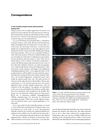
July 2008 in “International Journal of Dermatology” This article discusses a case of patchy alopecia areata that spares greying hairs but reports no new findings; it refers to existing literature for context.
November 2025 in “Scholarly Commons (Embry–Riddle Aeronautical University)” This review discusses how urban air pollutants may influence the regulation of JAK3 signaling in alopecia areata and reports no new experimental results; the authors integrate existing data to map potential pathways and biomarkers.
 34 citations
,
October 2017 in “Archivos Argentinos De Pediatria”
34 citations
,
October 2017 in “Archivos Argentinos De Pediatria” This review discusses the clinical characteristics, diagnosis, and treatment of alopecia areata, exploring potential environmental, immunological, and genetic factors involved in its development, but reports no new research findings.
 9 citations
,
October 2017 in “Archivos Argentinos de Pediatria”
9 citations
,
October 2017 in “Archivos Argentinos de Pediatria” This review discusses the clinical features, diagnosis, and treatment of alopecia areata, while investigating potential genetic, environmental, and immunological factors involved in its etiology, but reports no new findings.
November 2023 in “Medical Immunology (Russia)” In this study, researchers found that children with alopecia areata exhibited immune system imbalances, including increased autoimmune and allergic markers and decreased phagocytic activity, along with a higher prevalence of autoimmune thyroiditis and allergic rhinitis compared to children without alopecia.
 77 citations
,
July 2020 in “Journal of the European Academy of Dermatology and Venereology”
77 citations
,
July 2020 in “Journal of the European Academy of Dermatology and Venereology” This review examines the skin exposome, including solar exposure, air pollution, hormones, nutrition, and psychological factors, but reports no new clinical results.
70 citations
,
September 2008 in “PubMed” This article reviews the role of microRNAs in skin-related conditions like psoriasis and wound healing and highlights their potential as therapeutic targets and diagnostic biomarkers, without reporting new experimental results.
11 citations
,
July 2012 in “Experimental dermatology” This article discusses the expression and potential new roles of innate immunity genes in CD49f(+) /CD34(+) hair follicle stem cells, but reports no new experimental results.
10 citations
,
November 2023 in “Science Immunology” This study found that deleting specific super-enhancer regions in mice affects CD25 expression in a cell type-specific manner, leading to autoimmune alopecia in some cases and revealing distinct regulatory mechanisms for constitutive and inducible expression of CD25.
 September 2024 in “PubMed”
 This study found that patients with alopecia areata have distinct mRNA and lncRNA expression profiles between normal and bald scalp areas, identifying differentially expressed genes and revealing potential biomarkers for diagnosis, with keratin family genes possibly playing a key role in the disease's pathogenesis.
This review discusses comprehensive information on hair growth, its clinical and environmental influences, and provides a detailed guide for diagnosing hair loss, but reports no new clinical results.
114 citations
,
August 2002 in “Journal of Investigative Dermatology” Alopecia areata is caused by an immune response, and targeting immune cells might help treat it.
October 2025 in “Science Advances” In this study, researchers demonstrated that CD4 T cells from skin-draining lymph nodes in mice with alopecia areata can transfer the disease to recipient mice, revealing a critical role for CD4 T cells in disease development and suggesting potential therapeutic targets.
220 citations
,
June 2013 in “The Journal of Pathology” This study found that immune privilege collapse in the hair follicle bulge and associated immune responses may contribute significantly to the pathogenesis of lichen planopilaris, suggesting a potential autoimmune basis for the disease.
 38 citations
,
October 2006 in “Fertility and Sterility”
38 citations
,
October 2006 in “Fertility and Sterility” The document concludes that identifying the cause of amenorrhea is crucial for proper treatment.
 January 2021 in “American journal of dermatological research and reviews”
 This study concluded that myositis in the reported case was caused by T-cell large granular lymphocytic leukemia, not dermatomyositis.
SMP creates illusion of full hair, addressing various issues and bringing happiness to those with thinning hair.
August 2026 in “Frontiers in Immunology” This study introduces Immunoguided Cutaneous Regeneration as a potential framework for understanding skin allotransplantation, suggesting that regeneration may depend on the preserved extracellular matrix and a regulated immune response.