 July 2024 in “Periodontology 2000”
 This review summarizes the use of autologous platelet concentrates in aesthetic medicine, finding promising results for facial treatments, but highlights the need for more rigorous research due to current study limitations.
 January 2024 in “Journal of dermatology and skin science”
 In this study, researchers found that applying topical aprepitant, which blocks substance P receptors, significantly reduced facial dermatitis and hair loss in rats experiencing erlotinib-induced skin side effects, highlighting the neurogenic inflammation's role and the protective effect of ROS inhibition.
 April 2012 in “Informa Healthcare eBooks”
 Fibrosing alopecia in a pattern distribution is a unique hair loss condition with inflammation and scarring, resembling but distinct from common balding.
August 2017 in “Seoul National University Open Repository (Seoul National University)” The study investigated the role of Aminoacyl-tRNA synthetase interacting multifunctional protein 1 (AIMP1) in hair follicle stem cell proliferation and its potential as a treatment for alopecia. AIMP1, when dissociated from the multi-tRNA synthetase complex, was found to be secreted by dermal papilla cells in a sonic hedgehog (Shh) signal-dependent manner. This secretion increased the proliferation of CD34+ hair follicle stem cells by promoting the wnt signaling pathway through inhibition of sFRP1, a known wnt antagonist. The research demonstrated that the N-terminal fragment of AIMP1 could be developed into a therapeutic peptide for hair loss. When applied topically to depilated mice, this peptide significantly accelerated hair growth, especially when formulated with carbomer. The findings highlighted a novel mechanism of AIMP1 action and its potential application in alopecia treatment.
 31 citations
,
May 2021 in “Journal of endocrinological investigation”
31 citations
,
May 2021 in “Journal of endocrinological investigation” This study in Italy found that APS-1, a rare disorder, is associated with various AIRE gene mutations and most individuals have autoantibodies such as IFNωAbs, which are markers of the condition.
 July 2025 in “Journal of Investigative Dermatology”
 In this study, AMP-303 injections demonstrated a trend toward increasing non-vellus hair count in men with mild to moderate androgenetic alopecia, notably showing a 14.5% peak increase at 60 days compared to saline, with effects lasting up to five months.
 September 2021 in “CRC Press eBooks”
 This review discusses fibrosing alopecia in a pattern distribution and highlights diagnostic features, but reports no new clinical results; the authors emphasize the value of trichoscopy and histology in diagnosis.

This study observed that 70.2% of patients with androgenetic alopecia at a dermatologic clinic used complementary and alternative medicine, with topical applications being the most common form.
1 citations
,
December 2011 in “Arzneimittelforschung” This study developed a sensitive HPLC-MS/MS method for determining cyproterone acetate levels in human plasma and found no significant difference in its concentration between two oral formulations in bioequivalence testing.
 July 2024 in “Experimental Dermatology”
 This study suggests that APC collagen peptides may accelerate hair growth and promote overall hair health by enhancing cellular proliferation and activating specific signaling pathways in human and mouse models.
June 2024 in “British Journal of Dermatology” This study found that alopecia areata significantly impacts patients' quality of life irrespective of hair loss severity, and concluded that the newer assessment tools AAPPO and AASIS better capture this impact compared to the traditional SALT measure.
 184 citations
,
September 2006 in “PLoS Genetics”
184 citations
,
September 2006 in “PLoS Genetics” This study found that loss of Apc due to K14-cre-mediated gene recombination in mice led to aberrant growth in ectodermally derived squamous epithelia, implicating its critical role in specifying epithelial cell fates during embryonic development.
March 2024 in “Preprints.org” In a study conducted on mice, researchers observed that exposure to ionizing radiation led to significant metabolic imbalances, including dyslipidemia and disruptions in amino acid metabolism, with activated protein C providing partial protection by normalizing certain plasma metabolites and lipids.
135 citations
,
March 2000 in “Journal of Biological Chemistry” This review discusses the roles of the Agouti and Agouti-related proteins in pigmentation and energy regulation and reports no new experimental findings.
 January 2024 in “Archives of Biological Sciences (Beograd)”
 This study found that AP collagen peptides can promote hair growth by supporting the health of hair follicle cells, as they stimulate cell proliferation, counteract apoptosis, and enhance antioxidant enzyme expression, suggesting potential as a treatment for hair loss.
 282 citations
,
April 2007 in “Journal of Agricultural and Food Chemistry”
282 citations
,
April 2007 in “Journal of Agricultural and Food Chemistry” This study found that apple polyphenol extract, particularly oligomeric procyanidins, inhibited pancreatic lipase activity and reduced triglyceride absorption in both mice and humans.
 December 2024 in “Indian Journal of Dermatology”
 This case report describes a 3-year-old boy with atrichia with papular lesions, emphasizing that dermoscopy, showing the 'cluster of stars' appearance, facilitated diagnosis without needing a skin biopsy.
 1 citations
,
April 2017 in “Journal of Investigative Dermatology”
1 citations
,
April 2017 in “Journal of Investigative Dermatology” This study found that the novel IPC analog SIG-1451 may inhibit inflammatory cytokine release in cell-based assays relevant to allergic dermatitis.
 31 citations
,
July 2017 in “Journal of the American Academy of Dermatology”
31 citations
,
July 2017 in “Journal of the American Academy of Dermatology” This study observed that apremilast treatment improved skin lesions and reduced pruritus in patients with chronic, severe atopic dermatitis and one case of hand and foot dermatitis.
 November 2021 in “bioRxiv (Cold Spring Harbor Laboratory)”
 This study found that 4-aminopyridine, a potassium channel blocker, greatly improves skin wound healing by accelerating wound closure, enhancing tissue regeneration, and promoting hair follicle neogenesis.
 9 citations
,
May 2019 in “Journal of dermatological treatment”
9 citations
,
May 2019 in “Journal of dermatological treatment” This article reviews characteristics and mental health impacts of alopecia areata but provides no new clinical findings; future research is encouraged.
23 citations
,
September 1957 in “Archives of Dermatology” This study investigated alkaline phosphatase activity in scalp biopsies from patients with alopecia areata and totalis, but provides no new conclusive clinical results.
November 2021 in “Research Square (Research Square)” This study found that 4-aminopyridine significantly improves skin wound healing by enhancing various cellular and molecular processes, suggesting its potential for rapid translational development in wound treatment.
June 2026 in “Mendeley Data” This dataset provides supplemental material for a study on long-term particulate matter exposure and androgenetic alopecia risk, including additional exposure data and sensitivity analyses, but reports no new clinical results.
1 citations
,
October 2005 in “Experimental and Clinical Endocrinology & Diabetes” This study found that in pregnant rats, the suppression of ACTH responses to IL-1β is linked to the action of endogenous opioids and AP, with AP potentially inducing opioid inhibition through increased pENK-A expression.
January 2017 in “Seoul National University Open Repository (Seoul National University)” This study found that the N-terminal fragment of AIMP1 enhances hair growth and proliferation of hair follicle stem cells in mice, suggesting its potential as a therapeutic peptide for hair loss treatment.
70 citations
,
August 2006 in “Cancer Research” This study found that inhibiting AP-1 activity in mice modified tumor development, leading to transdifferentiation between squamous and sebaceous tumors, with molecular analysis suggesting AP-1's role in maintaining tumor cell identity.
 16 citations
,
February 2010 in “Journal of the European Academy of Dermatology and Venereology”
16 citations
,
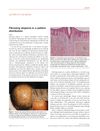
February 2010 in “Journal of the European Academy of Dermatology and Venereology” This article is a letter to the editor about fibrosing alopecia in a pattern distribution and reports no new research findings.
August 2026 in “JAMA Dermatology” This study found that upadacitinib significantly improved hair regrowth compared to placebo in adults and adolescents with severe alopecia areata, and demonstrated a positive benefit-risk profile.
January 2024 in “Biomedicines” This review discussed the cutaneous manifestations of APECED, highlighting chronic mucocutaneous candidiasis, alopecia areata, and vitiligo, while emphasizing the importance of early detection and monitoring for accurate diagnosis and patient care in various populations.