3 citations
,
March 2023 in “ACTA SCIENTIAE VETERINARIAE” This case report describes how real-time PCR rapidly identified Trichophyton mentagrophytes in a dog's dermatophytosis when traditional mycological methods were slower.
 3 citations
,
September 2020 in “Case reports in dermatological medicine”
3 citations
,
September 2020 in “Case reports in dermatological medicine” This case report described a misdiagnosed kerion in a 10-year-old child initially treated as a bacterial abscess, leading to unnecessary surgery and residual scarring alopecia.
3 citations
,
November 2019 in “Journal of dermatology” This case report details the successful use of oral itraconazole in treating a giant tufted angioma with hair loss that developed during pregnancy, leading to significant symptom relief and hair regrowth after discontinuation of the medication.
 3 citations
,
January 2019 in “Annals of dermatology/Annals of Dermatology”
3 citations
,
January 2019 in “Annals of dermatology/Annals of Dermatology” Hydroxychloroquine effectively treated twenty-nail dystrophy in a patient with alopecia areata.
 3 citations
,
January 2017 in “Evidence-based complementary and alternative medicine”
3 citations
,
January 2017 in “Evidence-based complementary and alternative medicine” This study found that Galla chinensis solution significantly improved skin lesions and fungal eradication in dermatophytosis-infected dogs, showing over 85% efficacy in fungal removal after 14 days and outperforming the positive control treatment.
 3 citations
,
June 2010 in “Pharmacognosy journal”
3 citations
,
June 2010 in “Pharmacognosy journal” This study found that a formulated polyherbal antidandruff hair oil containing eucalyptus and ocimum volatile oils, along with hibiscus and phyllanthus extracts, showed both antifungal and hair growth activities in open pilot clinical trials.
2 citations
,
August 2023 in “Journal of Natural Remedies” In this study, researchers developed a herbal anti-dandruff shampoo that demonstrated strong antifungal activity against Malassezia furfur and reported its conditioning performance to be comparable to market-available shampoos, though further research is needed to improve its quality and safety.
 2 citations
,
April 2022 in “Cureus”
2 citations
,
April 2022 in “Cureus” This case study reports a rare instance of a subcutaneous abscess caused by Candida albicans infection in a 42-year-old Japanese woman following laparoscopic cholecystectomy.
 2 citations
,
May 2017 in “The Journal of Dermatology”
2 citations
,
May 2017 in “The Journal of Dermatology” This case report describes a Japanese bone marrow transplant recipient who developed a high-risk cutaneous squamous cell carcinoma on the scalp, potentially linked to long-term voriconazole use.
2 citations
,
January 2012 in “ACTA SCIENTIAE VETERINARIAE” This case report describes the successful topical treatment of a horse with a Pythium insidiosum infection using amphotericin B and DMSO, leading to significant wound healing and hair regrowth.
 2 citations
,
January 2004 in “Medical Hypotheses”
2 citations
,
January 2004 in “Medical Hypotheses” This hypothesis proposes that fungal infection may be a common risk factor for both male pattern baldness and coronary heart disease, supported by some evidence linking antifungal treatment to improvements in both conditions.
1 citations
,
April 2024 in “Animal Genetics” This study described an Appenzeller Mountain Dog with clinical signs of an NSDHL defect, discovering a large heterozygous de novo deletion spanning the entire NSDHL gene through whole genome sequencing.
 1 citations
,
April 2024 in “Veterinary Science and Medicine Journal”
1 citations
,
April 2024 in “Veterinary Science and Medicine Journal” In this study, a mixed breed dog with Malassezia fungal dermatitis and tick infestation showed notable improvement after 14 days of treatment with itraconazole, loratadine, fish oil, sebasol shampoo, and multivitamins, with reduced skin symptoms and hair regrowth observed.
1 citations
,
January 2024 in “Journal of clinical medicine” This literature review highlights the changing epidemiology of tinea capitis due to global migration and underscores the importance of early recognition and treatment of atypical variants in immunocompetent children to minimize prolonged systemic antifungal therapy and prevent adverse events, especially regarding liver health.
1 citations
,
November 2023 in “Journal of Innovations in Applied Pharmaceutical Science (JIAPS)” In this study, researchers developed a neem oil-based emulgel showcasing anti-dandruff properties with controlled dual release, observing formulation F5 providing a 65.27% release after 8 hours and the highest antifungal inhibition against Candida albicans.
 1 citations
,
November 2023 in “Naunyn-Schmiedeberg's archives of pharmacology”
1 citations
,
November 2023 in “Naunyn-Schmiedeberg's archives of pharmacology” This review focused on the bioactive compounds and pharmacological properties of Lawsonia inermis (henna) and found that it contains various beneficial compounds with potential therapeutic applications, such as antioxidant and anti-inflammatory effects, indicating a need for further investigation into its medical benefits.
 1 citations
,
November 2023 in “Journal of cosmetic dermatology”
1 citations
,
November 2023 in “Journal of cosmetic dermatology” This study developed a novel antidandruff shampoo with ketoconazole-coated zinc oxide nanoparticles that showed enhanced antifungal activity against Malassezia furfur compared to standard ketoconazole treatments, suggesting it could be a more effective alternative for dandruff management.
 1 citations
,
December 2022 in “International Journal of Science for Global Sustainability”
1 citations
,
December 2022 in “International Journal of Science for Global Sustainability” This study found that Mitracarpus hirtus extracts showed potential antifungal activity against Tinea capitis in vitro, with ethylacetate extracts demonstrating the highest inhibitory effects.
 1 citations
,
October 2022 in “Journal of food and nutrition research”
1 citations
,
October 2022 in “Journal of food and nutrition research” This review investigates the potential benefits of cinnamon supplementation alongside lifestyle changes for managing obesity and polycystic ovary syndrome, but it reports no new clinical results.
 1 citations
,
July 2022 in “Pakistan biomedical journal”
1 citations
,
July 2022 in “Pakistan biomedical journal” This review discusses ethanol-based transethosome vesicles for drug delivery through the skin, but reports no new clinical results.
 1 citations
,
March 2022 in “Berkala Ilmu Kesehatan Kulit dan Kelamin/Berkala ilmu kesehatan kulit dan kelamin (Periodical of dermatology and venerology)”
1 citations
,
March 2022 in “Berkala Ilmu Kesehatan Kulit dan Kelamin/Berkala ilmu kesehatan kulit dan kelamin (Periodical of dermatology and venerology)” This case analysis found that trichoscopy is a valuable tool for diagnosing and monitoring treatment progress in tinea capitis by distinguishing between Microsporum and Trichophyton etiologies.
 1 citations
,
February 2022 in “Scholars international journal of traditional and complementary medicine”
1 citations
,
February 2022 in “Scholars international journal of traditional and complementary medicine” In this study, researchers formulated a hair gel using guar gum and jatamansi extract, evaluating its physical properties and noting that jatamansi may promote hair growth, with the gel meeting various parameters such as pH, viscosity, and spreadability.
 1 citations
,
March 2019 in “Journal of Interdisciplinary Medicine”
1 citations
,
March 2019 in “Journal of Interdisciplinary Medicine” This case report details a middle-aged man with multiple sclerosis who developed difficult-to-evaluate skin reactions after daclizumab treatment, noting only slight improvement with additional therapies.
 1 citations
,
January 2019 in “Journal of The Korean Institute of Illuminating and Electrical Installation Engineers”
1 citations
,
January 2019 in “Journal of The Korean Institute of Illuminating and Electrical Installation Engineers” This study found that LEDs at specific wavelengths may improve antifungal performance and promote hair growth by activating scalp cells without inducing inflammation compared to a non-irradiated group.
 1 citations
,
December 2018 in “Talenta Conference Series Tropical Medicine (TM)”
1 citations
,
December 2018 in “Talenta Conference Series Tropical Medicine (TM)” This study evaluated the antifungal activity of lemongrass oil in anti-dandruff gel shampoo formulations and found that a 10% lemongrass oil concentration was the most effective at inhibiting the growth of the dandruff-causing fungus Pityrosporum ovale.
 1 citations
,
May 2016 in “Current Opinion in Pediatrics”
1 citations
,
May 2016 in “Current Opinion in Pediatrics” This review discusses diagnostic strategies for pediatric hair loss, emphasizing the importance of thorough examinations and dermoscopy for accurate diagnosis, and reports no new research findings.
 1 citations
,
January 2016 in “Open Forum Infectious Diseases”
1 citations
,
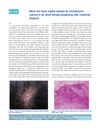
January 2016 in “Open Forum Infectious Diseases” This study found that fluconazole induced early hair follicle resting phase (telogen effluvium) in rats, without changing retinoic acid levels in rats or human patients, suggesting further investigation into fluconazole's hair loss mechanism is needed.
 1 citations
,
January 2015 in “Indian journal of dermatology, venereology, and leprology”
1 citations
,
January 2015 in “Indian journal of dermatology, venereology, and leprology” A woman's scalp infection caused by a fungus led to permanent hair loss and was hard to treat but responded to a specific antifungal.
 1 citations
,
September 2011 in “British Journal of Dermatology”
1 citations
,
September 2011 in “British Journal of Dermatology” This review discusses advances in understanding the role of Malassezia in seborrhoeic dermatitis and dandruff, highlighting the significance of the hair follicle infundibulum and the action of zinc pyrithione, but reports no new clinical results.
 1 citations
,
August 2007 in “Indian Journal of Pediatrics”
1 citations
,
August 2007 in “Indian Journal of Pediatrics” This case report describes a 13-year-old girl with atypical symptoms leading to a delayed diagnosis of HIV infection with fatal disseminated cryptococcosis.