 September 2018 in “Asian journal of pharmacy and pharmacology”
 This review discusses the nutritional and therapeutic benefits of honey based on its botanical origin, and it reports no new clinical results, instead calling attention to its varied uses and potential health impacts.
 20 citations
,
September 2019 in “South African Journal of Botany”
20 citations
,
September 2019 in “South African Journal of Botany” This study found that Teucrium polium L. subsp. geyrii Maire extract demonstrated a large safety margin in acute and subacute toxicity tests on mice and significantly enhanced wound healing in rats, especially with callus extract, by improving cell proliferation and wound contraction.
 8 citations
,
November 2024 in “Scientific Reports”
8 citations
,
November 2024 in “Scientific Reports” In this study, different drying methods for Hedychium spicatum rhizomes significantly affected the essential oil yield, antioxidant potential, and compound composition, with the HSOV30 method yielding the highest oil content, antioxidant activity, and specific compound levels such as 1,8-cineole and elemol.
 September 2025 in “International Journal of Environmental Sciences”
 This study explored the stem of Moullava spicata and found it to be rich in secondary metabolites and natural antioxidants, showing significant concentration-dependent antioxidant activity, which supports its ethnomedicinal use and provides a basis for further pharmacological research.
 125 citations
,
December 2016 in “Molecules”
125 citations
,
December 2016 in “Molecules” This review discusses the extraction, purification, modification, and biological activity of polysaccharides from Traditional Chinese Medicine and reports no new research findings.
 April 2026 in “BMC Biotechnology”
 This study found that curcumin spanlastics demonstrated greater antimicrobial, antioxidant, and anticancer activities in the MCF-7 breast cancer cell line compared to curcumin alone or curcumin nanocrystals, also affecting several cancer-related protein markers and showing enhanced solubility and activity.
 June 2017 in “Asian journal of pharmaceutical and clinical research”
 This study found that a green tea extract gel was stable across various temperatures, did not cause eye irritation, and significantly increased eyelash growth compared to a placebo after two months of use in human volunteers.
 6 citations
,
February 1974 in “The BMJ”
6 citations
,
February 1974 in “The BMJ” The document concludes that scalp disorders can be treated with hair washing, specific shampoos, medications, and sometimes surgery or hair transplants, but hereditary baldness is untreatable.
 4 citations
,
February 2018 in “Jurnal teknologi”
4 citations
,
February 2018 in “Jurnal teknologi” This study found that Kaempferia galanga ethanolic extract has potential as an antifungal agent in an oil-in-water cream formulation, exhibiting stable physicochemical properties in laboratory tests.
 October 2025 in “International Journal of Novel Research and Development”
 In this review, the authors discussed herbal hair cosmetics, highlighting natural ingredients like hibiscus and aloe vera that may nourish hair and improve scalp health without synthetic chemicals' side effects.
 January 2012 in “Postgraduate obstetrics & gynecology”
 Up to 50% of women may experience significant hair loss by age 50, with various causes and treatments available.
 78 citations
,
September 2006 in “International Journal of Cosmetic Science”
78 citations
,
September 2006 in “International Journal of Cosmetic Science” This paper discusses the role of Malassezia yeast and inflammation in dandruff and highlights the potential of anti-inflammatory antidandruff formulations to improve scalp conditions and hair cycle disturbances; it presents no new experimental results.
59 citations
,
January 2003 in “Phytomedicine” This study found that a cream containing 2% Fennel extract reduced hair diameter in idiopathic hirsutism patients more effectively than a cream with 1% Fennel or a placebo.
 39 citations
,
January 2019 in “Journal of Dermatological Treatment”
39 citations
,
January 2019 in “Journal of Dermatological Treatment” This review found topical ketoconazole to be highly effective against Malassezia-related skin conditions, though other treatments may outperform it for Tinea and Candida infections.
 5 citations
,
February 2022 in “East African Journal of Science Technology and Innovation”
5 citations
,
February 2022 in “East African Journal of Science Technology and Innovation” This study evaluated a herbal shampoo containing flavonoid glycosides from Dicerocaryum senecioides and found that it successfully treated T. tonsurans infections in children's scalp when used daily, demonstrating significant effectiveness compared to a placebo.
 3 citations
,
January 2017 in “Evidence-based complementary and alternative medicine”
3 citations
,
January 2017 in “Evidence-based complementary and alternative medicine” This study found that Galla chinensis solution significantly improved skin lesions and fungal eradication in dermatophytosis-infected dogs, showing over 85% efficacy in fungal removal after 14 days and outperforming the positive control treatment.
 June 2026 in “Frontiers in Marine Science”
 This study found that Codium sp. cultivated in IMTA systems can be a sustainable source of bioactive ingredients for skin care products, with various fractions providing photoprotective, wound-healing, and antimicrobial benefits in vitro.
 January 2025 in “International Journal of Advanced Research in Science Communication and Technology”
 This systematic review highlights the potential of herbal shampoos, formulated with ingredients like Neem, Bhringraj, and Aloe Vera, to promote hair growth and reduce dandruff, while also discussing modern techniques and challenges in their development and evaluation.
 January 2025 in “International Journal of Pharmaceutical Research and Applications”
 This study examines the formulation and effectiveness of a natural hair gel made with Mussaenda frondosa leaf extract for its potential anti-dandruff benefits, highlighting its safety and additional advantages for promoting hair and scalp health.
 January 2025 in “International Journal of Herbal Medicine”
 This review highlights that while dandruff affects over 50% of humans and cannot be fully eradicated, it can be controlled through chemical treatments that may cause side effects or herbal remedies such as Neem and Tea tree oil, which have longstanding use in hair care.
 January 2022 in “Journal of pharmacognosy and phytochemistry”
 This study found that a polyherbal gel made from guava leaves, amla, and aloe is effective against candidiasis on the skin, with additional benefits of nourishing hair and preventing premature graying.
 8 citations
,
January 2000
8 citations
,
January 2000 This study found that terbinafine prevented the invasion of keratin by Trichophyton mentagrophytes in experimental models replicating human dermatomycoses.
 73 citations
,
March 2014 in “Journal of The American Academy of Dermatology”
73 citations
,
March 2014 in “Journal of The American Academy of Dermatology” Most dermatologic medications are safe during pregnancy and breastfeeding, but some should be avoided due to potential risks.
 61 citations
,
October 2005 in “The journal of investigative dermatology. Symposium proceedings/The Journal of investigative dermatology symposium proceedings”
61 citations
,
October 2005 in “The journal of investigative dermatology. Symposium proceedings/The Journal of investigative dermatology symposium proceedings” This review discusses scalp skin disorders, their overlapping symptoms, diagnostic techniques, and treatment strategies, emphasizing the importance of accurate differential diagnosis, but reports no new clinical results.
 30 citations
,
June 2024 in “Scientific Reports”
30 citations
,
June 2024 in “Scientific Reports” This study explored a keratin, sodium alginate, and carboxymethyl chitosan hydrogel modified with tannic acid and found it to have promising wound-healing qualities, including similar elasticity to human skin, antimicrobial and antioxidant properties, and effective water retention. These attributes suggest potential applications in biomedical engineering.
 11 citations
,
April 2016 in “The American Journal of Dermatopathology”
11 citations
,
April 2016 in “The American Journal of Dermatopathology” This review discusses the current knowledge on using special and immunohistochemical stains for diagnosing hair disorders, concluding that no stains are recommended for routine use in hair pathology.
6 citations
,
August 2022 in “Journal of Herbal Medicine” In this study, mangosteen pericarp water extract was found to significantly promote hair dermal papilla cell proliferation and enhance melanin synthesis in vitro, surpassing known melanogenic agents such as α-melanocyte stimulating hormone and forskolin in potency.
 3 citations
,
October 2021 in “International Journal of Research in Ayurveda and Pharmacy”
3 citations
,
October 2021 in “International Journal of Research in Ayurveda and Pharmacy” This study reviewed the pharmacological properties of Priyaladi lepa, an Ayurvedic formulation, and reported its potential anti-dandruff benefits due to anti-inflammatory, anti-fungal, anti-microbial, anti-pruritic, antioxidant, and exfoliation effects, warranting further research for managing Darunaka (dandruff).
 3 citations
,
January 2019 in “Annals of dermatology/Annals of Dermatology”
3 citations
,
January 2019 in “Annals of dermatology/Annals of Dermatology” Hydroxychloroquine effectively treated twenty-nail dystrophy in a patient with alopecia areata.
 1 citations
,
December 2010 in “InnovAiT”
1 citations
,
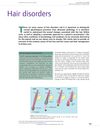
December 2010 in “InnovAiT” This article reviews common causes of hair loss and hair excess and discusses their management in primary care settings, but it reports no new clinical results.