January 2026 in “Zenodo (CERN European Organization for Nuclear Research)” This study evaluated the effect of statins on alopecia areata improvement in a large retrospective cohort and found that statins do not independently predict improvement in this hair disorder. Age and intralesional triamcinolone acetonide injections were identified as better predictors.
January 2026 in “Ciencia Latina Revista Científica Multidisciplinar” In this case study, a 14-year-old boy with treatment-resistant diffuse alopecia areata achieved complete hair regrowth following three monthly sessions of microneedling combined with injections of triamcinolone, dutasteride, and synthetic exosomes, suggesting that exosome-based therapy could be a promising alternative for managing refractory autoimmune alopecia.
 January 2026 in “BULLETIN OF STOMATOLOGY AND MAXILLOFACIAL SURGERY”
 In this randomized controlled trial, both Botulinum Toxin-A and Triamcinolone Acetonide showed substantial effectiveness in treating patchy Alopecia Areata, but Botulinum Toxin-A avoided complications while Triamcinolone led to skin atrophy in 16.7% of patients.

This case study reports a rare instance of both alopecia areata and fixed drug eruption occurring in the same area on a 40-year-old man's beard, triggered by oral paracetamol, highlighting potential shared pathogenic pathways and the isotopic phenomenon.
 July 2025 in “Journal of Cosmetic Dermatology”
 In this clinical study involving individuals with localized alopecia areata, TrA injections were found to significantly outperform MTX, leading to better hair regrowth and higher patient satisfaction, though both treatments had similar mild side effects.
 February 2025 in “PubMed”
 This case series found that trichoscopy and biopsy of the scalp in individuals with skin of color identified concurrent lichen planopilaris and female androgenic alopecia, highlighting the importance of comprehensive scalp evaluation to ensure accurate diagnosis and effective treatment.
January 2025 in “Indian Journal of Dermatology” This case report describes a 38-year-old man who experienced alopecia areata immediately following a COVID-19 infection with high fever, suggesting a potential association between the two events.
 January 2025 in “TURKDERM”
 Alopecia areata incognito in children can be effectively treated with triamcinolone acetonide and supplements, leading to full hair regrowth.
January 2025 in “Dialnet (Universidad de la Rioja)” In this case study, a 14-year-old male with treatment-resistant diffuse alopecia areata experienced complete hair regrowth after three monthly sessions of microneedling combined with triamcinolone, dutasteride, and synthetic exosomes, suggesting this therapy might enhance outcomes in refractory cases.
 December 2024 in “PubMed”
 This case study describes a 55-year-old Japanese male with Vogt-Koyanagi-Harada disease who experienced no hair regrowth but did have hair repigmentation after localized steroid injections, highlighting an unusual late-onset poliosis and alopecia, which has not been previously reported.
 October 2024 in “Journal of the Endocrine Society”
 This case study reported a 40-year-old woman developing Cushing Syndrome months after a single intraarticular injection of Triamcinolone Acetonide, highlighting the potential long-term effects of corticosteroid exposure and the importance of awareness about these risks for clinicians and patients.
 September 2024 in “Egyptian Journal of Dermatology and Venerology”
 This study found that intralesional injection of triamcinolone acetonide combined with latanoprost (a PGF2α analog) was more effective in treating localized alopecia areata, showing higher treatment response rates and greater reduction in severity scores compared to other treatments.
 November 2023 in “Aktualʹnì problemi sučasnoï medicini”
 This article provides a review of alopecia areata, highlighting the development of diagnostic and therapeutic algorithms that consider factors such as age, disease severity, and quality of life, but it reports no new clinical findings.
 October 2023 in “Applied materials today”
 In this study, researchers developed a novel TA-encapsulated microneedle applicator that successfully promoted hair growth and reduced inflammation in a C3H/HeJ mouse model of alopecia areata, potentially offering an improved alternative to existing treatments.
 July 2023 in “IntechOpen eBooks”
 This review highlights that alopecia areata, a common type of hair loss, currently lacks preventive or curative treatments, and traditional therapies such as minoxidil and corticosteroids offer inconsistent results, necessitating patient-consensual treatment planning.
 May 2023 in “Journal of medical case reports”
 This case report describes a 6-year-old Middle-Eastern girl with skin lesions, scaling, discoloration, and patchy alopecia, diagnosed with acute granuloma annulare, alopecia areata, and dermatitis. The treatment, including topical minoxidil, betamethasone, and triamcinolone acetonide injections, showed modest effectiveness for alopecia.
 April 2023 in “Indian journal of paediatric dermatology”
 In this case study, a 12-year-old boy with isolated nail lichen planus showed significant improvement after receiving intramuscular triamcinolone acetonide and topical tacrolimus treatment, although his great toenails were less responsive.
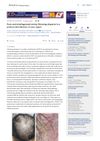 March 2023 in “Journal of Cosmetic Dermatology”
 This case report illustrates that fibrosing alopecia in a pattern distribution may be misdiagnosed as androgenetic alopecia due to similar hair loss patterns, but distinctive trichoscopic and histopathologic features help differentiate it.
 February 2023 in “Archives of Dermatological Research”
 This study found fractional carbon dioxide laser therapy effective in treating alopecia areata, both alone and with topical treatments, suggesting decorin's involvement in improving hair growth.
 January 2023 in “Dermatologic Therapy”
 This study suggests that platelet-rich plasma is a safe and effective treatment for alopecia areata, showing superior treatment response compared to triamcinolone acetonide and placebo, with primarily minor side effects.
 September 2022 in “JAAD Case Reports”
 In this study, researchers observed that approximately 25% of patients experienced hair loss after COVID-19 infection, with nonscarring alopecia being the most common form.
 July 2022 in “Media Dermato Venereologica Indonesiana”
 In this case study, a 29-year-old man with alopecia areata experienced satisfactory hair regrowth after five months of combined intralesional triamcinolone acetonide and platelet-rich plasma therapy.
 January 2022 in “Clinical dermatology open access journal”
 This study reported rapid hair regrowth in a patient with early-stage alopecia areata after treatment with intralesional triamcinolone acetonide, prednisone, minoxidil, and vitamin C, leading to complete recovery of the bald area within three months.

In this study on patchy alopecia areata treatment involving 20 patients, TCA (triamcinolone acetonide) injections showed a significantly better response and minimal side effects compared to superficial cryotherapy.
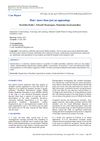 June 2021 in “International journal of research in dermatology”
 This report describes a child and his father with hereditary hypotrichosis simplex, an uncommon isolated form of hair loss, with no other ectodermal or systemic abnormalities noted.
March 2020 in “QJM: An International Journal of Medicine” This study found that intradermal minoxidil 5% alone and with intralesional triamcinolone acetonide significantly reduced alopecia areata dermoscopic findings, while standard intralesional corticosteroids remain the main first-line treatment for patchy alopecia with less than 50% scalp involvement.

In this case report, combination therapy with topical tretinoin, topical and intralesional steroids, and systemic doxycycline showed improvement in AKN lesions for a 19-year-old man, with notable reductions in lesion size and number observed by the second week.
 October 2017 in “Journal of Investigative Dermatology Symposium Proceedings”
 This study suggests that PGD2 may increase testosterone production in keratinocytes through oxidative stress pathways, with n-acetyl-cysteine blocking this effect.
 September 2016 in “Journal of Dermatology and Dermatologic Surgery”
 This case report describes a rare instance where scalp psoriasis mimicked severe alopecia, initially misdiagnosed as central centrifugal cicatricial alopecia.
April 2016 in “Journal of the American Academy of Dermatology” Incorrect injection of corticosteroids for alopecia areata can cause skin problems.