 8 citations
,
January 2013 in “Medicinal chemistry”
8 citations
,
January 2013 in “Medicinal chemistry” This study reported that among 10 tested 2-(4-chlorophenyl)-5-aryl-1,3,4-oxadiazole compounds, compound 4c showed the highest activity against cancer cell lines, with a 95.37% average growth rate.
 8 citations
,
March 1942 in “Journal of Endocrinology”
8 citations
,
March 1942 in “Journal of Endocrinology” This study found that growth in rats hindered by thyroid removal at birth can be normalized through the administration of thyroid preparations like thyroxine and artificial thyroprotein.
 7 citations
,
November 2004 in “International Journal of Cosmetic Science”
7 citations
,
November 2004 in “International Journal of Cosmetic Science” This review examines mechanical and chemical causes of hair fiber adhesion failure and fracture patterns in the cell membrane complex, but presents no new experimental results.
 6 citations
,
March 2018 in “Journal of Chromatography A”
6 citations
,
March 2018 in “Journal of Chromatography A” This study describes an analytical technique combining field-enhanced sample stacking with dispersive liquid-liquid microextraction, offering improved sensitivity for detecting finasteride and its metabolite in urine samples from patients treated for androgenetic alopecia.
 4 citations
,
January 2009 in “Eclética Química”
4 citations
,
January 2009 in “Eclética Química” This study described a potentiometric titration method for determining minoxidil, which showed recoveries of 97.4 to 98.7% and agreed with chromatographic results within a 90% confidence level.
 3 citations
,
December 2013 in “Journal of Dermatology”
3 citations
,
December 2013 in “Journal of Dermatology” This study found that scanning electron microscopy can identify four specific hair morphology patterns in alopecia areata patients, offering a less invasive diagnostic option compared to punch biopsy.
 2 citations
,
October 2007 in “Kafrelsheikh Veterinary Medical Journal”
2 citations
,
October 2007 in “Kafrelsheikh Veterinary Medical Journal” This study examined the morphological features of buffalo lips, finding that their structure includes distinct layers of skin, muscle, connective tissue, and glands.
 2 citations
,
March 2005 in “Journal of the American Academy of Dermatology”
2 citations
,
March 2005 in “Journal of the American Academy of Dermatology” This study found that using an overnight peel treatment for 3 months increased wrinkle spacing, leading to an average reduction in wrinkles of 39% in 67% of participants.
 2 citations
,
October 2001 in “Analytical Sciences”
2 citations
,
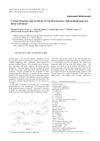
October 2001 in “Analytical Sciences” A new compound that could treat various androgen-related conditions was created and analyzed.
 1 citations
,
May 2007 in “International Journal of Dermatology”
1 citations
,
May 2007 in “International Journal of Dermatology” Minoxidil, when applied to the scalp, can stimulate hair growth but effects vary, stop if treatment ends, and it may cause side effects like fluid retention.
This chapter reviews various types of aromatic compounds and provides references, but reports no new experimental results.
 1 citations
,
July 1965 in “Postgraduate medicine”
1 citations
,
July 1965 in “Postgraduate medicine” This article reviews common dermatologic diseases and their treatments, suggesting that physicians can effectively manage these conditions using general medical knowledge, but it reports no new clinical results.
 April 2026 in “Journal of Pharmaceutical Innovation”
 In this study, the researchers developed and optimized a curcumin nanocrystal gel to enhance skin permeability, reporting improved dissolution properties and antiproliferative effects on cell lines, suggesting it as a promising topical delivery system.
 June 2025 in “Universities Journal of Phytochemistry and Ayurvedic Heights”
 This study evaluated the wedelolactone content and antimicrobial activity of Eclipta alba and Wedelia chinensis extracts, finding a potential relationship between the concentration of wedelolactone and their in vitro antimicrobial effects against several pathogenic bacteria and yeast.
 January 2025 in “Current Trends in Pharmacy and Pharmaceutical Chemistry”
 This review examines recent advancements in analytical techniques used to quantify dutasteride, a medication for enlarged prostate, in various biological samples and its commercial forms, emphasizing methods such as HPTLC, GC-MS, and HPLC.
 April 2024 in “Research Square (Research Square)”
 This study found that extracts of mesenchymal stem cells (MSC-extract) and their protein components (MSC-protein) enhanced the proliferation and migration of periodontal ligament cells and induced significant periodontal tissue regeneration, showing potential as a new cell-free treatment for periodontal disease.
 May 2022 in “International Journal for Research in Applied Science and Engineering Technology”
 This study reported that Eclipta prostrata contains active phytochemicals and demonstrated antibacterial properties in methanolic extracts, suggesting potential antibiotic uses.
 March 2022 in “International Journal of Current Science Research and Review”
 This article describes subclinical ketosis in pregnant cows and associates it with several metabolic changes and clinical signs, reporting decreased levels of hemoglobin and glucose and increased ketone bodies.

In this animal study, treatment with Trachyspermum copticum seed extract significantly altered IL-1 and KGF/FGF-7 gene expression, improving dermatitis and hair growth in mice compared to controls and corticosteroids.
 January 2018 in “Elsevier eBooks”
 This article reviews the mechanisms and uses of minoxidil for hypertension and androgenetic alopecia, without presenting new clinical findings.
 September 2017 in “Journal of Investigative Dermatology”
 This study found that hyaluronic acid increased the size and cell proliferation of mixed aggregates in a 3D culture model, indicating its role in human hair follicle germ-like structure formation without enhancing dermal papilla cell markers.
 September 2017 in “Journal of Investigative Dermatology”
 This study found that dermal papilla cells exhibit stage-dependent variation in histone methylation during the hair follicle cycle and display distinct chromatin marker expression when transitioning to in vitro culture.
 September 2017 in “Journal of Investigative Dermatology”
 In this study, low-dose 453 nm blue light appeared to enhance hair growth by interacting with specific photoreceptors in the outer root sheath cells.
 September 2017 in “Journal of Investigative Dermatology”
 In this study, the novel ASAXA-μCT imaging method identified that the shrinkage of sweat glands with aging causes dermal defects, reducing skin elasticity and contributing to wrinkling and sagging.
 January 2017 in “Nasza Dermatologia Online”
 This study found that both new and old formulas of DCP for treating alopecia areata resulted in similar hair regrowth, but tolerance was significantly better with DCP in isopropanol.
 August 2016 in “The journal of investigative dermatology/Journal of investigative dermatology”
 This article discusses how activating the hexosamine pathway may enhance skin homeostasis by increasing hyaluronic acid secretion and supporting hair follicle stem cell self-renewal, but reports no new results.

The document concludes that scientists created various steroids with different properties, including a more effective semi-synthetic vitamin D.
 February 1999 in “Analytical Sciences”
 A new antiandrogen compound was made and its detailed three-dimensional shape was described.
 September 2017 in “Journal of Investigative Dermatology”
 This study found that Bone morphogenetic proteins (BMPs) play a crucial role in dermal papilla cells' ability to induce hair follicle stem cell differentiation, and that androgens may impair this process by downregulating BMPs.
 80 citations
,
November 1975 in “Acta dermato-venereologica”
80 citations
,
November 1975 in “Acta dermato-venereologica” This study found that while some patients with severe alopecia areata responded to high-dose prednisolone, the response was inconsistent and the therapy's risks prevent recommending it for general use.