 1 citations
,
January 2017 in “Expert opinion on orphan drugs”
1 citations
,
January 2017 in “Expert opinion on orphan drugs” This study reviews current systemic treatments for hidradenitis suppurativa, highlighting traditional methods and new options like biological agents, and suggests that pharmacological therapies show promise, particularly for non-advanced cases, despite the disease's complex etiology involving factors such as genetics and inflammation.
 1 citations
,
December 2007 in “Drug and therapeutics bulletin”
1 citations
,
December 2007 in “Drug and therapeutics bulletin” This review discusses updated guidance on treating scalp ringworm in children, emphasizing newer antifungal drugs, but does not report new clinical results.
 1 citations
,
February 1977 in “Archives of Dermatology”
1 citations
,
February 1977 in “Archives of Dermatology” This case report describes a 2-month-old infant with a severe seborrhea-like skin eruption and respiratory distress, similar to symptoms that led to a sibling's death from Gram-negative septicemia.
 1 citations
,
February 2021 in “Gastroenterology”
1 citations
,
February 2021 in “Gastroenterology” This report discusses a case of vesiculopustular eruption in a patient with ulcerative colitis, highlighting the effective use of ustekinumab for treatment and suggesting its consideration in similar cases of IBD-related skin lesions.
 May 2026 in “Frontiers in Immunology”
 This case report documents the first use of bimekizumab as monotherapy for dissecting cellulitis of the scalp, where a 27-year-old man experienced significant symptom relief without adverse effects after failing standard treatments.
 February 2026 in “Frontiers in Pharmacology”
 This study found that injecting PRP gel derived from a patient's own blood may promote tissue regeneration and closure of intestinal fistulas unresponsive to conservative therapy.
This case report in the Journal of Drugs in Dermatology discusses dissecting cellulitis of the scalp, emphasizing its disproportionate impact on Black males and the need for early diagnosis and effective management to mitigate scarring and quality of life issues.
 January 2026 in “Journal of Cutaneous Immunology and Allergy”
 In this case report, a young Japanese man was diagnosed with scalp IgG4-related disease, which mimicked acne keloidalis nuchae but was identified by histopathology and elevated serum IgG4 levels as a systemic fibroinflammatory disorder, highlighting the importance of differential diagnosis in atypical scarring alopecia.
 September 2025 in “International Journal of Innovative Technologies in Social Science”
 This review highlights that while pharmacotherapy, including biological agents, provides varying but often partial control of hidradenitis suppurativa depending on disease severity, significant challenges and high relapse rates persist, necessitating further research for more effective treatments.
 April 2025 in “International Journal of Homoeopathic Sciences”
 In this study, a 17-year-old male with a recurring pilonidal sinus improved within two months after receiving homeopathic treatment with Silicea and Echinacea mother tincture, suggesting a potential role for homeopathy in managing such surgical cases.
 March 2025 in “Journal of Pakistan Association of Dermatologists”
 In this randomized clinical trial, the authors reported that after 12 weeks, 5% dapsone gel was more effective than 1% clindamycin phosphate gel in treating mild to moderate acne vulgaris, showing efficacy in 78.2% of patients compared to 52.7% with clindamycin.
 January 2024 in “Jurnal Ilmu Kesehatan Hewan”
 In this study, a two-month-old dog diagnosed with scabiosis and toxocariosis showed significant clinical improvement after being treated with sarolaner and pyrantel, evidenced by resolved skin lesions, hair regrowth, and a return to normal abdominal size and oral mucosa color after 30 days.
 June 2023 in “Medical records-international medical journal”
 This study observed that IGF-1R expression significantly decreased in basal keratinocytes of sacrococcygeal pilonidal sinus tissues, suggesting a potential role in its etiology, although further data are needed to evaluate its treatment implications.
 January 2023 in “International Journal of Zoology and Animal Biology”
 This case report describes an 11-year-old Lhasa Apso diagnosed with hypothyroidism and diabetes mellitus, illustrating the link between these common endocrine disorders in dogs.
 May 2022 in “Journal of pharmacognosy and phytochemistry”
 This study carried out a detailed pharmacognostic and phytochemical analysis of Sphagneticola calendulacea leaves, which may help authenticate this plant used in treating inflammation and alopecia.
 June 2018 in “Disease-a-Month”
 This study observed that patients with burning mouth syndrome had higher levels of cystatin SN in resting saliva compared to healthy controls, suggesting a potential biomarker for the condition.
 April 2016 in “JAMA Dermatology”
 Acne is not a key diagnostic feature for PCOS, postadolescent men with acne may have insulin resistance, melanoma patients often have few moles, tumor size in CSCC indicates higher risk of serious outcomes, and hidradenitis suppurativa is linked to higher risk of heart problems and death.
 December 2012 in “Drugs & Therapy Perspectives”
 Doctors use their experience to choose treatments for scarring hair loss because it's hard to diagnose and treat.
 November 2005 in “Journal of Investigative Dermatology Symposium Proceedings”
 This paper reviews various cases of hair loss, detailing the specific histopathological findings associated with different types of alopecia and scalp disorders, but provides no new clinical results.
 January 2003 in “Springer eBooks”
 Children with diabetes often have skin problems, which can be better managed with good blood sugar control.
 30 citations
,
January 2013 in “Obesity Surgery”
30 citations
,
January 2013 in “Obesity Surgery” This review summarizes the effects and complications of bariatric surgery on skin, noting it can alter existing skin conditions like psoriasis and trigger new dermatoses, but provides no new clinical results.
 68 citations
,
July 2016 in “Dermatology and Therapy”
68 citations
,
July 2016 in “Dermatology and Therapy” This review highlights that light and laser therapies, such as the 1064-nm Nd:YAG and 810-nm diode lasers, may offer significant improvement for acne keloidalis nuchae with minimal side effects, though larger trials are needed.
 59 citations
,
July 2020 in “Journal of The American Academy of Dermatology”
59 citations
,
July 2020 in “Journal of The American Academy of Dermatology” This study concluded that oral minoxidil is an effective and well-tolerated alternative to topical minoxidil for healthy patients struggling with application-related compliance issues.
 37 citations
,
March 1990 in “The Journal of Pediatrics”
37 citations
,
March 1990 in “The Journal of Pediatrics” Toxic shock syndrome is caused by a complex interaction of bacterial toxins and the immune system, and understanding this can help improve diagnosis and treatment.
 26 citations
,
April 2019 in “Advances in wound care”
26 citations
,
April 2019 in “Advances in wound care” This study found that tannic acid accelerated wound healing in rats by modulating inflammatory cytokines, increasing growth factors, and activating the Erk 1/2 pathway.
 25 citations
,
January 2005 in “Pediatric Dermatology”
25 citations
,
January 2005 in “Pediatric Dermatology” This article discusses the use of methotrexate for treating generalized pustular psoriasis in a 2-year-old child, providing a specific case study but reporting no new clinical results.
 24 citations
,
April 2017 in “Aesthetic plastic surgery”
24 citations
,
April 2017 in “Aesthetic plastic surgery” In this study, micro-autologous fat transplantation (MAFT) for frontal augmentation using the MAFT-GUN showed high patient satisfaction and no complications among 178 patients, suggesting it may be a reliable method for forehead contouring.
 24 citations
,
March 2007 in “International Journal of Dermatology”
24 citations
,
March 2007 in “International Journal of Dermatology” This study translated and culturally adapted the Skindex-16 questionnaire into Arabic, finding it to be a reliable and valid measure of quality-of-life impacts from skin diseases in Saudi patients.
 22 citations
,
April 2000 in “International Journal of Dermatology”
22 citations
,
April 2000 in “International Journal of Dermatology” This case report describes a 78-year-old farmer with idiopathic pulmonary fibrosis who developed cutaneous Alternaria alternata infections, which improved with reduced prednisolone and itraconazole treatment, with no recurrence after two years.
 21 citations
,
January 2005 in “Pediatric Dermatology”
21 citations
,
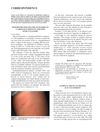
January 2005 in “Pediatric Dermatology” An 8-year-old girl with vitiligo developed extra hair growth on her knee after using tacrolimus ointment.