 1 citations
,
January 2020 in “Elsevier eBooks”
1 citations
,
January 2020 in “Elsevier eBooks” Hormone therapy is safe and effective for transgender adults, but requires regular monitoring and mental health support.
 1 citations
,
April 2019 in “Clinical Breast Cancer”
1 citations
,
April 2019 in “Clinical Breast Cancer” This study found that in men with benign prostatic hyperplasia, 5-alpha reductase inhibitors significantly increased the risk of gynecomastia and breast tenderness compared to placebo or alpha-blockers.
1 citations
,
July 2012 in “Der Urologe” This clinical trial in Poland found that using finasteride, alone or with an alpha-blocker, reduced prostate adenoma size by 40% and improved micturition in patients with benign prostatic hyperplasia.
1 citations
,
October 2008 in “Urology” PSA levels help determine prostate size and guide treatment choices for benign prostatic hyperplasia.
 1 citations
,
February 1993 in “Nursing Standard”
1 citations
,
February 1993 in “Nursing Standard” This article highlights that nurses may not be sufficiently aware of the potential for various drug groups, beyond cytotoxic drugs, to cause alopecia, and emphasizes the importance of early recognition of this side effect.
 1 citations
,
January 1987 in “Journal of The American Academy of Dermatology”
1 citations
,
January 1987 in “Journal of The American Academy of Dermatology” The patient's hair loss was likely not caused by beta blockers but possibly by stress or other factors.
April 2026 in “Journal of the American Academy of Dermatology” Oral 5-alpha-reductase inhibitors for hair loss don't increase heart risk.
 March 2026 in “Gazzetta Medica Italiana Archivio per le Scienze Mediche”
 This analysis concluded that finasteride effectively reduces prostate size and urinary symptoms in benign prostatic hyperplasia, offering a favorable safety profile and versatility as a treatment option.
February 2026 in “Postgraduate Medicine” This meta-analysis reports that 5-alpha-reductase inhibitors are associated with a 31% increased risk of depression, with varying outcomes depending on the comparator group, highlighting significant heterogeneity across studies.
 August 2025 in “medRxiv (Cold Spring Harbor Laboratory)”
 This study reports that using 5-alpha reductase inhibitors is associated with a 31% increased risk of depression, highlighting that the choice of comparator group significantly affects study results.

This case report describes a 61-year-old woman with telogen effluvium, highlighting her concerns about exacerbated hair loss after surgery and aims to explore anesthesia techniques that might reduce hair shedding in such patients.
February 2025 in “Actas Dermo-Sifiliográficas” Transgender patients with hair loss need personalized treatment plans considering their unique needs.
 October 2024 in “Journal of the Endocrine Society”
 In this retrospective chart review, researchers observed that estrogen monotherapy effectively suppressed testosterone levels below 50ng/dL in all transfeminine patients studied, particularly those using injectable formulations, though the small sample size and ongoing data collection limit these findings.
 October 2024 in “Journal of the Endocrine Society”
 In this retrospective study, among transfeminine patients aged 19-81 receiving gender-affirming estrogen therapy, 100% achieved testosterone suppression without anti-androgens when serum estradiol exceeded 100pg/mL, predominantly using injectable estrogen.
 August 2024 in “Cosmetics”
 This review highlights caffeine's diverse benefits in cosmetics and nutricosmetics, noting its antioxidant properties, ability to treat skin disorders like androgenic alopecia, and potential to enhance sunscreen effectiveness, though penetration into deeper skin layers remains challenging.
 April 2024 in “Research Square”
 IBD patients treated with TNF antagonists may develop autoimmune alopecia areata, with severe cases less likely to improve.
 March 2024 in “Cleveland Clinic journal of medicine”
 This review details contemporary medical management options for benign prostatic hyperplasia, highlighting the expanding role of phosphodiesterase-5 inhibitors and beta-3 agonists, but reports no new clinical findings.

This review discusses anticoagulant and antihypertensive medications as potential contributors to medication-induced telogen effluvium and reports no new clinical results.
 October 2023 in “Paediatrics & child health”
 This document serves as a resource for pediatricians and primary care providers to guide gender-affirming health care for transgender and gender-diverse youth, including potential medical transition options.
 September 2023 in “Fides et Ratio”
 This paper reviews the current lack of evidence on the safety and effectiveness of gender-affirming therapies in minors with gender dysphoria, highlighting ethical and legal concerns, including possible long-term consequences such as infertility.
 September 2023 in “Journal of the American Academy of Dermatology”
 This study found that hair care products designed for coily/curly hair are significantly more expensive than those for straight hair, based on pricing data from Amazon.com. This indicates a need for equitable pricing to ensure access to affordable hair care for all hair types.
January 2023 in “CINECA IRIS Institutial research information system (University of Pisa)” This article discusses topical pharmaceutical compositions with 5-alpha reductase inhibitors for treating androgenetic alopecia and reports no clinical results.
 November 2020 in “TURKDERM”
 This study reports that hormonal therapies, particularly combined oral contraceptives, are commonly used and effective in treating acne in women, especially those with hormonal imbalances or specific acne patterns, regardless of their serum androgen levels.
January 2018 in “Journal of Investigative Dermatology” This quiz article provides a series of dermatological diagnosis questions based on a Journal of Investigative Dermatology article and includes explanations but reports no original research findings.
January 2018 in “Haydarpaşa Numune Hastanesi tıp dergisi” This study hypothesizes that the sulfonamide group in tamsulosin might contribute to its association with intraoperative floppy iris syndrome.
April 2017 in “The Journal of urology/The journal of urology” This Cochrane review reports that 5-alpha reductase inhibitors may slightly reduce urological symptoms and acute urinary retention risk compared to placebo, with a possible small reduction in surgical intervention need compared to alpha blockers.
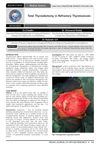 March 2016 in “Indian Journal Of Applied Research”
 This report presents a case of refractory thyrotoxicosis where the patient required a total thyroidectomy after resistance to conventional treatments including antithyroid drugs and radioactive iodine.
 May 2015 in “Journal of Investigative Dermatology”
 Melanoma risk tools need improvement, a gene mutation causes a hair disorder that might be treated by managing cell stress, a potential therapy for a skin-ear disorder involves blocking cell channels, skin wrinkling may indicate lung aging regardless of smoking, and oxidative stress might contribute to common baldness.
January 2015 in “Faculty of 1000 Research Ltd” BPH treatment improved with personalized medicine, new drugs, and less invasive surgeries.
 January 2014 in “Revue des Maladies Respiratoires”
 This study confirmed significant and dramatic ophthalmic and mucocutaneous sequelae from Stevens-Johnson and Lyell syndromes in Morocco, affecting the social and professional integration of mostly young patients.