 3 citations
,
January 2021 in “ScienceAsia”
3 citations
,
January 2021 in “ScienceAsia” In this study, combined treatment with transglutaminase and keratin significantly repaired damaged hair by improving its structural properties, reducing swelling, and enhancing crosslink activities, as evidenced by microscopy and spectroscopy analyses.
 37 citations
,
December 2024 in “Theranostics”
37 citations
,
December 2024 in “Theranostics” In this study, a newly developed nanoparticle-loaded hydrogel wound dressing demonstrated significant antibacterial, antioxidant, anti-inflammatory, and proangiogenic activities, effectively reducing pain and promoting healing in a murine burn wound model while preventing infection by *Staphylococcus aureus*.
 4 citations
,
January 2025 in “Journal of Materials Chemistry B”
4 citations
,
January 2025 in “Journal of Materials Chemistry B” In this study, researchers developed a multifunctional, injectable hydrogel that adapts to irregularly shaped wounds, enhances healing, and shows potential antibacterial activity without significant toxicity, suggesting promise for treating chronic wounds.
 128 citations
,
August 2015 in “Cell Stem Cell”
128 citations
,
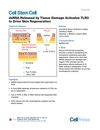
August 2015 in “Cell Stem Cell” The researchers reported that dsRNA from damaged skin activates TLR3, promoting hair follicle regeneration, while TLR3-deficient animals fail to initiate this process, suggesting potential therapeutic approaches for hair neogenesis.
 233 citations
,
February 2018 in “Polymers”
233 citations
,
February 2018 in “Polymers” This review examines the roles and benefits of chitosan in cosmetics and oral hygiene, highlighting its potential in the cosmeceutical market, but it reports no new results.