Finasteride, A Steroid 5α-Reductase Inhibitor, Does Not Affect the Oxidative Metabolism of Antipyrine
October 1993
in “
The Journal of Clinical Pharmacology
”
New to Finasteride? There is a guide in the encyclopedia. Read the guide → 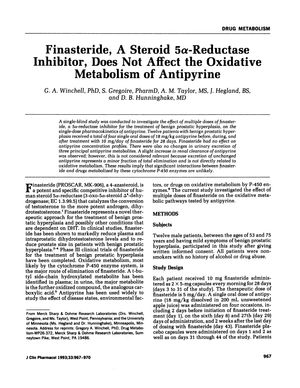
Studysummary Finasteride doesn't affect antipyrine metabolism, so interactions with cytochrome P-450 enzyme drugs are unlikely.
Our plain-language summary. Not medical advice or a treatment recommendation. Consult a qualified healthcare professional before changing treatment. Full disclaimer
This study found that finasteride, a drug used to treat benign prostatic hyperplasia, did not affect the metabolism of antipyrine, a drug metabolized by cytochrome P-450 enzymes. Twelve patients with benign prostatic hyperplasia received multiple doses of antipyrine before, during, and after treatment with finasteride, and there were no changes in antipyrine concentration profiles or urinary excretion of antipyrine metabolites. The study suggests that significant interactions between finasteride and drugs metabolized by cytochrome P-450 enzymes are unlikely.