28 citations
,
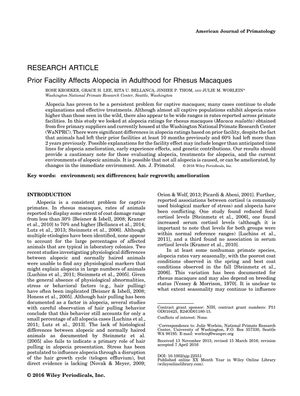
May 2014 in “PubMed” This study found that increased hair cortisol levels, indicating stress, were associated with greater hair loss in captive rhesus macaques, although the causality of this relationship remains unclear.
 17 citations
,
November 2013 in “American Journal of Primatology”
17 citations
,
November 2013 in “American Journal of Primatology” This study reported species and demographic differences in alopecia rates among macaques, with the highest rates in pigtail macaques and noted age-related improvements in alopecia scores.
 20 citations
,
June 2010 in “Genes and Immunity”
20 citations
,
June 2010 in “Genes and Immunity” This study found distinct gene expression patterns in the blood of alopecia areata patients, suggesting involvement of immune processes and new pathways like Wnt signaling and apoptosis in disease pathogenesis.
 23 citations
,
January 2010 in “Journal of Medical Primatology”
23 citations
,
January 2010 in “Journal of Medical Primatology” This study found that alopecia in captive Rhesus macaques may be linked to chronic hypersensitivity dermatitis with CD4+ cell inflammation, possibly influenced by altered housing and reduced pathogen exposure.
87 citations
,
February 2009 in “PubMed” This review discusses the potential causes and treatments for alopecia in nonhuman primates, emphasizing the need for comprehensive testing before attributing hair loss to stress.
 16 citations
,
April 2007 in “Journal of Medical Primatology”
16 citations
,
April 2007 in “Journal of Medical Primatology” This study reports that a 14-year-old female rhesus monkey with alopecia universalis was found to have a T-cell-mediated autoimmune disease similar to human alopecia areata universalis.
 51 citations
,
November 2005 in “Journal of Medical Primatology”
51 citations
,
November 2005 in “Journal of Medical Primatology” This study observed that hair loss in captive rhesus macaques varies with season, sex, and housing conditions, and is significantly correlated with HPA axis activity as indicated by faecal cortisol metabolites.
 29 citations
,
June 2005 in “Journal of Zoo and Wildlife Medicine”
29 citations
,
June 2005 in “Journal of Zoo and Wildlife Medicine” This study concluded that coat damage in captive rhesus macaques is unlikely caused by parasitic, bacterial, or mycotic infections but may be linked to environmental or behavioral factors affecting hair growth.
70 citations
,
March 1980 in “Journal of Nutrition” Zinc deficiency in monkeys causes skin issues and reproductive problems, but supplementation reverses these effects.