Cutaneous Reactions to Recombinant Cytokine Therapy

    Lisa A Asnis, Anthony A. Gaspari
    Image of study
    TLDR Recombinant cytokine therapy can cause skin reactions ranging from mild to severe.
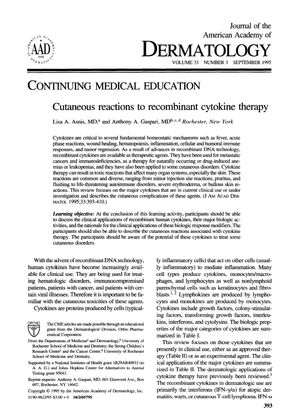
    The document from 1995 reviews the skin reactions caused by recombinant cytokine therapy, which includes proteins produced through recombinant DNA technology used to treat various medical conditions. It highlights that while cytokines are beneficial in treating diseases like cancers and immunodeficiencies, they can also cause a range of skin toxicities. These reactions can be minor, such as injection site reactions and pruritus, or severe, like autoimmune disorders and bullous skin reactions. The review details the cutaneous side effects of specific cytokines, including interferons, which are used for conditions like atopic dermatitis and malignant melanoma, and colony-stimulating factors, which can lead to Sweet's syndrome and exacerbation of inflammatory disorders. The document also notes that interferon therapies can cause alopecia in about 10% of patients and injection site reactions in about 65% of 226 patients. It emphasizes the importance of clinicians being aware of these potential toxicities when using cytokine therapies.

    Discuss this study in the Community →

    Research cited in this study

    3 / 3 results

    Related Community Posts Join

    6 / 10 results

      community The theory that explains everything. Please help me make this big!

      in Research/Science  2447 upvotes 4 years ago
      The post and conversation are about the role of the enzyme 3alpha-hydroxysteroid reductase in hair loss and the potential of compounds like procyanidin B2 and sulforaphane to boost its activity for hair regrowth. Further research is needed to develop effective treatments based on this theory.
      FCE 28260: A Forgotten 5α-Reductase Inhibitor

      community FCE 28260: A Forgotten 5α-Reductase Inhibitor

      by nkrata in Research  330 upvotes 1 year ago
      FCE 28260 (PNU 156765), an under-explored 5α-reductase inhibitor, showcases promising results in research by Giudici et al., outperforming well-known treatments like Finasteride in reducing the conversion of testosterone to DHT. Its superior efficacy, demonstrated through lower IC50 values in both natural and human recombinant enzyme studies, suggests it could offer more effective management of DHT-related conditions. Additionally, its lower molecular weight hints at better potential for topical application, potentially offering advantages in treating conditions such as androgenic alopecia. Despite its potential, it has not advanced in development, possibly due to financial limitations, leaving its therapeutic prospects and side effect profile largely unexplored.

      community Serum based on plant extracts boosts hair growth in weeks.

      in Treatment  43 upvotes 5 months ago
      A serum containing Centella asiatica extracellular vesicles, IGF-1, FGF-7, and caffeine significantly improved hair thickness, density, length, and reduced hair loss after 56 days. The conversation also discusses how treatments like finasteride, minoxidil, and ketoconazole address different aspects of hair loss by reducing DHT, improving blood flow, and lowering inflammation.

      community New plant-based serum shown to regrow hair in weeks, according to scientists

      in Treatment  274 upvotes 2 months ago
      A new plant-based serum is claimed to regrow hair in weeks, but users are skeptical about its effectiveness and the reliability of the study. Ingredients like Centella Asiatica and IGF-1 are mentioned, but many doubt the serum's superiority over existing treatments like Minoxidil and finasteride.

    Similar Research

    5 / 1000+ results