Unexpected Serum DHT Elevation after Generic Dutasteride Use. Finasteride/Dutasteride 6/28/2025
Switching from finasteride to a generic dutasteride led to unexpectedly high DHT levels, prompting a switch to a reputed brand and consideration of softgel capsules for better absorption. The user plans to retest DHT levels and may return to finasteride if issues persist.
View this post in the Community →
Similar Community Posts Join
5 / 5 resultscommunity Finasteride nuking 85%+ dht levels update
The user discovered their previous hair loss medication was counterfeit and switched to Propecia, which significantly lowered their DHT levels. They plan to continue using Propecia and add oral Minoxidil to their routine for better results.
community Why is no one talking about this? Topical dutasteride out performs oral finasteride.
Topical dutasteride is considered more effective for hair regrowth with fewer side effects than oral finasteride. Users have mixed experiences, with some preferring topical applications for reduced side effects.
community Bryan Johnson shares information on his hair loss stack
Bryan Johnson uses topical dutasteride, minoxidil, and microneedling for hair loss. Users discuss treatment effectiveness and side effects, debating topical versus oral dutasteride efficacy.
community Increase hair shedding on Dut + Min after 10 months. 21M
A 21-year-old male is experiencing increased hair shedding after 10 months on dutasteride and minoxidil, with concerns about thinning hairline despite no vitamin deficiencies. Users suggest using high-quality medications and consider increasing dutasteride dosage to 1mg daily.
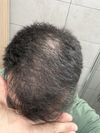
community What should I start with? Advices are welcomed
A 35-year-old is seeking advice on hair loss treatments, considering minoxidil, finasteride, and possibly a hair transplant in Turkey. They have previously tried microneedling for a year.
Related Research
6 / 6 resultsresearch Hair Restoration in Androgenetic Alopecia: Looking Beyond Minoxidil, Finasteride and Hair Transplantation
This review discusses the emerging pathophysiological factors and potential new therapies for androgenetic alopecia beyond traditional treatments, but reports no new results.
research Evaluation of bioequivalence of five 0.1 mg dutasteride capsules compared to one 0.5 mg dutasteride capsule: a randomized study in healthy male volunteers
This study found that five 0.1 mg dutasteride capsules are bioequivalent to one 0.5 mg dutasteride capsule in healthy adult males under fasting conditions, and both were well tolerated.
research Influence of Saw palmetto and Pygeum africana extracts on the urinary concentrations of endogenous anabolic steroids: Relevance to doping analysis
In this study, researchers found that taking Saw palmetto and Pygeum africana supplements for five days altered the urinary steroid profile in a way that may interfere with the steroidal module of the Athlete Biological Passport.
research What do we know about phytotherapy of benign prostatic hyperplasia?
This review discusses phytotherapy options for managing benign prostatic hyperplasia, noting some herbal agents show promise in trials for mild-moderate symptoms but more evidence is needed for others.
research An Integrated Approach to Develop Innovative, Sustainable, and Effective Cosmetic Ingredients: The Case Report of Fatty-Acids-Enriched Wild Strawberry Waste Extract
This study suggests that a supercritical CO2 extract from wild-strawberry-processing waste may be an innovative and sustainable ingredient for cosmetic applications, particularly in treating androgenic-related skin conditions.
research Evidence-based (S3) guideline for the treatment of androgenetic alopecia in women and in men
This article discusses the development of an evidence-based guideline for treating androgenetic alopecia and reports no new research results.