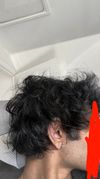
One year of dudasteride and minoxidil daily Progress Pictures 3/13/2023
This conversation details the impressive one year progress of a user's hair loss treatment, which included taking daily doses of dutasteride and minoxidil. Other users shared their own experiences with similar treatments, such as not having any shedding when starting, or having an oily scalp that improved significantly.
View this post in the Community โ
Similar Community Posts Join
6 / 1000+ resultscommunity 31M. Just diagnosed with androgenic alopecia. Fears of min.
A 31-year-old man with androgenic alopecia is considering treatments like finasteride, minoxidil, and ketoconazole shampoo but is worried about finasteride's side effects. Users recommend starting with finasteride or dutasteride for DHT blocking, suggesting topical solutions to reduce side effects.
community 21M with Temple Hair Thinning: Is My 5% Minoxidil + 0.1% Finasteride + Dutasteride Prescription Normal?
A 21-year-old male experiencing hair thinning and shedding was diagnosed with androgenetic alopecia and prescribed a topical solution containing 5% minoxidil and 0.1% finasteride, multivitamins, and 0.5mg dutasteride daily. He seeks confirmation on whether this prescription is typical for his condition.
community Androgenetic alopecia is a skin disease: DHT-mediated skin disorders
Dihydrotestosterone (DHT) impacts various skin conditions, including Androgenetic alopecia and seborrheic dermatitis, by causing overactivity in sebaceous glands. Topical medications Tacrolimus and Clobetasol can reduce these inflammatory conditions, and treatments like RU58841, Minoxidil, and Finasteride may also be beneficial.
community any news about DUPA (Diffuse unpatterned alopecia)?
The conversation discusses diffuse unpatterned alopecia (DUPA) and its possible causes, including sensitivity to DHT, not being androgenic alopecia, being diffuse alopecia areata, or hormonal issues. Treatments mentioned include topical melatonin, Clobetasol Propionate for alopecia areata, and the lack of results from using finasteride, dutasteride, and minoxidil.
community COMPLETE OVERVIEW of the Treatment of androgenetic alopecia in men
Male androgenetic alopecia is commonly treated with topical minoxidil and oral finasteride, both requiring continuous use. Other options include hair restoration surgery, dutasteride, light therapy, and camouflaging agents.
community Request for advice, feedback...
The conversation discusses hair loss treatments for a woman experiencing androgenetic alopecia and seborrheic dermatitis, with suggestions including low-dose oral minoxidil, dutasteride, and hormone replacement therapy. The user is seeking advice due to intolerance to spironolactone and topical minoxidil, and concerns about low testosterone and DHT levels.
Related Research
6 / 1000+ results
research Nanotechnology-Based Topical Treatments For Androgenic Alopecia
Nanotechnology could improve hair loss treatments by delivering drugs more effectively.
research Retrospective Pharmacotherapeutic Evaluation of Dutasteride Not Approved by US FDA for Androgenetic Alopecia in Korea
Dutasteride is highly effective for hair loss treatment in Korea, with more side effects than finasteride.
research Androgenetic Alopecia: A Review and Emerging Treatments
Hair loss, known as Androgenetic Alopecia, is often caused by hormones and can be diagnosed using noninvasive techniques. Treatments include topical minoxidil and oral finasteride, with new treatments being explored. There may also be a link between this type of hair loss and heart disease risk.
research The Inflammatory Component of Androgenetic Alopecia
Androgenetic alopecia, a genetic disorder affecting up to 50% of adults, is caused by an excessive response to androgens leading to hair follicle shrinkage. Treatments include FDA-approved drugs, other therapies like low-dose oral minoxidil, and hair transplantation.
research Androgenetic, Diffuse, and Senescent Alopecia in Men: Practical Evaluation and Management
The conclusion is that treatments like finasteride and minoxidil can prevent baldness progression and improve hair density, but more research is needed on other therapies.
research The Current Treatments and Perspectives for Androgenetic Alopecia
Finasteride and minoxidil are the main effective treatments for hair loss from androgenetic alopecia.