Minoxidil morning + topical finasteride at night? 5/4/2023
Applying minoxidil in the morning and topical finasteride at night. Mixing finasteride with liquid minoxidil is planned after finishing foam bottles.
View this post in the Community →
Similar Community Posts Join
5 / 5 resultscommunity 8 months apart with finasteride and Minoxidil
The user shared progress pictures showing significant hair regrowth after 8 months using finasteride and Minoxidil foam. They have not used microneedling and are considering oral Minoxidil but currently use topical Minoxidil and oral finasteride.
community Results after two years of treatment
The user experienced significant hair regrowth using Rogaine foam, microneedling, Nizoral, liquid minoxidil, and topical finasteride over two years, with most progress in the last six months. They plan to evaluate their progress in the fall and consider a hair transplant if needed.
community If you are wondering, YES, you will go through a shed if you switch Minoxidil brands.
Switching from Kirkland minoxidil foam to a topical finasteride/minoxidil solution can cause significant hair shedding. The user also uses dutasteride, RU58841, and pyrilutamide in their treatment regimen.
community Minoxidil 5%/FInasteride 0.1% topical - 4 weeks, am I seeing things or is there progress?
The user is using topical Minoxidil 5% and Finasteride 0.1% for hair loss and is concerned about potential side effects of oral treatments due to a history of depression and testosterone replacement therapy. Other users suggest that oral Finasteride may be more effective, but results typically take several months to a year to become noticeable.
community Excessive hair growth from Minoxidil
Minoxidil foam and oral finasteride resulted in significant hair regrowth, especially on the hairline, with no side effects from finasteride. The user applied Rogaine 5% for minoxidil.
Related Research
6 / 6 results
research Do non-prescription products help in managing androgenic alopecia?
Researchers reviewed 13 clinical trials on non-prescription monotherapies like procyanidin and cetirizine for androgenetic alopecia, finding potential improvements in hair density and diameter, but emphasized the need for more robust trials to confirm efficacy and safety.

research Optimal use of topical minoxidil in management of female pattern hair loss in India: an expert opinion
The authors provide an overview of using topical minoxidil to manage female pattern hair loss in Indian clinical practice, emphasizing its significance as the main treatment method.

research Comprehensive analysis of minoxidil effectiveness for hair growth
This study reviewed the evidence on minoxidil's effectiveness for androgenetic alopecia, finding that 5% topical minoxidil is the most effective monotherapy for men, while 2% is similarly effective for women. Genetic markers can predict response, and new formulations like foam and gel improve tolerability.
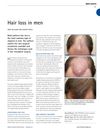
research Hair loss in men
This article reviews non‐surgical treatments and surgical techniques for male‐pattern hair loss and does not present new findings.
research Selected Disorders of Skin Appendages—Acne, Alopecia, Hyperhidrosis
This review discusses common skin appendage diseases, including their pathophysiology and treatments, but does not report new results.

research Topical minoxidil effectiveness in enhancing facial aesthetics: A systematic review and meta-analysis
This systematic review and meta-analysis found that low-dose minoxidil treatment effectively enhances facial hair development with relatively minimal side effects, which can be beneficial in primary care settings.