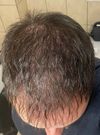
Approach: starting with dut then came om finestride 4/8/2025
The user initially used dutasteride, minoxidil, and vitamins, then switched to finasteride but experienced side effects and hair loss. They found better results with a natural supplement containing stinging nettle and beta-sitosterol, reporting thicker hair without side effects.
View this post in the Community →
Similar Community Posts Join
5 / 5 resultscommunity To the late responders of finasteride. How long did it take to finally see results?
Finasteride can take over a year to show results, with some users seeing significant improvements after 1.5 to 3.5 years. Patience is key, and combining treatments like minoxidil may help.
community If you had to abandon DHT blockers, what’s next?
Users discuss alternatives to DHT blockers for hair loss, suggesting minoxidil, microneedling, natural DHT blockers, and scalp massages. Some explore RU58841, ketoconazole, hair transplants, and hair systems due to side effects from finasteride and dutasteride.
community Any experiences with fin/dut alternatives?
The user is exploring alternatives to finasteride and dutasteride due to concerns about side effects, and is using rosemary and jojoba oil, ketoconazole, minoxidil, microneedling, multi-peptide serum, saw palmetto, and stinging nettle for hair loss. They are also considering CB 03 01 and spironolactone.
community Lipisomal Solution (Dutasteride / Tretinoin & Minoxidil & Tretinoin) Horror Story Warning
Using liposomal solutions with dutasteride, minoxidil, and tretinoin worsened hair loss due to buildup and scalp issues. Consulting a professional and returning to simpler treatments like finasteride and minoxidil improved the situation.
community What About Phytosterol Alternatives - Rice Bran Oil - Natural DHT Blockers
The conversation discusses natural DHT blockers like rice bran oil, which may reduce 5α-reductase activity similarly to Minoxidil and Dutasteride. One user argues that finasteride is more reliable and effective than natural alternatives.
Related Research
6 / 6 resultsresearch The new paradigm for androgenetic alopecia and plant-based folk remedies: 5α-reductase inhibition, reversal of secondary microinflammation and improving insulin resistance
This review discusses the role of inheritance, androgens, and microinflammation in androgenetic alopecia and suggests some plant-based folk remedies may help address these factors but reports no new clinical results.
research Antiandrogens and Androgen Inhibitors
This source outlines various antiandrogen and androgen inhibitor drugs used to treat cutaneous disorders of hyperandrogenism, detailing their mechanisms, uses, dosages, and side effects, with emphasis on spironolactone, finasteride, dutasteride, and oral contraceptives.
research Hair loss and herbs for treatment
This review summarizes causes and treatments of androgenetic alopecia with a focus on herbs as potential alternatives, but reports no new results and suggests more research is needed to validate these options.
research Efficacy of non-surgical treatments for androgenetic alopecia: a systematic review and network meta-analysis
This study found that low-level laser therapy was the most effective non-surgical treatment for androgenetic alopecia, although the overall quality of evidence supporting various therapies was generally low.
research Medical Treatment of Alopecia
This article reviews various treatments for alopecia, highlighting that minoxidil, finasteride, PRP therapy, and hair transplants are the most commonly used options, but it reports no new clinical results.
research Pathophysiology, conventional treatments, and evidence-based herbal remedies of hair loss with a systematic review of controlled clinical trials
This literature review reports that certain herbal remedies, such as rosemary, green tea, and ginseng, have shown promise in promoting hair growth and improving hair density, though variability and study design limitations highlight the need for more rigorous research.