 37 citations
,
January 2017 in “International Journal of Dermatology”
37 citations
,
January 2017 in “International Journal of Dermatology” This study found that trichoscopic features like exclamation mark hairs and angulated hairs were more indicative of alopecia areata in an Asian population, while features like broken hairs of different lengths and flame hairs were more common in trichotillomania.
This abstract is from a website with no specific study or research content, focusing on access to JAMA publications and administrative information.
 34 citations
,
January 2014 in “International Journal of Trichology”
34 citations
,
January 2014 in “International Journal of Trichology” This study reported that polarized dermoscopy was better for visualizing vascular patterns, scaling, and reticular pigmentation, while nonpolarized mode better documented features like black dots and tapered hair in various hair and scalp conditions.
 August 2019 in “Journal of The American Academy of Dermatology”
 This article discusses the premade slit method in hair restoration surgery, emphasizing the importance of a tailored depth control instrument for optimal follicle implantation, but provides no new clinical results.
 1 citations
,
May 2016 in “Dermatologic Surgery”
1 citations
,
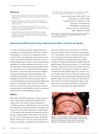
May 2016 in “Dermatologic Surgery” The document concludes that using a phototrichogram with a protractor and tapeline is a reliable and noninvasive way to measure hair loss.