February 2013 in “Journal of the American Academy of Dermatology” Uncombable hair syndrome causes dry, frizzy hair that can't be combed flat, seen in a young child.
22 citations
,
January 1992 in “PubMed” This preliminary study suggests that baseline central serotonin turnover, indicated by CSF 5-HIAA levels, may influence treatment response to serotonin re-uptake inhibitors in women with trichotillomania.
 April 2023 in “Journal of the American Psychoanalytic Association”
 This review explores the emotional and psychoanalytic significance of male pattern hair loss through four perspectives but reports no new clinical findings.
October 2012 in “The American Journal of Gastroenterology” This case report details a 21-year-old female diagnosed with a massive gastric trichobezoar due to trichophagia, successfully treated with single incision laparoscopic surgery and slated for psychiatric follow-up to prevent recurrence.
December 2009 in “Pediatrics in review” This case study describes a 17-year-old girl initially thought to be experiencing a Crohn disease exacerbation, but ultimately found to have a trichobezoar causing small bowel obstruction.
August 2025 in “Skin Appendage Disorders” This case study observed that in a child with spontaneous trichonodosis, topical minoxidil and gentle hair care improved hair length and strength over two years, suggesting a potential genetic predisposition for the disorder.
February 2022 in “Actas Dermo-Sifiliográficas” This abstract presents a clinical case of a woman with traction alopecia and discusses trichoscopic findings without reporting any new research results.
 16 citations
,
June 2005 in “Clinical and Experimental Dermatology”
16 citations
,
June 2005 in “Clinical and Experimental Dermatology” In this study of 30 severe anorexia nervosa patients, true acquired pili torti was not found although twisted hair was observed in 6.6% of cases.
Trichorrhexis nodosa causes hair to break easily, often affecting young to middle-aged black women.
May 2022 in “British Journal of Dermatology” In this case report, a 35-month-old girl with loose anagen hair syndrome experienced spontaneous resolution and hair regrowth within 24 months.
 1 citations
,
May 2023 in “JAMA dermatology”
1 citations
,
May 2023 in “JAMA dermatology” Tight hairstyles can cause hair loss, which can be permanent if not treated early.
December 2020 in “Dermatology practical & conceptual” Trichoscopy helped diagnose a teenage girl's hair loss as monilethrix.

This case study reports that a 14-year-old female with loose anagen hair syndrome and trichotillomania initially improved with topical minoxidil and counseling, but relapsed after a year, highlighting treatment challenges.
 July 2024 in “Federal Practitioner”
 Act quickly to prevent permanent hair loss from tight hairstyles.
 6 citations
,
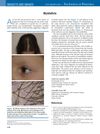
August 2012 in “The Journal of Pediatrics”
6 citations
,
August 2012 in “The Journal of Pediatrics” This case report describes a 12-year-old girl diagnosed with monilethrix, characterized by fragile, beaded hair shafts, with no effective treatment currently available.
January 2006 in “DOAJ (DOAJ: Directory of Open Access Journals)” This review discusses the characteristics and diagnosis of loose anagen hair syndrome in children and reports no new clinical results.
1 citations
,
January 2013 in “Pediatric Annals” This article discusses the clinical features, differential diagnosis, and natural history of loose anagen syndrome in children but reports no new clinical findings.
 13 citations
,
June 2012 in “Journal of Dermatological Case Reports”
13 citations
,
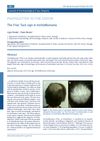
June 2012 in “Journal of Dermatological Case Reports” This report describes an 8-year-old male with trichotillomania, confirmed by trichoscopy showing characteristic hair damage and patterns.
 2 citations
,
May 2022 in “Journal of the American Academy of Dermatology”
2 citations
,
May 2022 in “Journal of the American Academy of Dermatology” This study observed that most patients with traction alopecia showed improved or stabilized hair loss with therapeutic counseling and adjunctive treatments, but follow-up was often inconsistent, highlighting the need for better awareness and management.
19 citations
,
March 1999 in “PubMed” This review discusses trichotillomania, its prevalence, and treatment options, emphasizing that many sufferers experience delays in treatment due to secrecy and shame, but reports no new research findings.
 21 citations
,
July 2005 in “European Journal of Emergency Medicine”
21 citations
,
July 2005 in “European Journal of Emergency Medicine” This case report discusses hair-tourniquet syndrome in infants, emphasizing the importance of early diagnosis and treatment to prevent serious complications.
 April 2025 in “Brazilian Journal of Hair Health”
 This report from Tangle Teezer and TRI Princeton indicates that their Extra Gentle brush reduces hair breakage by up to 39%, offering a therapeutic experience for users with fragile scalps.
 1 citations
,
July 2024 in “Cutis”
1 citations
,
July 2024 in “Cutis” This paper highlights that traction alopecia is common among certain ethnic groups and occupations due to tight hairstyling practices, but early-stage hair loss can often be reversed with treatment and by avoiding these styling habits, as observed in Hispanic and Black women.
 60 citations
,
April 2018 in “Clinical, cosmetic and investigational dermatology”
60 citations
,
April 2018 in “Clinical, cosmetic and investigational dermatology” This review discusses the causes and diagnosis of traction alopecia, emphasizing education for high-risk populations as there is currently no cure, and presents no new clinical findings.
January 2024 in “International Journal of Trichology” This case report detailed two instances of plica polonica, an acquired hair matte condition, attributing it to factors like drug effects and hair care neglect, but emphasized not labeling affected patients as unable to self-care.
 January 2026 in “Cosmoderma”
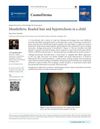
 In this clinical case study, a 9-year-old girl was diagnosed with monilethrix, a hereditary hair shaft disorder characterized by weak, beaded hair, with management focusing on minimizing hair trauma.
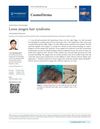 February 2023 in “Cosmoderma”
 Loose anagen hair syndrome causes easily shed hair but usually improves with time.
 19 citations
,
October 1985 in “British Journal of Dermatology”
19 citations
,
October 1985 in “British Journal of Dermatology” This review proposes a new approach for categorizing and diagnosing unruly hair forms, building on previous literature and clinical experience, without presenting new clinical results.
November 2021 in “CRC Press eBooks” This article reviews various congenital and acquired hair shaft disorders, examining their characteristics and potential links to wider health conditions, but does not present any new clinical results.