15 citations
,
October 2012 in “Journal of child neurology” In this study, two unrelated Honduran patients with Sjögren-Larsson syndrome had the same genetic mutation but displayed different disease severities, suggesting that factors beyond the ALDH3A2 mutation influence clinical outcome.
 1 citations
,
September 2017
1 citations
,
September 2017 This study found that the combination of Stemoxydine® and Resveratrol improved hair density in women with Female Pattern Hair Loss.
 1 citations
,
November 2024 in “Diabetes Metabolic Syndrome and Obesity”
1 citations
,
November 2024 in “Diabetes Metabolic Syndrome and Obesity” In this study, researchers found that a specific genetic variant in the INSR gene is linked to severe insulin resistance and hyperandrogenemia in type A insulin resistance syndrome, suggesting the benefit of exon sequencing for accurate diagnosis and treatment.
1 citations
,
May 2024 in “Communications Biology” This study found that Dab2 conditional knockout mice experienced delayed hair follicle cycles and reduced hair follicle stem cell activity, suggesting Dab2's crucial role in regulating stem cell activation and anti-aging process in hair follicles.
107 citations
,
March 2014 in “BoneKEy Reports” This abstract reviews hereditary vitamin D-resistant rickets, a rare genetic condition causing severe early childhood rickets, and reports no new results; effective treatment typically requires high doses of calcium to address hypocalcemia and secondary hyperparathyroidism.
 6 citations
,
November 2017 in “Scientific reports”
6 citations
,
November 2017 in “Scientific reports” This study found that a novel R343H mutation in the vitamin D receptor gene impairs its transcription activity, contributing to hereditary vitamin D-resistant rickets and alopecia in the affected family.
 24 citations
,
November 2008 in “Arquivos Brasileiros de Endocrinologia & Metabologia”
24 citations
,
November 2008 in “Arquivos Brasileiros de Endocrinologia & Metabologia” In this study, mutations in the vitamin D receptor were identified in Brazilian children with rickets and alopecia, leading to impaired receptor activation and reduced 24-hydroxylase expression.
47 citations
,
September 2002 in “Journal of Bone and Mineral Research” This study found that a specific VDR amino acid substitution in children with hereditary vitamin D-resistant rickets disrupts ligand binding and gene activation but does not impair hair follicle development.
65 citations
,
September 2014 in “Orphanet Journal of Rare Diseases” This study identified mutations in the STUB1 gene linked to hereditary cerebellar ataxia with cognitive impairment, revealing potential effects on protein function and patient symptoms, including accelerated aging.
November 2025 in “Journal of Investigative Dermatology” A new genetic mutation causing Xeroderma Pigmentosum was found in an 8-year-old girl, affecting her DNA repair.
37 citations
,
August 2011 in “Journal of Bone and Mineral Research” This study reported a case of hereditary vitamin D–resistant rickets caused by a single heterozygous missense mutation in the VDR gene, showing dominant-negative effects and reduced response to 1,25-dihydroxyvitamin D3.
22 citations
,
February 2012 in “Journal of Investigative Dermatology” A specific gene mutation causes severe skin and nail issues and hair loss.
33 citations
,
October 2005 in “Journal of Investigative Dermatology” A specific gene mutation causes sparse, brittle hair in a family.
 14 citations
,
October 2003 in “Annals of Oncology”
14 citations
,
October 2003 in “Annals of Oncology” In this study, the researchers observed that the severity of capecitabine-induced hand-foot syndrome in advanced gastric cancer patients was not linked to the IVS14+1G→A mutation in the DPYD gene.
 6 citations
,
June 2018 in “Journal of pediatric endocrinology & metabolism/Journal of pediatric endocrinology and metabolism”
6 citations
,
June 2018 in “Journal of pediatric endocrinology & metabolism/Journal of pediatric endocrinology and metabolism” In this study, eight patients with hereditary vitamin D-resistant rickets who share a specific VDR mutation showed improved clinical symptoms except alopecia after up to 11 years of treatment.
 20 citations
,
July 2017 in “Scientific Reports”
20 citations
,
July 2017 in “Scientific Reports” This study found that a novel missense mutation in the vitamin D receptor caused hereditary 1,25-dihydroxyvitamin D-resistant rickets with alopecia by disrupting protein function, highlighting the importance of DNA binding in hair development.
4 citations
,
January 2023 in “Journal of Clinical Investigation” This study identified a recurrent mutation in the endothelin receptor type A associated with mandibulofacial dysostosis with alopecia, and proposed a mechanism involving increased ligand affinity due to structural changes.
 1 citations
,
December 2015 in “Balkan Journal of Medical Genetics”
1 citations
,
December 2015 in “Balkan Journal of Medical Genetics” This study found no significant difference in the prevalence of CYP21A2 mutations between couples with unexplained fertility problems and healthy controls, but identified an association between the c.290-13A/C>G mutation and clinical issues like hormone deviations and polycystic ovary syndrome.
This study suggests that specific mutations in the MFN2 gene, including the p.Arg707Trp allele, can result in tissue-selective mitochondrial dysfunction leading to excessive upper body fat growth and low leptin levels.
 93 citations
,
April 2003 in “Proceedings of the National Academy of Sciences of the United States of America”
93 citations
,
April 2003 in “Proceedings of the National Academy of Sciences of the United States of America” This study identified an unexpected critical role for the FATP4 protein in skin and hair development in mice, linking it to a potential candidate gene for restrictive dermopathy in humans.
5 citations
,
January 2015 in “Case reports in medicine” In this case report, a novel missense mutation c.1360G>C (p.Ala454Pro) in the MBTPS2 gene was identified in a boy with typical IFAP syndrome and severe atopic features, although no phenotype/genotype correlation was established.
53 citations
,
May 1996 in “The Journal of Clinical Endocrinology & Metabolism” This study identified multiple mutations in the 5 alpha-reductase-2 gene among male pseudohermaphrodites in the Dominican Republic, suggesting they do not share a common ancestry.
 73 citations
,
June 2010 in “PLoS Genetics”
73 citations
,
June 2010 in “PLoS Genetics” This study identified that a deficiency in the palmitoyl transferase enzyme, due to a mutation in the Zdhhc13 gene, led to severe physiological abnormalities in mice, including skin, bone, and systemic amyloid issues.
3 citations
,
January 2013 in “Dermatology” This study identified novel compound heterozygous mutations in the hairless gene among a non-consanguineous Chinese family with congenital atrichia, illustrating phenotypic variations due to founder or modifier genes.
 11 citations
,
January 2020 in “BMC pediatrics”
11 citations
,
January 2020 in “BMC pediatrics” This case report identified two new SLC39A4 mutations in twin patients with acrodermatitis enteropathica, suggesting that different mutations in this gene may lead to varying clinical manifestations of the disorder.
 4 citations
,
May 2011 in “Movement Disorders”
4 citations
,
May 2011 in “Movement Disorders” A woman's unique dementia was misdiagnosed, a genetic mutation increases Parkinson's risk with age, and finasteride may help with Tourette syndrome.
 November 2022 in “Journal of Investigative Dermatology”
 In this study, analysis of over 800 Iranian patients with epidermolysis bullosa identified 15 with pathogenic PLEC variants, highlighting a correlation between variant locations and phenotypic manifestations of plectinopathies.
 11 citations
,
September 2011 in “British Journal of Dermatology”
11 citations
,
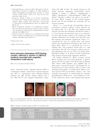
September 2011 in “British Journal of Dermatology” New ABCA12 gene mutations were linked to a skin condition with scaling and hair loss, and a treatment helped with hair loss in a related case.
 1 citations
,
March 2023 in “Frontiers in Cardiovascular Medicine”
1 citations
,
March 2023 in “Frontiers in Cardiovascular Medicine” A specific gene variant is linked to heart disease, increased heart muscle, curly hair, and thick skin on palms and soles.

This study in a nine-year-old boy from Lebanon identified a gene mutation (c.1066dup p.(Arg356Profs*16)) associated with a rare inborn error of immunity, characterized by craniosynostosis, jaundice, and several other symptoms, expanding the known genotypic and phenotypic spectrum of this condition.