March 2026 in “Journal of the mechanical behavior of biomedical materials/Journal of mechanical behavior of biomedical materials” In this study, researchers found that hair fibers exposed to bleaching and UV irradiation displayed significantly more damage, including increased adhesion and surface heterogeneity, compared to untreated hair, highlighting a synergistic degradation pathway affecting the hair cuticle's integrity.
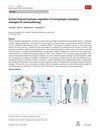
This review highlights that surface mechanical regulation can program macrophage behavior through specific mechanical cues on material surfaces, potentially advancing immunotherapies and regenerative medicine by enabling precise control over macrophage functions.
 13 citations
,
May 2016 in “International journal of biological macromolecules”
13 citations
,
May 2016 in “International journal of biological macromolecules” This study demonstrated that molecular dynamics simulations of keratin could effectively model the mechanical properties of hair, aligning well with experimental data, especially when conducted in vacuum conditions.
 19 citations
,
July 2018 in “ACS biomaterials science & engineering”
19 citations
,
July 2018 in “ACS biomaterials science & engineering” This study showed that chemical and mechanical treatments significantly alter the nanoscale surface properties of hair, affecting its roughness, mechanical stiffness, adhesion, and surface potential.
117 citations
,
August 2005 in “Ultramicroscopy” This study systematically characterized the nanomechanical properties of human hair, such as hardness and elastic modulus, across different ethnicities and treatment conditions using nanoindentation and scanning electron microscopy.