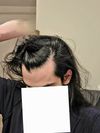
TLDR Natural hairline asymmetry should be embraced for better-looking hair transplants.
The study of 125 East Asian males with Norwood-Hamilton stage II or lower hair loss found a significant rightward skew in hair growth direction, with an average difference of 22.2 degrees between the right and left sides. This suggests that symmetrical hairline designs may look unnatural, and embracing natural asymmetry can improve aesthetic outcomes in hair transplant surgery. The study highlights the importance of educating patients about natural hairline asymmetry and recommends personalized hairline designs based on individual growth patterns. Further research is needed to examine the effects of ethnicity, skull morphology, and sex on hairline asymmetry.
9 citations
,
January 2017 in “International Journal of Trichology” No current system perfectly classifies male-pattern hair loss, indicating a need for a new system for better diagnosis and treatment.
8 citations
,
January 2003 in “Plastic and Reconstructive Surgery” Hair transplants using follicular unit grafting and a strategic design can give great results even for men with severe hair loss.
8 citations
,
January 2003 in “Plastic and Reconstructive Surgery” Hair transplants using follicular unit grafting can significantly improve appearance for men with advanced hair loss.
5 citations
,
October 2013 in “Clinics in Plastic Surgery” Hair transplant improves with regenerative medicine and FUE technique.
April 2021 in “Advances in Cosmetic Surgery” Hair restoration can be achieved through non-surgical treatments like minoxidil, antiandrogens, phototherapy, and PRP procedures, or through surgical methods like hair transplantation. Continued treatment is needed to maintain results, and full results are visible after 12-18 months.
4 citations
,
September 2019 in “Journal of Cosmetic Dermatology” FUE megasession effectively treats severe hair loss with natural-looking results in one operation.