Disorders of the Hair and Scalp
January 1967
in “
The BMJ
”
Studysummary The document concludes that while some hair and scalp disorders can be treated, hair loss from destroyed follicles is permanent, and damaged hair can only regrow naturally. Our plain-language summary of this paper — not a Tressless recommendation.
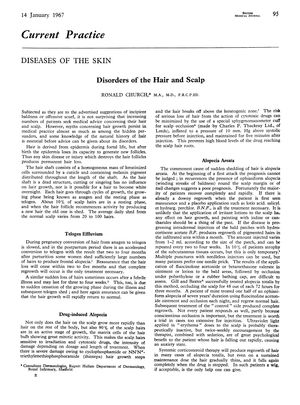
The 1967 document provides an overview of hair and scalp disorders, detailing the hair growth cycle, conditions like Telogen Effluvium, drug-induced alopecia, Alopecia Areata, and hereditary male-pattern baldness, along with their respective treatments. It notes that hair loss from follicle destruction is permanent, and daily hair shedding averages between 20 to 100 strands. Treatments mentioned include intradermal hydrocortisone acetate injections for Alopecia Areata, a special cuff to minimize drug-induced hair loss, and griseofulvin for ringworm, which effectively cured most children within seven weeks. Acne Necrotica was treated with chlortetracycline, and Chronic Discoid Lupus Erythematosus treatment was said to allow hair regrowth in viable follicles. The document also cautions against hair damage from cosmetic treatments, emphasizing that damaged hair can only regrow naturally, with temporary improvements possible through hydration and oiling. It highlights that cosmetic hair damage often results in medico-legal consultations.