Is RU daily dosing from 100mg to 17.5mg safe long term? Finasteride/Dutasteride 7/14/2025
The user is considering reducing RU58841 dosage from 100mg to 17.5mg for long-term safety due to brain fog issues from finasteride. They apply RU58841 only to the front of the scalp where thinning occurs.
View this post in the Community →
Similar Community Posts Join
6 / 6 resultscommunity Scalp Inflammation Beyond Psoriasis: A Hidden Player in Hair Thinning
Scalp inflammation may contribute to hair thinning, with treatments like ketoconazole shampoo potentially helping by reducing inflammation. Some users report that DHT blockers and other treatments like finasteride, minoxidil, and RU58841 can alleviate symptoms associated with inflammation.
community Prevent g thinning while promoting beard growth
A 25-year-old male experiencing hair shedding due to testosterone use is considering topical finasteride or RU58841 for scalp treatment while continuing minoxidil for beard growth. Topical finasteride is suggested to prevent scalp thinning without affecting beard growth.

community 31M Experiencing Diffuse Thinning Since 2023, Seeking Solutions
The user is experiencing hair thinning at the front of the scalp and is seeking advice on regrowing long curly hair. They are considering treatments like Minoxidil, finasteride, and RU58841 to prioritize hair regrowth.
community Why Diffuse Thinning is Worse Than a Receding Hairline
Diffuse thinning is worse than a receding hairline as it affects the entire scalp, complicating styling and hair transplants. Treatments like finasteride, minoxidil, dutasteride, and RU58841 are mentioned, with some users noting improved hair density.
community For diffuse thinners: Has it been harder to get regrowth on scalp vs hairline?
Diffuse thinning can result in varied regrowth, with some users experiencing better results at the hairline and others at the crown. Treatments mentioned include finasteride, minoxidil (oral and topical), RU58841, microneedling, and dermarolling.
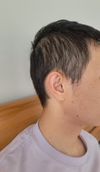
community 25M Low Density Hair, Concerned About Increased Scalp Visibility
The user is experiencing excessive hair thinning and is unsure of the cause. They are seeking opinions on treatments like Minoxidil, finasteride, and RU58841.
Related Research
6 / 6 results
research Real-time in vivo structure-function study of scalp hair cycles: an experimental approach for monitoring living hair roots with a 20-year follow-up
In this study, after long-term observation of human scalp hair follicles over 16 years, the researchers found that a topical 5% minoxidil solution could stimulate hair regrowth after a period of dormancy, though with reduced growth rates and hair diameter.

research Investigational medications in the treatment of alopecia
This review discusses investigational treatments for androgenetic and chemotherapy-induced alopecia and reports no new clinical results, highlighting the need for further research.

research Androgenetic alopecia
This article discusses androgenetic alopecia and reports no new clinical results.

research Antiandrogens and Androgen Inhibitors
This source outlines various antiandrogen and androgen inhibitor drugs used to treat cutaneous disorders of hyperandrogenism, detailing their mechanisms, uses, dosages, and side effects, with emphasis on spironolactone, finasteride, dutasteride, and oral contraceptives.

research Androgenetic Alopecia: An Update on Pathogenesis and Pharmacological Treatment
This review article examines current drugs for androgenetic alopecia, focusing on their mechanisms and clinical efficacy, noting that while finasteride and minoxidil are commonly approved treatments, new drugs targeting different pathogenic pathways have emerged, offering a broader understanding and reference for AGA treatment options.

research Scalp microbiome in male androgenetic alopecia: 16S rRNA sequencing-based clinical characterization, mouse model validation, and effects on hair follicle cells
This study found that patients with androgenetic alopecia had increased scalp microbial diversity and reduced Staphylococcus abundance, particularly in the frontal and vertex regions, suggesting this dysbiosis as a sensitive indicator of AGA.