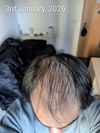
Finasteride is being used by a 17-year-old concerned about its impact on height while still growing. The user has been balding since age 13 and was recently diagnosed with androgenetic alopecia.
A dental technician claims malocclusion causes pattern hair loss due to poor scalp circulation. Users debate this, noting treatments like finasteride, minoxidil, and microneedling focus on DHT and blood flow.
The conversation is about a hair loss treatment regimen that includes finasteride, dutasteride, oral minoxidil, Dermapen, quercetin, N-acetyl L-cysteine, biotin, millet seed extract, MSM, OPC, green tea extract, high-dose vitamins B1-B12, boron, and silica. The user is seeking advice on additional treatments.
A male in his 30s is using 1.25 mg finasteride daily, 5% minoxidil foam twice daily, collagen/biotin supplements, and weekly .5mm rolling. After six weeks, he notices his crown appears thicker and feels better, possibly due to placebo.
A user is experiencing hair loss and has been using Propecia, minoxidil, Regenepure DR, and dermarolling, with recent improvements on the left temple but worsening on the right. Suggestions include checking for vitamin deficiencies, thyroid issues, and considering dutasteride.
27-year-old female experiences aggressive hair thinning and hirsutism despite normal testosterone levels. Spironolactone and 2% minoxidil were ineffective; high DHEA sulfate levels may be the cause.
Minoxidil helps hair growth on both scalp and face, but stopping it leads to hair loss on the scalp, not the face. The user questions why scalp hair can't be maintained with finasteride or androgen blockers after stopping minoxidil, despite these treatments reducing DHT damage.
A 28-year-old male experiencing early male pattern baldness is considering using Pyrilutamide (KX-826) as an alternative to finasteride due to side effects. He seeks to maintain his current hair without regrowth and is concerned about potential side effects like reduced libido.
Hair follicles can be dormant and potentially revived with treatments like finasteride and minoxidil, but irreversible loss occurs if certain structures are destroyed. Early intervention is more effective, and additional methods like microneedling may help.
The user shared their positive experience with finasteride for hair loss, noting improved hairline and reduced hair fall without major side effects, except for acne. They expressed concerns about potential facial structure changes but concluded there were none.
Kintor Pharma completed enrolling subjects for a Phase III trial of KX-826 for male hair loss treatment. The trial includes a 24-week treatment period and a 4-week safety follow-up, with results expected in about 6-7 months.
A 22-year-old with advanced diffuse thinning is considering oral dutasteride after stopping finasteride due to side effects like brain fog and testicular pain. They are also contemplating a hair transplant combined with oral dutasteride and topical finasteride, noting a thick donor area.
The user has been using topical minoxidil for over a year and added kx826/pyrilutamide to improve hair growth, avoiding finasteride due to side effects like lowered libido and panic attacks. They report positive results with reduced shedding and healthier hair, particularly in areas previously unresponsive to minoxidil.
A 17-year-old is concerned about hair thinning and unable to see a dermatologist for a year. They are advised to consider using topical minoxidil and possibly finasteride in the future.
The conversation discusses a hair loss treatment regimen involving minoxidil, finasteride, RU58841, JXL069, and nizoral shampoo. The user reports seeing new black dots in areas where hair hasn't grown in years, suggesting potential regrowth.
Hair loss treatments, including finasteride and minoxidil, as well as vitamins, supplements, and scalp biopsy. A joke was made about Feline Pattern Baldness in cats.
Alfatradiol is considered safe but less effective than finasteride for hair loss. One user reported subtle regrowth using alfatradiol with finasteride and minoxidil, while another found alfatradiol ineffective.
A 19-year-old male shared his 1-month results using minoxidil, ketoconazole shampoo, and dermastamping for traction alopecia. He plans to continue this treatment for 11 more months.
The user has been using finasteride 1 mg daily for 6 months, seeing improvement in hairline but noticing a strange wide part on the side of the crown. Suggestions include using topical dutasteride and considering a hair transplant if the issue persists.
The conversation discusses concerns about using cordyceps while on dutasteride due to potential DHT increase, with OP experiencing hair loss after using creatine. OP is advised to stop creatine and give dutasteride more time to evaluate its effectiveness.
A 22-year-old male has been using oral dutasteride, oral minoxidil, topical minoxidil, and supplements for hair loss, experiencing shedding but some regrowth on the temples. Despite concerns about starting dutasteride, he is seeing positive results and hopes for long-term success.
An 18-year-old noticed significant hairline recession and is concerned about further hair loss. They plan to improve their lifestyle and are advised to use finasteride and minoxidil and consult a dermatologist.
The user noticed hair thinning since age 15, initially attributed to a Vitamin D deficiency. They are currently using Rogaine and considering Propecia but are hesitant about a scalp biopsy; they seek financially practical treatments for male-pattern baldness.
User noticed black dots along the hairline and temples, questioning if it's regrowth. They are using a regimen including Dutasteride, oral and topical Minoxidil, and a compounded topical treatment.
A 21-year-old has been using daily oral finasteride, minoxidil, biotin, and vitamins since January 2026 for hair loss, adding topical treatments and microneedling in May. They observed initial shedding and scalp issues but noted significant progress after adjusting their routine.
White spots on a bald scalp, likely tinea versicolor, can be treated with ketoconazole or selenium sulfide shampoos like Selsun Blue. Consulting a dermatologist is recommended for proper diagnosis and treatment.
A user is treating hair loss with Dutasteride, Minoxidil, RU58841, Derminator 2, Vitamin D, Biotin, and Zinc. After 6 months, there's no significant visual improvement, but the user feels less insecure about Retrograde Alopecia.
The user is dealing with androgenic alopecia and has been using finasteride and minoxidil for six months, which has stopped hair loss and started regrowth. The user expresses concern about the impact of hair loss on their self-image and future career plans.
User is 1.5 months into using oral minoxidil and finasteride for hair regrowth, along with dermarolling. They report good progress and seek advice on whether new hairs will thicken.