A Clinical Study of Geriatric Dermatoses
July 2017
in “
Journal of evolution of medical and dental sciences
”
Studysummary In this study, common skin conditions in the geriatric population of Kerala were found to be widely prevalent, with significant associations between xanthelasma palpebrarum and dyslipidemia, and between cherry angioma and diabetes.
Our plain-language summary. Not medical advice or a treatment recommendation. Consult a qualified healthcare professional before changing treatment. Full disclaimer
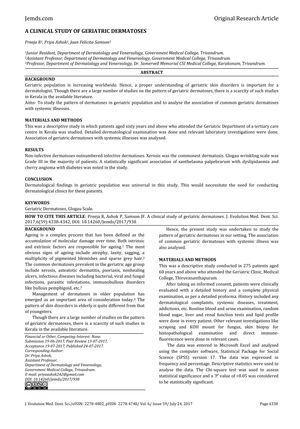
In a study from Kerala, India, involving 275 patients aged 60 and above, it was discovered that non-infective dermatoses were more prevalent than infective ones, with xerosis being the most common, affecting 54.9% of the patients. The majority of participants had Grade III wrinkles according to the Glogau scale. There was a significant correlation between xanthelasma palpebrarum and dyslipidaemia (p < 0.001), and between cherry angioma and diabetes (p = 0.002). The study also found that all participants had at least one skin disorder, with other conditions like eczema (16%), idiopathic guttate hypomelanosis (36.7%), vitiligo (2.9%), and fungal infections (45.8%) being reported. However, no significant association was found between acrochordon with diabetes and obesity, or seborrhoeic keratoses with diabetes or obesity. The findings underscore the ubiquity of dermatological issues in the elderly and the need for specialized dermatological care for this demographic.