8.5 month transplant + meds update - 2,689 grafts 5/24/2023
Ibrox1972 shared an 8.5-month update on their 2,689-graft hair transplant by Dr. Raghu Reddy in London, along with using oral finasteride, oral minoxidil, and microneedling. Users praised the natural-looking results and discussed the importance of choosing a skilled doctor.
View this post in the Community →
Similar Community Posts Join
5 / 5 resultscommunity How’s my donor? 20 months on oral fin/min
The user has experienced decent hair regrowth using oral finasteride and minoxidil for 20 months and is considering a hair transplant, with opinions varying on the suitability of their donor area. Some suggest a smaller graft procedure or consulting an elite surgeon, while others recommend additional treatments like microneedling and dietary changes.
community 6 month update - 3200 FUE grafts, oral fin/min, keto shampoo, biotin
A user shared their 6-month hair loss treatment progress, which included 3200 FUE grafts, oral finasteride and minoxidil, keto shampoo, and biotin. The user also mentioned micro needling their temples for further growth and plans to observe the effects of finasteride and minoxidil over the next 6-12 months.
community Transplant 3400 grafts 4 month update
The user had a hair transplant of 3400 grafts, primarily focusing on the hairline, and is happy with the results four months post-surgery. They used topical minoxidil, oral minoxidil, finasteride, and topical dutasteride, along with microneedling and Nizoral, and the procedure cost around $12,000.
community 44M 19 months fin oral 1mg daily /min 5% foam once daily
A 44-year-old man has been using finasteride 1mg daily and minoxidil 5% foam for 19 months to address hair loss, with mixed results and continued shedding. Suggestions include trying oral minoxidil, microneedling, and possibly a hair transplant for better cosmetic density.
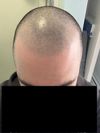
community 36M too late to start oral Fin and Min then get a FUE?
A 36-year-old man is considering starting oral finasteride and minoxidil, using ketoconazole shampoo, and possibly getting a 3000-graft FUE hair transplant. He previously had scalp micropigmentation but is now exploring medication due to fewer concerns about side effects.
Related Research
6 / 6 results
research O IMPACTO DO USO PERIOPERATÓRIO DA DUTASTERIDA (ORAL E MESOTERAPIA) NOS RESULTADOS ESTÉTICOS DO TRANSPLANTE CAPILAR: UMA REVISÃO DE LITERATURA
This study reports that perioperative use of dutasteride, both orally and through mesotherapy, may enhance hair graft survival and reduce shock loss in patients undergoing hair transplantation for androgenetic alopecia.

research Guidelines based management of androgenetic alopecia
This review examines the effectiveness of current treatments for androgenetic alopecia, offering plastic surgeons evidence-based guidance for choosing safe and effective options, but reports no new results.

research Minoxidil: a comprehensive review
This study reported that while topical minoxidil exhibits hair regrowth in androgenetic alopecia, oral minoxidil 5 mg/day was more effective than topical forms after six months, with low doses also potentially effective for women and other hair loss types.
research Female pattern hair loss—An update
This article discusses the causes, diagnosis, and treatment options for female pattern hair loss, emphasizing the role of topical minoxidil as a primary treatment, but provides no new clinical results.

research Microneedle-mediated therapies in hair loss: applications, mechanisms, and future directions
This review discusses recent advancements in microneedle technology for hair loss treatment, highlighting their ability to enhance drug delivery and improve hair follicle survival in transplantation, while also exploring their potential integration with tissue engineering to address regeneration challenges.

research Hair restoration surgery: pre-surgical considerations and pitfalls
This review outlines diagnostic strategies and a thorough checklist for evaluating patients before they undergo hair restoration surgery, addressing non-scarring and scarring alopecia, to improve surgical outcomes and avoid errors, according to this source.